For years, many of us have been told that painful, difficult periods are just a normal part of being a woman. We’re told to just “tough it out.” But what if your period problems are a sign of something more? What if the pain that makes you miss school or work isn’t “normal” at all?
Two of the most common conditions that cause period problems are Polycystic Ovary Syndrome (PCOS) and Endometriosis. Millions of women have them, but they often go undiagnosed for years because the symptoms are dismissed as just a “bad period.”
At CrampCare, we believe that knowledge is power. Understanding the signs of these conditions is the first, most crucial step to getting the diagnosis and care you deserve. Let’s break down the key differences.
What is PCOS? The Hormone Disruptor
PCOS is one of the most common hormonal disorders in women of reproductive age. The name is a bit misleading—it’s not really about cysts on your ovaries. It’s a complex metabolic and hormonal condition. [1]
Think of PCOS as a communication breakdown. Your hormones get out of balance, which can disrupt ovulation and lead to a whole host of symptoms.
The Vibe Check: Key Signs of PCOS
To be diagnosed with PCOS, you typically need to have at least two of these three main signs:
- Irregular or Missing Periods: This is the hallmark sign. Because of the hormonal imbalance, you might not ovulate regularly. This can mean your cycles are super long (more than 35 days apart), you miss periods for months at a time, or they’re just completely unpredictable.
- Signs of High Androgens (a type of hormone): Androgens are sometimes called “male hormones,” but everyone has them. In PCOS, the levels can be higher than normal, leading to:
- Acne: Especially stubborn, cystic acne around the jawline, chin, and neck.
- Hirsutism: Unwanted hair growth on the face, chest, or back.
- Hair Loss: Thinning hair on your head.
- Polycystic Ovaries on an Ultrasound: An ultrasound might show that your ovaries are enlarged and have many small follicles (which are sometimes called cysts, hence the name).
Other common signs: Weight gain (especially around the abdomen), insulin resistance, and difficulty getting pregnant.
What is Endometriosis? The Painful Inflammatory Disease
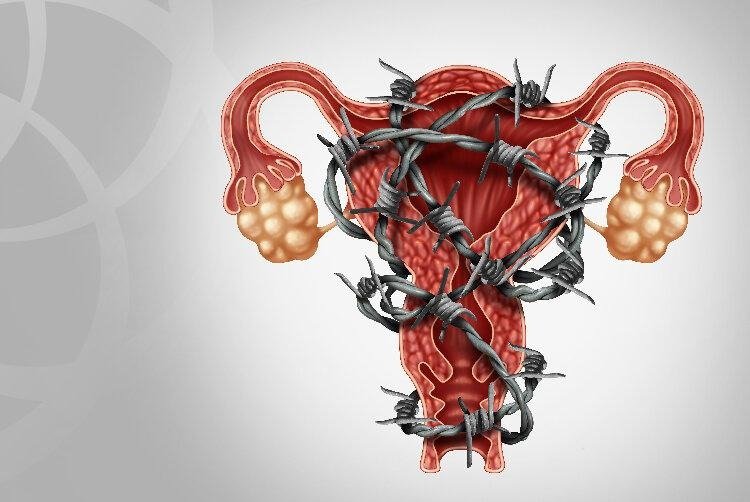
Endometriosis (or “endo”) is a condition where tissue similar to the lining of the uterus (the endometrium) grows outside of the uterus—on the ovaries, fallopian tubes, or other parts of the pelvic cavity. [2]
This out-of-place tissue acts like the uterine lining does: it thickens, breaks down, and bleeds with each menstrual cycle. But because this blood has no way to exit the body, it gets trapped, causing intense inflammation, scar tissue (adhesions), and severe pain.
The Vibe Check: Key Signs of Endometriosis
The number one sign of endometriosis is PAIN. But it’s not just “normal” period cramps.
- Severe, Debilitating Period Pain: This is pain that makes you cancel plans, miss school or work, and doesn’t get better with over-the-counter pain meds. It’s often described as a sharp, stabbing, or pulling pain.
- Pain at Other Times: You might also have pain during or after sex, during ovulation, or when you go to the bathroom (especially during your period).
- Heavy Bleeding: You might soak through pads or tampons every hour or two.
- Bowel and Bladder Issues: Things like painful bowel movements, diarrhea, constipation, and bloating, especially around your period (this is often misdiagnosed as IBS).
- Infertility: Endometriosis is a leading cause of infertility in women.
It’s important to know that the amount of pain you have doesn’t always correlate with the severity of the disease. Someone with a small amount of endo can have severe pain, and vice versa.
“I Think I Might Have One of These. What Do I Do?”
If you’re reading this and alarm bells are going off in your head, the first thing to know is that you are not alone, and you are not imagining it. Your pain is real, and your symptoms are valid.
The most powerful next step you can take is to start tracking your symptoms. This is non-negotiable. When you go to a doctor, being able to show them a detailed record of your symptoms is the single best way to be taken seriously.
This is exactly why we built the CrampCare app. Use it to track:
- Your Cycle: Is it regular or irregular? How long is it?
- Your Pain: On a scale of 1-10, how bad is your pain each day? Where is it located? What does it feel like (stabbing, dull, aching)?
- Your Bleeding: How heavy is it? Are you passing clots?
- Other Symptoms: Note everything—acne, bloating, pain with sex, bowel issues, fatigue.
When you have weeks or months of this data collected, you are no longer just telling your doctor you have “bad periods.” You are presenting them with concrete evidence that something is wrong.
Take this data, make an appointment, and don’t be afraid to advocate for yourself. A diagnosis can be the first step on the path to managing your symptoms and reclaiming your quality of life. You deserve to be heard, and you deserve to feel well.
References
[1] National Institutes of Health. (2020). Polycystic Ovary Syndrome (PCOS). https://www.ninds.nih.gov/health-information/disorders/polycystic-ovary-syndrome-pcos
[2] World Health Organization. (2021). Endometriosis. https://www.who.int/news-room/fact-sheets/detail/endometriosis