Category: Biology & hormones

  • Why Am I So Tired on My Period? The Real Reasons for Period Fatigue

    Does this sound familiar? The first day of your period hits, and suddenly, you have the energy of a sloth. Your brain feels foggy, your body feels heavy, and the thought of doing anything besides lying on the couch with a heating pad feels impossible. 

    This isn’t just “being lazy.” Period fatigue is a very real, very common, and very frustrating experience. It can be so intense that it disrupts your work, your social life, and your general ability to function. But why does it happen? 

    It’s not just about the cramps or the hassle of bleeding. There are some real biological reasons why you feel so completely wiped out. At CrampCare, we want to help you understand what’s going on in your body so you can give it the support it needs. Let’s dive into the main culprits behind period fatigue.

    Culprit #1: Iron Loss (The Energy Thief)

    This is the biggest and most direct cause of period fatigue. When you menstruate, you lose blood. And when you lose blood, you lose iron

    Iron is a crucial component of hemoglobin, the protein in your red blood cells that’s responsible for carrying oxygen from your lungs to the rest of your body, including your muscles and brain. When your iron levels dip, your body can’t get the oxygen it needs to function optimally. The result? Exhaustion, weakness, and that classic “brain fog.” [1]

    If you have particularly heavy periods (menorrhagia), you’re at an even higher risk for low iron levels or even iron-deficiency anemia. 

    What you can do: Focus on replenishing your iron stores, especially during and right after your period. 

    • Eat iron-rich foods: Lean red meat, poultry, fish, beans, lentils, and dark leafy greens like spinach.
    • Pair it with Vitamin C: To help your body absorb the iron, eat it with foods high in Vitamin C, like oranges, strawberries, and bell peppers.
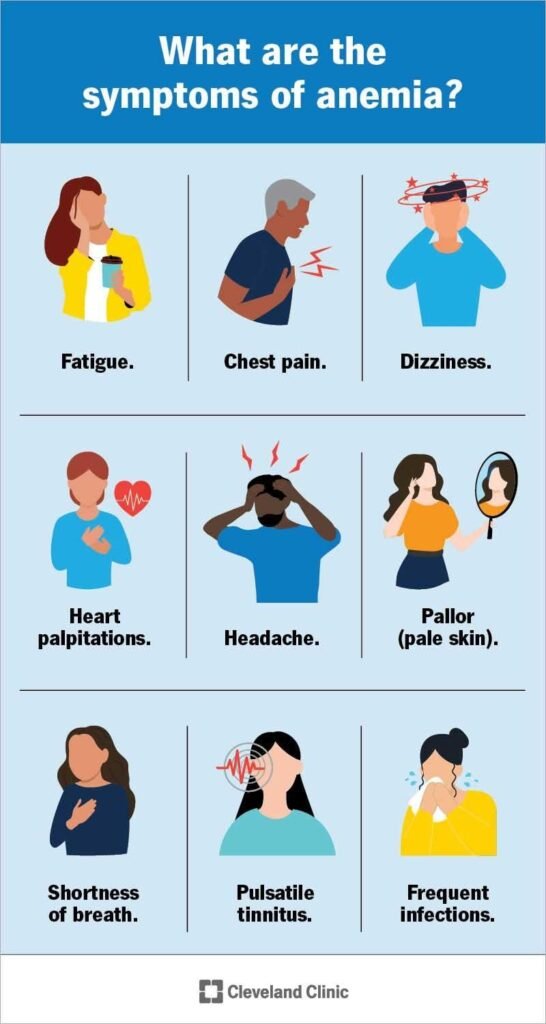
    Source: Cleveland Clinic

    Culprit #2: Hormonal Shifts (The Progesterone Coma)

    Your hormones are on a rollercoaster ride all month long, and this has a huge effect on your energy.

    Just before your period starts, your levels of both estrogen and progesterone take a nosedive. Estrogen is linked to serotonin, a brain chemical that helps you feel energetic and happy. When estrogen drops, your mood and energy can drop with it.

    But the bigger player here is often progesterone. Progesterone has a sedative, almost calming effect on the body. In the week before your period (the luteal phase), your progesterone levels are high, which can make you feel a bit sluggish. When it suddenly drops right before your period, this abrupt shift can leave you feeling completely drained. [2]

    What you can do: While you can’t stop the hormonal shifts, you can support your body through them.

    • Prioritize sleep: Your body is doing a lot. Give it the rest it needs. Aim for 7-9 hours of quality sleep.
    • Gentle movement: It might be the last thing you feel like doing, but a short walk or some gentle stretching can actually boost your energy levels.
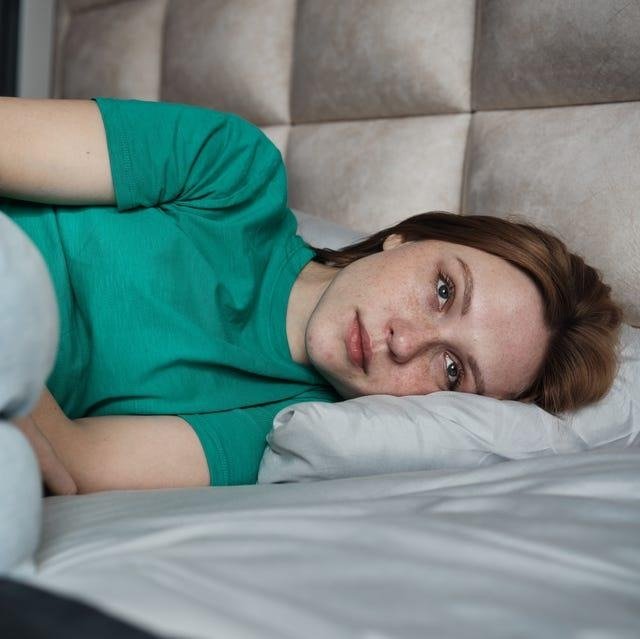
    Culprit #3: Inflammation & Pain (The Energy Drain)

    Dealing with pain is exhausting. During your period, your body releases chemicals called prostaglandins. These chemicals cause the muscles of your uterus to contract to shed the uterine lining—this is what causes cramps. 

    High levels of prostaglandins can also cause inflammation throughout your body, leading to headaches, back pain, and general achiness. Your body uses a ton of energy just to deal with this pain and inflammation, leaving you feeling physically and mentally drained.

    What you can do: Focus on fighting inflammation.

    • Eat anti-inflammatory foods: Think fatty fish (salmon), nuts, seeds, and colorful fruits and veggies.
    • Use heat: A heating pad or a warm bath can help relax your uterine muscles and reduce pain.
    • Consider an NSAID: Over-the-counter pain relievers like ibuprofen work by blocking the production of prostaglandins. Taking them a day or two before your period starts can be very effective.

    When Is It More Than Just Period Fatigue?

    While period fatigue is common, extreme exhaustion that interferes with your daily life isn’t something you should just have to put up with. If your fatigue is severe, or if you have extremely heavy periods, it’s a good idea to talk to your doctor. They can check your iron levels and rule out any underlying conditions.

    Tracking your symptoms is key. Use the CrampCare app to log your energy levels throughout the month. Having this data can help you and your doctor see just how much your cycle is impacting you. For example, you might see a clear pattern of crashing energy on day 1 and 2 of your period every single month.

    This information is so valuable. It validates your experience and helps you get the support you need. You deserve to feel energized and vibrant all month long.

    References

    [1] National Institutes of Health. (2022). Iron – Fact Sheet for Health Professionals. https://ods.od.nih.gov/factsheets/Iron-HealthProfessional/

    [2] Shechter, A., & Boivin, D. B. (2010). Sleep, Hormones, and Circadian Rhythms throughout the Menstrual Cycle in Healthy Women and Women with Premenstrual Dysphoric Disorder. International journal of endocrinology, 2010, 259345. https://doi.org/10.1155/2010/259345
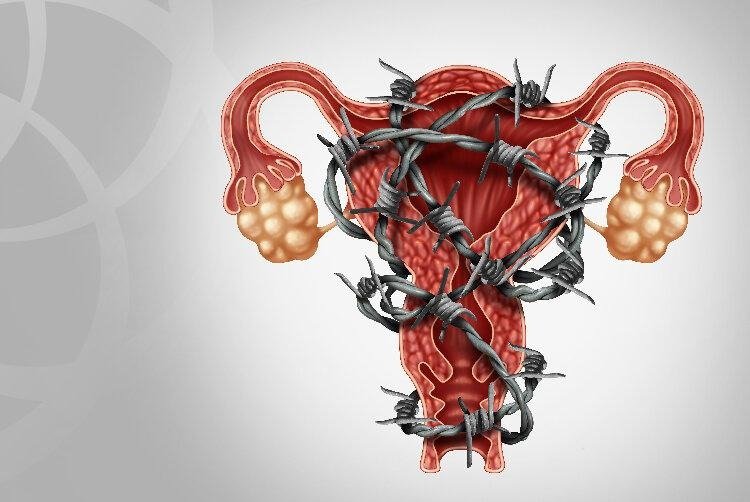
  • Is It More Than Just a ‘Bad Period’? Signs of PCOS & Endometriosis

    For years, many of us have been told that painful, difficult periods are just a normal part of being a woman. We’re told to just “tough it out.” But what if your period problems are a sign of something more? What if the pain that makes you miss school or work isn’t “normal” at all?

    Two of the most common conditions that cause period problems are Polycystic Ovary Syndrome (PCOS) and Endometriosis. Millions of women have them, but they often go undiagnosed for years because the symptoms are dismissed as just a “bad period.”

    At CrampCare, we believe that knowledge is power. Understanding the signs of these conditions is the first, most crucial step to getting the diagnosis and care you deserve. Let’s break down the key differences.

    What is PCOS? The Hormone Disruptor

    PCOS is one of the most common hormonal disorders in women of reproductive age. The name is a bit misleading—it’s not really about cysts on your ovaries. It’s a complex metabolic and hormonal condition. [1]

    Think of PCOS as a communication breakdown. Your hormones get out of balance, which can disrupt ovulation and lead to a whole host of symptoms.

    The Vibe Check: Key Signs of PCOS

    To be diagnosed with PCOS, you typically need to have at least two of these three main signs:

    1. Irregular or Missing Periods: This is the hallmark sign. Because of the hormonal imbalance, you might not ovulate regularly. This can mean your cycles are super long (more than 35 days apart), you miss periods for months at a time, or they’re just completely unpredictable.
    2. Signs of High Androgens (a type of hormone): Androgens are sometimes called “male hormones,” but everyone has them. In PCOS, the levels can be higher than normal, leading to:
    • Acne: Especially stubborn, cystic acne around the jawline, chin, and neck.
    • Hirsutism: Unwanted hair growth on the face, chest, or back.
    • Hair Loss: Thinning hair on your head.
    1. Polycystic Ovaries on an Ultrasound: An ultrasound might show that your ovaries are enlarged and have many small follicles (which are sometimes called cysts, hence the name).

    Other common signs: Weight gain (especially around the abdomen), insulin resistance, and difficulty getting pregnant.

    What is Endometriosis? The Painful Inflammatory Disease

    Endometriosis (or “endo”) is a condition where tissue similar to the lining of the uterus (the endometrium) grows outside of the uterus—on the ovaries, fallopian tubes, or other parts of the pelvic cavity. [2]

    This out-of-place tissue acts like the uterine lining does: it thickens, breaks down, and bleeds with each menstrual cycle. But because this blood has no way to exit the body, it gets trapped, causing intense inflammation, scar tissue (adhesions), and severe pain.

    The Vibe Check: Key Signs of Endometriosis

    The number one sign of endometriosis is PAIN. But it’s not just “normal” period cramps.

    • Severe, Debilitating Period Pain: This is pain that makes you cancel plans, miss school or work, and doesn’t get better with over-the-counter pain meds. It’s often described as a sharp, stabbing, or pulling pain.
    • Pain at Other Times: You might also have pain during or after sex, during ovulation, or when you go to the bathroom (especially during your period).
    • Heavy Bleeding: You might soak through pads or tampons every hour or two.
    • Bowel and Bladder Issues: Things like painful bowel movements, diarrhea, constipation, and bloating, especially around your period (this is often misdiagnosed as IBS).
    • Infertility: Endometriosis is a leading cause of infertility in women.

    It’s important to know that the amount of pain you have doesn’t always correlate with the severity of the disease. Someone with a small amount of endo can have severe pain, and vice versa.

    “I Think I Might Have One of These. What Do I Do?”

    If you’re reading this and alarm bells are going off in your head, the first thing to know is that you are not alone, and you are not imagining it. Your pain is real, and your symptoms are valid.

    The most powerful next step you can take is to start tracking your symptoms. This is non-negotiable. When you go to a doctor, being able to show them a detailed record of your symptoms is the single best way to be taken seriously.

    This is exactly why we built the CrampCare app. Use it to track:

    • Your Cycle: Is it regular or irregular? How long is it?
    • Your Pain: On a scale of 1-10, how bad is your pain each day? Where is it located? What does it feel like (stabbing, dull, aching)?
    • Your Bleeding: How heavy is it? Are you passing clots?
    • Other Symptoms: Note everything—acne, bloating, pain with sex, bowel issues, fatigue.

    When you have weeks or months of this data collected, you are no longer just telling your doctor you have “bad periods.” You are presenting them with concrete evidence that something is wrong.

    Take this data, make an appointment, and don’t be afraid to advocate for yourself. A diagnosis can be the first step on the path to managing your symptoms and reclaiming your quality of life. You deserve to be heard, and you deserve to feel well.

    References

    [1] National Institutes of Health. (2020). Polycystic Ovary Syndrome (PCOS). https://www.ninds.nih.gov/health-information/disorders/polycystic-ovary-syndrome-pcos

    [2] World Health Organization. (2021). Endometriosis. https://www.who.int/news-room/fact-sheets/detail/endometriosis

  • The Real Deal on Hormonal Birth Control: What to Expect for Your Body, Mood & Cycle

    So, you’re thinking about starting hormonal birth control. It’s a big decision, and it’s totally normal to have a million questions. You’ve probably heard stories from friends—the good, the bad, and the confusing. One friend says the pill cleared her acne, another says it made her feel moody, and a third says her IUD made her periods disappear completely. What’s the real deal?

    Here’s the truth: hormonal birth control affects every single body differently. But understanding the potential changes can help you feel way more prepared and empowered. 

    At CrampCare, we’re all about giving you the straight facts, no filter. Let’s talk about what hormonal birth control is actually doing in your body and what you might expect for your cycle, mood, and more.

    First, How Does This Stuff Even Work?

    Most hormonal birth control methods (like the pill, patch, ring, hormonal IUD, and implant) work by releasing a steady, low dose of lab-made hormones. These hormones do two main things to prevent pregnancy:

    1. They stop ovulation. This means your ovaries don’t release an egg each month. No egg, no chance of pregnancy.
    2. They thicken your cervical mucus. This makes it harder for sperm to get through to the uterus in the first place.

    By creating this stable hormonal environment, birth control can have effects that go way beyond just preventing pregnancy.

    Your Cycle on BC: The Period Glow-Up

    This is one of the biggest and often most welcome changes. If you struggle with heavy, painful, or unpredictable periods, hormonal birth control can be a game-changer.

    • Lighter & Shorter Periods: Because the hormones prevent the uterine lining from building up as much, there’s less to shed each month. This often means lighter, shorter, and way less crampy periods. [1]
    • Predictable Schedule: With the pill, patch, or ring, you’ll know exactly when your period (which is technically a “withdrawal bleed”) is coming.
    • Skipping Periods Altogether: Yes, it’s safe! With methods like the hormonal IUD or the implant, many users find their periods become super light or stop completely after a few months. You can also use the pill to safely skip your period.
    An infographic showing that birth control is a common reason for lighter periods.

    Source: OSH WELLNESS

    Your Mood on BC: The Big Question Mark

    This is the side effect that probably gets talked about the most. Does birth control make you moody or depressed? The answer is… it’s complicated.

    For some people, the stable level of hormones can actually reduce the intense mood swings that come with PMS or PMDD. They feel more even-keeled all month long.

    For others, particularly in the first few months of starting a new method, they might experience an increase in moodiness, anxiety, or feelings of sadness. Your body is adjusting to a new normal, and it can take time to settle. [2]

    The bottom line: If you start a new birth control method and feel like your mood has taken a nosedive and it’s not getting better after 2-3 months, trust your gut. Talk to your doctor. There are dozens of different hormonal formulations out there, and sometimes finding the right fit takes a little trial and error.

    A woman looking sad and moody, representing the potential mood effects of birth control.

    Your Body on BC: The Other Stuff

    What else might you notice? Here’s a rapid-fire rundown of other common effects.

    • Acne: For many, hormonal birth control, especially certain types of pills, can be amazing for clearing up hormonal acne.
    • Weight: This is a big myth! Large-scale studies have shown that, on average, hormonal birth control does not cause weight gain. While some people might experience minor fluctuations, it’s not the norm.
    • Breast Tenderness: This is a common side effect, especially when you first start. It usually gets better after a few months.
    • Headaches: Some people experience headaches when starting birth control, while others who get menstrual migraines find that birth control actually helps them.

    Finding Your Perfect Match

    There is no one-size-fits-all answer when it comes to birth control. The best method for your friend might not be the best one for you. The key is to listen to your body and advocate for yourself.

    Keep a log of your symptoms—both good and bad—when you start a new method. An app like CrampCare is perfect for this. It helps you track your cycle, mood, and physical symptoms all in one place. This data is invaluable when you talk to your doctor.

    Don’t be afraid to say, “This isn’t working for me.” A good doctor will listen and help you explore other options. Finding the right fit can give you incredible freedom and peace of mind. You’ve got this!

    References

    [1] American College of Obstetricians and Gynecologists. (2022). Combined Hormonal Birth Control: Pill, Patch, and Ring. https://www.acog.org/womens-health/faqs/combined-hormonal-birth-control-pill-patch-and-ring

    [2] de Wit, A. E., et al. (2020). Association of Use of Hormonal Contraception With Depression. JAMA Psychiatry, 77(11), 1154–1162. https://doi.org/10.1001/jamapsychiatry.2020.2110

  • Oops! A Calm & Clear Guide to Emergency Contraception

    Meta Description: Missed a pill? Condom broke? Don’t panic. Here’s a clear, calm guide on what to do next, including your emergency contraception options like Plan B and the copper IUD.

    Focus Keyphrase: what to do if I miss a birth control pill

    It happens. That sudden, heart-sinking moment when you realize the condom broke, or you forgot to take your birth control pill. Your mind starts racing, and panic can set in fast. 

    First, take a deep breath. You are not the first person this has happened to, and you won’t be the last. It’s okay to feel scared or stressed, but you have options, and you have the power to take control of the situation. 

    At CrampCare, we believe in providing calm, clear, and non-judgmental information for these high-anxiety moments. This is your action plan. Let’s walk through it together.

    The Situation: You Had Unprotected Sex. What Now?

    Whether you missed a pill, the condom failed, or you just got caught up in the moment, the next steps are all about timing. When it comes to preventing pregnancy after sex, the sooner you act, the better.

    This is where Emergency Contraception (EC) comes in. EC is a safe way to prevent pregnancy after unprotected sex. It is NOT the same as the abortion pill. EC works by preventing or delaying ovulation, so an egg is never released and fertilization can’t happen. [1]

    Your Two Main Options: The Pill vs. The IUD

    There are two main types of emergency contraception available in the United States. 

    Option 1: The Morning-After Pill (Levonorgestrel)

    This is what most people think of when they hear “emergency contraception.” 

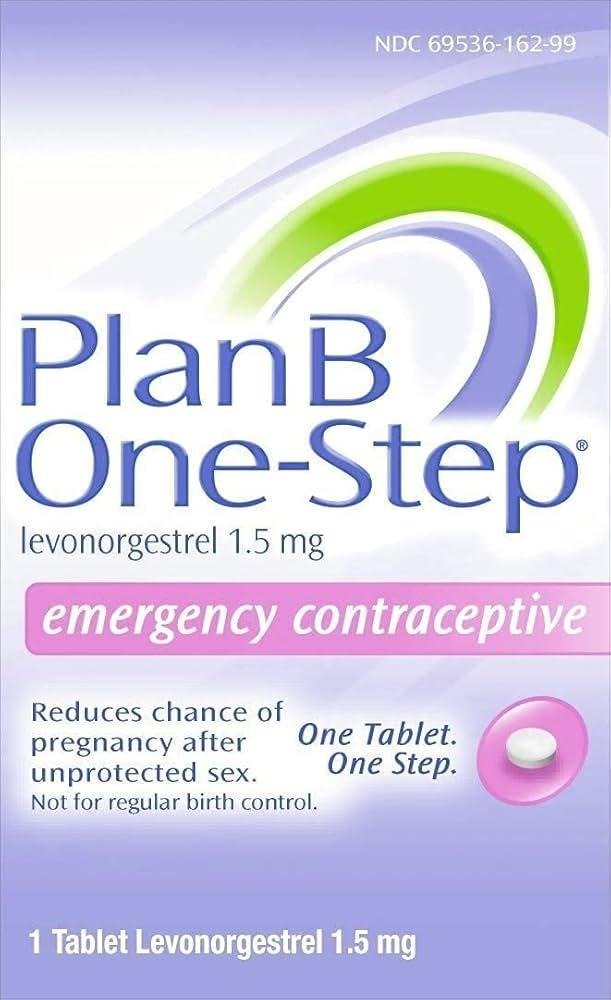
    • The Brand Name: The most common brand is Plan B One-Step, but there are many generic versions like Take Action, My Way, and Aftera that work the exact same way and are usually cheaper.
    • How it Works: It’s a single pill with a high dose of the hormone levonorgestrel (a type of progestin). 
    • The Time Window: You should take it as soon as possible. It can be taken up to 72 hours (3 days) after unprotected sex, but its effectiveness decreases with every passing hour.
    • Where to Get It: You can buy it over-the-counter at any pharmacy or drugstore. You do NOT need a prescription or an ID, and there is no age restriction.

    Important Note: Studies have shown that levonorgestrel-based EC pills may be less effective for individuals who weigh more than 165 pounds (75 kg). If this applies to you, the other options below are a better choice. [2]

    Option 2: The Other Morning-After Pill (Ulipristal Acetate)

    There is another type of EC pill that is more effective, especially if more time has passed or if you have a higher BMI.

    • The Brand Name: This pill is sold under the brand name ella®.
    • How it Works: It uses a different drug (ulipristal acetate) that is more effective at delaying ovulation, even closer to when it’s about to happen.
    • The Time Window: It is effective for up to 120 hours (5 days) after unprotected sex, with no decrease in effectiveness during that window.
    • Where to Get It: You need a prescription from a doctor or a health clinic to get ella®.

    Option 3: The Copper IUD (The Most Effective EC)

    This might be surprising, but the most effective form of emergency contraception is actually the copper IUD (Paragard).

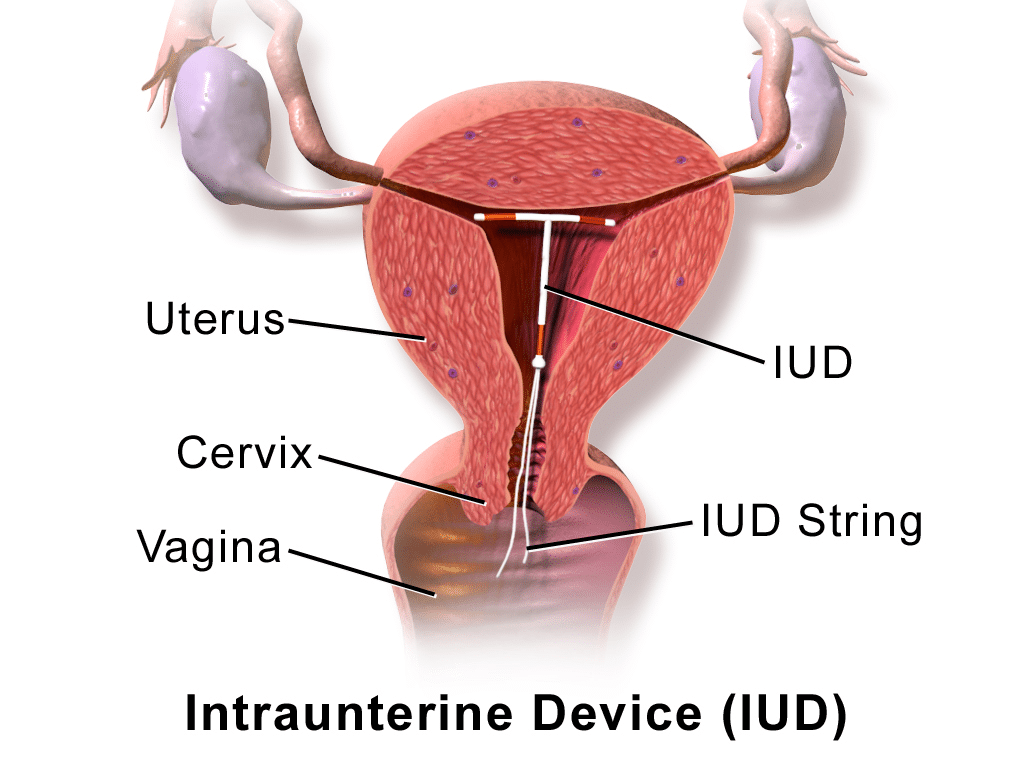
    • How it Works: A doctor inserts this small, hormone-free T-shaped device into your uterus. The copper is toxic to sperm and prevents fertilization.
    • The Time Window: It can be inserted up to 5 days after unprotected sex to prevent pregnancy. 
    • The Effectiveness: It is over 99.9% effective as emergency contraception. [1]
    • The Bonus: Once it’s in, you have a super-effective, hormone-free birth control method that can last for up to 10 years!

    Best for: Anyone who wants the most effective EC possible and is also interested in a long-term birth control method.

    What If I Missed My Regular Birth Control Pill?

    This is a super common scenario! Here’s a general guide, but you should always check the patient information leaflet that came with your specific pill pack.

    • If you missed ONE pill: Take the missed pill as soon as you remember, even if it means taking two pills in one day. Then continue taking the rest of your pack as usual. You generally don’t need emergency contraception.
    • If you missed TWO OR MORE pills: Take the most recent missed pill as soon as you remember and continue your pack as usual (discard the other missed pills). However, you should use a backup method (like condoms) for the next 7 days. If you had unprotected sex during this time, you should consider using emergency contraception.

    You Are in Control

    That moment of panic is real, but it doesn’t have to control you. Knowing your options is the first step to taking powerful, decisive action for your health.

    If you’re ever unsure what to do, don’t hesitate to call your doctor, a local health clinic like Planned Parenthood, or even talk to the pharmacist. They are there to help you without judgment.

    And remember to be kind to yourself. Accidents happen. The important thing is that you took care of yourself. You’ve got this.

    References

    [1] American College of Obstetricians and Gynecologists. (2022). Emergency Contraception. https://www.acog.org/womens-health/faqs/emergency-contraception

    [2] Glasier, A., et al. (2011). Can we identify women at risk of pregnancy despite using emergency contraception? Data from randomized trials of ulipristal acetate and levonorgestrel. Contraception, 84(4), 363-367. https://doi.org/10.1016/j.contraception.2011.02.009

  • Stressed Out? Why Your Period Might Be, Too

    Life is a lot sometimes. Between exams, work deadlines, relationship drama, and just trying to keep up, it’s easy to feel completely overwhelmed. You might notice that when you’re super stressed, you get more headaches, your sleep is a mess, and you’re snapping at everyone. But have you ever noticed that your period gets weird, too?

    Maybe it shows up late, or it doesn’t come at all. Maybe it’s much lighter or heavier than usual. It’s not a coincidence. Your menstrual cycle is like your body’s monthly report card, and it’s incredibly sensitive to stress.

    At CrampCare, we want to help you connect the dots between your mental health and your physical health. Understanding why your period gets thrown off by stress is the first step to managing it and showing your body some extra love when it needs it most.

    The Science, But Make It Simple: The Brain-Ovary Connection

    Think of your reproductive system as a team that needs clear communication to work properly. The coach is a part of your brain called the hypothalamus. It sends signals to another part of your brain (the pituitary gland), which then sends signals to your ovaries, telling them when to release the hormones (like estrogen) that lead to ovulation.

    This whole communication chain is called the HPO axis (Hypothalamic-Pituitary-Ovarian axis). It’s a delicate, finely-tuned system.

    Now, let’s add stress to the mix. When you’re stressed, your body goes into “fight or flight” mode and releases a flood of the stress hormone, cortisol. From a biological perspective, your body thinks you’re in danger—like you’re being chased by a tiger. In this state of emergency, your body decides that right now is not a great time to get pregnant. It needs to conserve all its energy for survival. [1]

    So, what does it do? Cortisol can directly interfere with the HPO axis, essentially telling the coach in your brain to stop sending signals. This can disrupt or even completely shut down the communication to your ovaries.

    How Stress Can Mess With Your Period

    When that brain-ovary communication gets staticky, a few things can happen:

    • Delayed Ovulation: Your body might put ovulation on hold until the stress passes. Since your period typically arrives about 14 days after you ovulate, delayed ovulation means a delayed period.
    • Anovulation (No Ovulation): If the stress is severe or long-lasting, your body might just skip ovulation altogether for that cycle. This can lead to a very long cycle or a missed period (this is called functional hypothalamic amenorrhea).
    • Irregular Cycles: You might find your cycle length is all over the place—one month it’s 28 days, the next it’s 40.
    • Worse PMS: Stress can also make your usual PMS symptoms, like cramps, mood swings, and fatigue, feel ten times worse.

    Finding Your Calm: How to Support Your Cycle

    You can’t just decide to “not be stressed.” But you can build a toolkit of strategies to help your body manage stress and feel safer, which allows your reproductive system to get back to its regular programming.

    This isn’t about adding more to your to-do list; it’s about finding small, sustainable ways to signal to your body that the tiger is gone.

    Your Stress-Busting Toolkit:

    • Mindful Movement: This isn’t about intense, punishing workouts. Think gentle, restorative activities like yoga, tai chi, or simply going for a walk in nature. Movement helps process stress hormones.
    • Breathwork: This is the fastest way to calm your nervous system. When you feel overwhelmed, try the “box breathing” technique: Inhale for 4 counts, hold for 4 counts, exhale for 4 counts, and hold for 4 counts. Repeat.
    • Prioritize Sleep: Sleep is when your body repairs itself. Aim for 7-9 hours of quality sleep per night. Try to create a relaxing bedtime routine, like reading a book or taking a warm bath.
    • Nourish, Don’t Restrict: When you’re stressed, your body needs fuel. This is not the time for a restrictive diet. Focus on regular, balanced meals with protein, healthy fats, and complex carbs to keep your blood sugar stable.

    Track Your Way to Understanding

    Sometimes, it’s hard to see the connection between a stressful week at work and a late period a few weeks later. This is where tracking your cycle becomes an act of self-care.

    By using an app like CrampCare to log not just your period, but also your daily stress levels, you can create a powerful map of your own body. You’ll be able to look back and see, “Oh, wow, my period was a week late after that crazy finals week.”

    This knowledge is empowering. It helps you anticipate these changes and reminds you to be extra gentle with yourself during stressful times. It transforms your cycle from a source of anxiety into a valuable source of information about your overall well-being.

    Your period is so much more than just a period. It’s a vital sign. Listen to what it’s telling you.

    References

    [1] Ranabir, S., & Reetu, K. (2011). Stress and hormones. Indian journal of endocrinology and metabolism, 15(1), 18–22. https://doi.org/10.4103/2230-8210.77573

  • Find Your Fit: A No-Stress Guide to Choosing Birth Control

    Let’s be real: choosing a birth control method can feel like a huge, overwhelming decision. There are so many options, so many opinions, and so much information to sift through. The pill? An IUD? What even is an IUD? It’s enough to make you want to just close all your browser tabs and give up.

    But here’s the thing: being in control of your reproductive health is one of the most empowering things you can do. And you don’t have to figure it out alone. Think of this as your friendly, no-judgment guide to the world of contraception. 

    At CrampCare, we want to give you the clear, simple facts so you can walk into a doctor’s office feeling confident and ready to have an informed conversation. Because the “best” birth control method is the one that’s best for you.

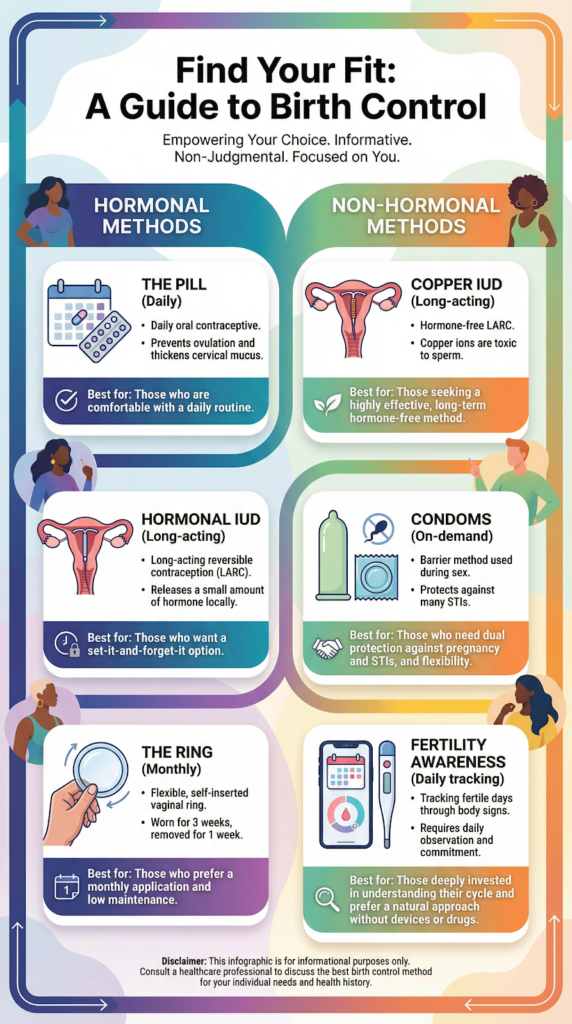
    The Two Big Teams: Hormonal vs. Non-Hormonal

    Most birth control methods fall into one of two categories. Understanding this is the first step to finding your fit.

    • Hormonal Methods use lab-made hormones (similar to the ones your body already makes) to prevent pregnancy, usually by stopping ovulation (the release of an egg).
    • Non-Hormonal Methods use other ways to prevent pregnancy, like creating a barrier or an environment where sperm can’t survive, without affecting your body’s natural hormone cycle.

    The Hormone Squad: Effective & Low-Maintenance

    These methods are super popular because they’re incredibly effective and can even help with things like heavy periods and cramps.

    The Superstars: IUDs & The Implant (aka LARCs)

    If you’re looking for a “set it and forget it” option, these are your MVPs. LARCs (Long-Acting Reversible Contraceptives) are the most effective methods out there—we’re talking over 99% effective. [1]

    • Hormonal IUDs (Mirena, Kyleena, etc.): A tiny, T-shaped device that a doctor places in your uterus. It releases a small amount of the hormone progestin to prevent pregnancy and can last for 3-8 years. Bonus: It often makes periods much lighter or even disappear altogether.
    • The Implant (Nexplanon): A tiny, flexible rod that’s inserted under the skin of your upper arm. It releases progestin and protects you from pregnancy for up to 5 years.

    Best for: Anyone who wants the most effective protection without having to think about it every day.

    The Routine Crew: The Pill, Patch & Ring

    These methods are also very effective, but they require you to remember to use them on a daily, weekly, or monthly basis. With perfect use, they’re great. With “typical” human use (because we all forget sometimes!), their effectiveness is closer to 93%. [1]

    • The Pill: The classic. You take one pill every single day.
    • The Patch: A sticker you wear on your skin that you change once a week.
    • The Ring: A small, flexible ring you insert into your vagina for three weeks at a time.

    Best for: People who are good with routines and want a method they can easily start and stop themselves.

    The Hormone-Free Zone: For a More Natural Vibe

    If you’d rather not use hormones, there are some fantastic and effective options for you, too.

    The Copper IUD (Paragard)

    This is the only hormone-free LARC, and it’s a powerhouse. It’s a small, T-shaped device wrapped in copper that a doctor places in your uterus. The copper creates an environment that’s toxic to sperm. It’s over 99% effective and can last for up to 10 years. The one downside? It can sometimes make periods heavier and more crampy, especially at first.

    Best for: Someone who wants a super-effective, long-term, hormone-free method and doesn’t mind their natural period.

    The On-Demand Defender: Condoms

    Don’t sleep on the condom! It’s a classic for a reason. When used correctly every time, condoms are a great way to prevent pregnancy. But their biggest superpower is that they are the only method that also protects you from Sexually Transmitted Infections (STIs). Because of this, it’s a great idea to use condoms even if you’re on another form of birth control.

    Best for: Everyone! Especially for STI protection, as a backup method, or if you’re not having sex regularly.

    How to Choose Your Fighter: A Vibe Check

    Feeling clearer? To narrow it down, ask yourself these questions:

    1. How important is effectiveness? If preventing pregnancy is your absolute top priority, a LARC like an IUD or the implant is your most reliable bet.
    2. Am I okay with hormones? Or would I prefer a hormone-free option?
    3. How much maintenance am I willing to do? Can I remember a pill every day, or do I need something I don’t have to think about?
    4. Do I need STI protection? If yes, condoms are your non-negotiable friend.

    You’re in the Driver’s Seat

    This guide is your starting point. The next step is to take this knowledge and have a conversation with a healthcare provider. They can talk to you about your personal health history and help you make the final choice.

    Remember, you can always change your mind. What works for you now might not be what you need in a few years, and that’s totally okay. This is your body, your health, and your choice.

    And if you choose a method that relies on understanding your cycle, like Fertility Awareness, an app like CrampCare can be an essential tool to help you track your signs with confidence. Knowledge is power, and you’ve got this.

    References

    [1] Centers for Disease Control and Prevention. (2023). Contraception. https://www.cdc.gov/reproductivehealth/contraception/index.htm

  • Could It Be? A Gentle Guide to the Earliest Signs of Pregnancy

    If you’re trying to conceive, there’s no time filled with more hope, anxiety, and obsessive symptom-spotting than the “two-week wait” (TWW). It’s the period between ovulation and when your next period is due, and every little twinge or flutter can have you wondering, “Is this it? Could I be pregnant?”

    This time can be an emotional rollercoaster. You’re hopeful, but you’re also scared to get your hopes up. You’re paying hyper-attention to your body, analyzing every single feeling. It’s completely normal, and you are not alone in this feeling.

    At CrampCare, we want to help you navigate this waiting game with a little more peace and a lot more facts. Let’s gently explore the earliest potential signs of pregnancy, while remembering to be kind to ourselves and manage our expectations.

    The Ultimate Tease: PMS vs. Pregnancy Symptoms

    Here’s the cruelest joke of the two-week wait: many of the earliest signs of pregnancy are almost identical to the symptoms of PMS. Why? Because they are both caused by the same hormone: progesterone. After ovulation, your progesterone levels rise to prepare your body for pregnancy. If you’re not pregnant, progesterone falls and your period starts. If you are pregnant, it continues to rise.

    This hormonal overlap means that breast tenderness, bloating, and moodiness can happen whether you’re about to get your period or you’ve just conceived. It’s confusing! That’s why it’s so important to see these signs as gentle clues, not definitive proof.

    Gentle Clues: The Earliest Signs of Pregnancy

    While every body is different, here are some of the most common signs that might pop up in those first few weeks.

    An infographic showing a hopeful woman surrounded by icons of early pregnancy symptoms like a missed period, breast tenderness, fatigue, and nausea.

    1. A Missed Period

    This is the most classic and reliable sign of all. If your period is usually pretty regular and it’s late, it’s a strong signal to take a pregnancy test. 

    2. Implantation Bleeding or Spotting

    About 6-12 days after conception, the fertilized egg attaches itself to the wall of your uterus. This can cause some light spotting, known as implantation bleeding. It’s usually much lighter and shorter than a normal period, often just a few pink or brownish spots. Not everyone experiences this, but if you do, it can be one of the earliest clues. [1]

    3. Tender, Swollen Breasts

    Ouch! Does your bra suddenly feel like a torture device? Sore, heavy, or tingly breasts are a very common early sign. This is due to those rising hormone levels preparing your body for what’s to come.

    4. Overwhelming Fatigue

    Does it feel like you could fall asleep at your desk? Bone-crushing fatigue is another hallmark of early pregnancy. Your body is working overtime to grow a tiny human, and your progesterone levels are soaring, which can act as a natural sedative. Listen to your body and rest!

    5. Nausea (aka “Morning Sickness”)

    That queasy feeling, with or without actual vomiting, can start surprisingly early for some. And despite its name, “morning sickness” can strike at any time of day. It’s thought to be caused by the rapid increase in pregnancy hormones.

    6. Frequent Urination

    Finding yourself running to the bathroom more often? Soon after you become pregnant, hormonal changes cause an increase in blood flow to your kidneys, causing them to produce more urine. 

    The Waiting Game: How to Stay Sane

    The two-week wait can feel like an eternity. The most important thing you can do during this time is to be compassionate with yourself.

    • Know that symptoms aren’t proof. Try not to read into every little twinge. Many women have all the “symptoms” and get their period, while others have zero symptoms and get a positive test.
    • Wait to test. It’s so tempting to test early, but home pregnancy tests are most accurate on or after the day of your missed period. Testing too early can lead to a false negative and unnecessary heartache.
    • Distract yourself. Plan some fun, low-key activities to keep your mind occupied. A movie night, a walk with a friend, or diving into a new book can work wonders.

    Your Body, Your Story

    No matter what you’re feeling, tracking your symptoms in an app like CrampCare can be incredibly helpful. It allows you to keep a clear record of what you’re experiencing and when, which can reduce the feeling of chaos. It helps you see patterns over time and provides a valuable log if you do get a positive test.

    Remember to breathe. This is a journey, and you are doing great. Whether this is your month or not, you are strong and resilient. Be gentle with your heart during this tender time.

    When the time is right—after a missed period or persistent symptoms—take a test. Until then, focus on taking care of you.

    References

    [1] American Pregnancy Association. (2022). What is Implantation Bleeding? https://americanpregnancy.org/pregnancy-symptoms/what-is-implantation-bleeding/

  • Ready for a Baby? Your Supportive Guide to Boosting Your Chances of Getting Pregnant

    Making the decision to start a family is a huge, exciting step! It’s a journey filled with hope, daydreams, and a whole lot of love. But it can also come with a lot of questions and a bit of pressure. You might be wondering, “Am I doing everything I can? How can I make this happen?”

    Trying to conceive (TTC) can feel like you’re navigating a whole new world, and it’s easy to get overwhelmed by all the advice out there. At CrampCare, we want to walk alongside you on this path, offering clear, supportive, and empowering advice to help you on your journey to parenthood.

    Let’s talk about the most effective ways to boost your fertility and increase your chances of seeing that positive test, one gentle step at a time.

    1. Timing is Everything: Get to Know Your Fertile Window

    If there’s one “secret” to getting pregnant, this is it. You can only conceive during a very specific time in your cycle known as the fertile window. This window is about 6 days long: the 5 days before you ovulate and the day you ovulate.

    Having sex during this window is the single most important thing you can do to increase your chances of getting pregnant. [1]

    So, how do you find this magic window? By becoming an expert on your own cycle. You can do this by tracking a few key signs:

    • Your Cycle Length: Helps you estimate when ovulation might happen.
    • Your Cervical Mucus: Changes to a clear, stretchy “egg white” consistency when you’re most fertile.
    • Your Basal Body Temperature (BBT): Spikes slightly right after ovulation, confirming it happened.

    This is where an app like CrampCare becomes your best friend. It takes the guesswork out of tracking and helps you pinpoint your most fertile days with confidence, so you can focus on the fun part!

    2. Nourish Your Body: The “Fertility Diet”

    Think of your body as a garden you’re preparing for a beautiful new seed. Creating a healthy, nourished environment is key. While there’s no magic food that guarantees pregnancy, a balanced, nutrient-rich diet supports your overall health and hormone function, which is crucial for fertility.

    Focus on these Fertility-Friendly Foods:

    • Leafy Greens: Spinach, kale, and broccoli are packed with folate, a B vitamin that’s essential for preventing birth defects and supporting reproductive health.
    • Healthy Fats: Avocados, nuts, seeds, and olive oil help regulate your hormones.
    • Lean Proteins: Think fish, chicken, beans, and lentils.
    • Complex Carbs: Brown rice, quinoa, and whole-wheat bread provide sustained energy without spiking your blood sugar.

    It’s also wise to limit things that can work against you, like excessive alcohol, smoking, and too much caffeine. [2]

    3. Move with Joy: Finding Your Exercise Sweet Spot

    Regular, moderate exercise is fantastic for fertility. It helps you maintain a healthy weight, reduces stress, and improves circulation. The key word here is moderate.

    This isn’t the time to train for a marathon or push yourself to the absolute limit. Over-exercising can actually stress your body and interfere with ovulation. Instead, focus on movement that feels good and energizes you.

    Great options include:

    • Brisk walking or hiking
    • Gentle yoga or Pilates
    • Dancing
    • Swimming

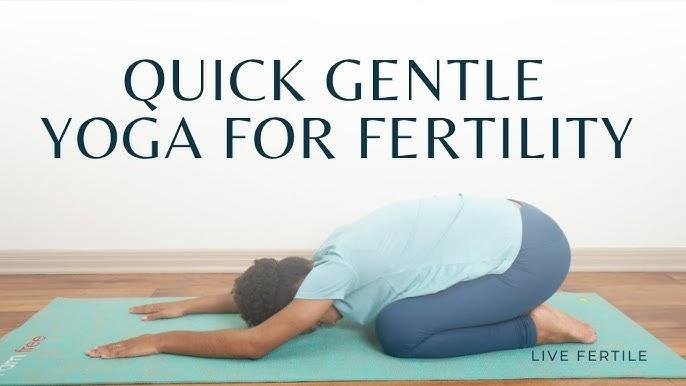
    Source: LIVE FERTILE

    4. Find Your Calm: Why Stress Matters

    The TTC journey can be stressful, which is a cruel irony because high levels of stress can mess with the hormones that control ovulation. Finding healthy ways to manage stress is not just good for your mental health—it’s good for your fertility, too.

    Try incorporating some of these into your routine:

    • Mindfulness or Meditation: Even 5-10 minutes a day can make a difference.
    • Deep Breathing: A simple tool you can use anytime, anywhere.
    • Journaling: Get your worries out of your head and onto paper.
    • Prioritizing Sleep: Aim for 7-9 hours of quality sleep per night.

    Be kind to yourself. This journey is a marathon, not a sprint.

    When to Get a Little Extra Help

    It’s also important to know when it might be time to talk to a professional. The general guidelines are:

    • If you are under 35 and have been actively trying for one year.
    • If you are over 35 and have been actively trying for six months.

    You should also consider seeing a doctor sooner if you have a history of very irregular periods, PCOS, endometriosis, or other known health issues.

    A doctor can help you explore your options and create a plan that’s right for you. Remember, seeking help is a sign of strength.

    You’ve Got This

    Embarking on the path to parenthood is a profound and personal experience. Be patient with your body, celebrate the small victories, and lean on your partner and support system.

    Let CrampCare be your trusted companion on this journey, helping you understand your body and feel empowered every step of the way. You are capable, you are strong, and you’ve got this.

    References

    [1] American Society for Reproductive Medicine. (2021). Fertility and Sterility: Optimizing natural fertility. https://www.fertstert.org/article/S0015-0282(16)62895-9/fulltext

    [2] American College of Obstetricians and Gynecologists. (2021). Evaluating Infertility. https://www.acog.org/womens-health/faqs/evaluating-infertility

  • Your Ultimate Guide to Predicting Ovulation & Finding Your Fertile Window

    Whether you’re thinking about starting a family someday, or you’re very much not trying to get pregnant right now, understanding your own fertility is like having a superpower. It’s the key to making informed decisions about your body and your future.

    But let’s be real: most of us weren’t taught how to do this. We learn that our period comes once a month, and that’s about it. The part in the middle—ovulation—is often a total mystery. When does it happen? How do I know?

    At CrampCare, we believe that fertility education is for everyone. Knowing when you’re fertile gives you the power to either achieve or avoid pregnancy. Let’s pull back the curtain and learn how to decode your body’s secret signals.

    First, What Is Ovulation & The Fertile Window?

    In simple terms, ovulation is the main event of your menstrual cycle. It’s the moment when one of your ovaries releases a mature egg. This egg then travels down the fallopian tube, where it can be fertilized by sperm.

    Here’s the catch: the egg only lives for about 12-24 hours. But sperm can live inside your body for up to 5 days! This means the time you can actually get pregnant—your fertile window—is about 6 days long. It includes the 5 days before ovulation and the day of ovulation itself.

    Nailing down this 6-day window is the whole game. So, how do you find it? Your body actually leaves you clues. You just have to know what to look for.

    Your Body’s 3 Big Ovulation Clues

    Think of yourself as a detective and your body as the scene of the crime. There are three main clues you can track to find out when you’re ovulating.

    Clue #1: Your Calendar (Cycle Tracking)

    This is the most well-known method, but it comes with a big asterisk. The basic idea is to use the length of your past cycles to predict your future fertile window.

    How it works: Ovulation typically happens about 14 days BEFORE your next period is due to start. This is a key point! It’s not 14 days after your last period ended. 

    • If you have a perfect 28-day cycle, you’ll likely ovulate around day 14.
    • If you have a longer 32-day cycle, you’ll likely ovulate around day 18.

    The catch: This method only gives you a rough estimate. It works best if your cycles are super regular. If your cycle length varies, the calendar method alone can be unreliable.

    Clue #2: Your Cervical Mucus (Your Body’s Secret Signal)

    This might sound a little weird, but checking your cervical mucus is one of the most reliable ways to spot your fertile window in real-time. This fluid changes throughout your cycle to either help or block sperm.

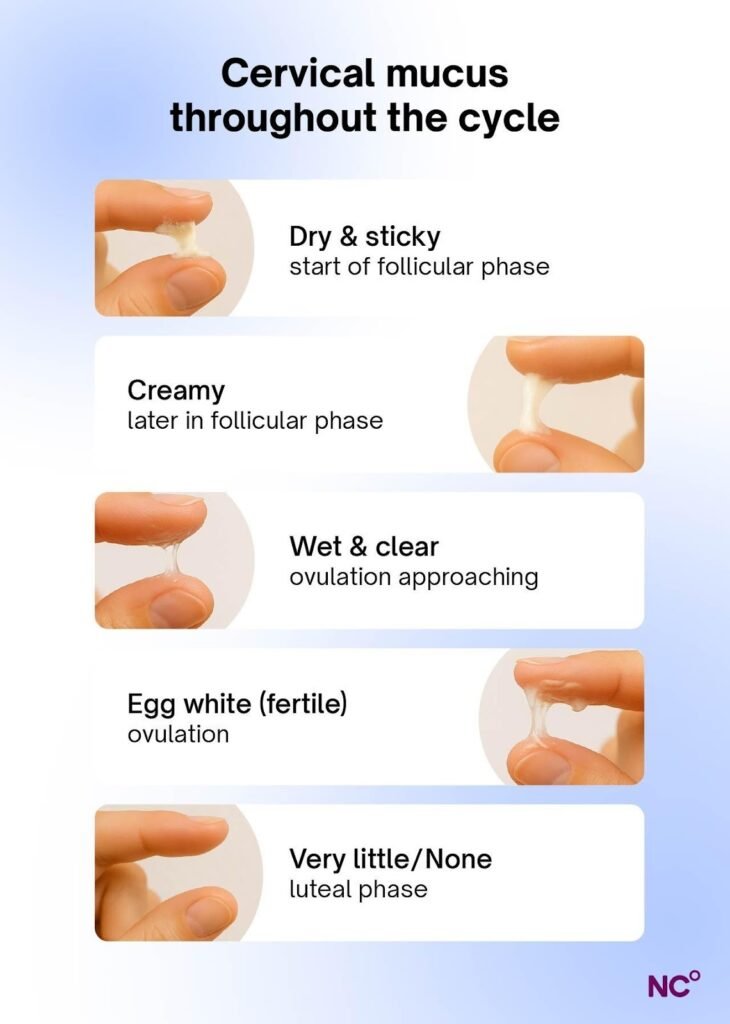
    How it works: After your period, you’ll likely be dry for a few days. As you get closer to ovulation, your estrogen levels rise, and you’ll start to notice more mucus. It will go through a few stages:

    1. Sticky or Gummy: Like paste.
    2. Creamy or Lotion-y: White or yellowish, like hand lotion.
    3. Egg White (The Main Event!): Right before and during ovulation, your mucus will become clear, slippery, and super stretchy—just like raw egg whites. This is your body’s green light for fertility! This “egg white” mucus helps sperm swim and stay alive. [1]

    Once you see egg white cervical mucus, you know you are in your fertile window.

    Clue #3: Your Basal Body Temperature (BBT)

    Your Basal Body Temperature (BBT) is your body’s temperature when you’re fully at rest. By tracking this temperature every morning, you can confirm when ovulation has already happened.

    How it works: You’ll need a special BBT thermometer that measures in tiny increments. You must take your temperature at the exact same time every morning, before you even sit up in bed, talk, or check your phone.

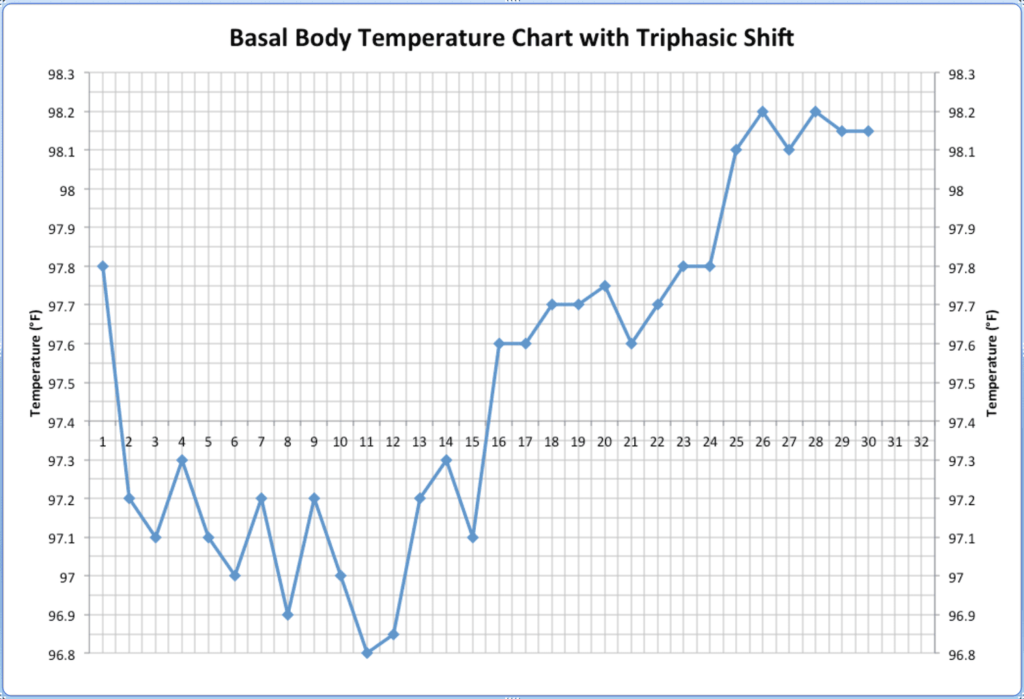
    • In the first half of your cycle, your BBT will be relatively low.
    • After you ovulate, the hormone progesterone causes your temperature to spike up by about 0.5 to 1.0 degrees Fahrenheit (about 0.3 to 0.6 degrees Celsius). It will stay elevated until your next period. [2]

    The catch: BBT charting doesn’t predict ovulation in advance; it confirms it after the fact. This makes it more useful for understanding your cycle patterns over time or confirming if you ovulated, rather than for timing intercourse in the moment.

    The Power Trio: Putting It All Together

    While each of these methods gives you a piece of the puzzle, using them together is the most accurate way to pinpoint your fertile window. 

    • Your calendar gives you a heads-up for when to start paying closer attention.
    • Your cervical mucus tells you in real-time when your fertile window has opened.
    • Your BBT confirms that ovulation happened, helping you understand your cycle’s length and rhythm.

    The Easy Button: Let CrampCare Do the Work

    Feeling a little overwhelmed? That’s totally normal. Tracking all these signs can feel like a part-time job. But that’s where technology comes in.

    Using an app like CrampCare simplifies everything. You can log your period dates, your cervical mucus consistency, and your daily BBT all in one place. The app’s algorithm does the heavy lifting, analyzing your unique data to give you a clear prediction of your fertile window and ovulation day.

    It takes the guesswork out of the equation and turns you into the ultimate expert on your own body. Whether your goal is to get pregnant or prevent it, knowledge is power.

    Ready to unlock your fertility superpower? Download CrampCare and start tracking your cycle with confidence today.

    References

    [1] American College of Obstetricians and Gynecologists. (2021). Fertility Awareness-Based Methods of Family Planning. https://www.acog.org/womens-health/faqs/fertility-awareness-based-methods-of-family-planning

    [2] Ecochard, R., Duterque, O., Leiva, R., & Bouchard, T. (2015). Self-identification of the clinical fertile window and the ovulation period. Fertility and sterility, 103(5), 1319–1325.e3. https://doi.org/10.1016/j.fertnstert.2015.01.031

  • PMS or PMDD? When Your Period Mood Swings Are More Than Just a Bad Mood

    We all know the jokes about PMS. The craving for chocolate, the teary-eyed movie nights, the short temper. For many of us, Premenstrual Syndrome is a familiar, if unwelcome, monthly visitor. It’s a few days of feeling a bit off, crampy, and moody before things go back to normal.

    But what if it’s more than that? What if, for you, the week before your period feels like a dark cloud descends, making it impossible to function? What if it’s not just a “bad mood,” but a deep, overwhelming sadness or rage that strains your relationships and makes you feel like you’re losing your mind? 

    If this sounds familiar, you might be dealing with something more than standard PMS. You could be experiencing Premenstrual Dysphoric Disorder (PMDD), a serious medical condition that is often misunderstood. At CrampCare, we want to help you understand the difference. Knowing what you’re dealing with is the first, most powerful step toward getting the right help.

    PMS is a Rain Cloud. PMDD is a Thunderstorm.

    Let’s think of it this way. PMS is like having a personal rain cloud follow you around for a few days. It’s annoying, gloomy, and might make you want to stay inside with a cup of tea, but you can still get through your day. 

    PMDD, on the other hand, is a full-blown thunderstorm raging inside you. It’s debilitating. The wind, the lightning, the downpour—it makes it feel impossible to leave the house or even function.

    An illustration comparing PMS (a woman under a small rain cloud) to PMDD (a woman under a raging thunderstorm).

    What is PMS (Premenstrual Syndrome)?

    PMS is a collection of physical and emotional symptoms that many people experience 1-2 weeks before their period. It’s caused by the normal hormonal shifts of your cycle. Symptoms are usually mild to moderate and can include:

    • Moodiness and irritability
    • Feeling a bit sad or anxious
    • Bloating and breast tenderness
    • Cravings and fatigue

    While annoying, PMS symptoms usually don’t stop you from living your life. You can still go to school, hang out with friends, and do the things you need to do.

    What is PMDD (Premenstrual Dysphoric Disorder)?

    PMDD is a severe, life-disrupting hormone-based mood disorder. It is NOT “bad PMS.” It’s a diagnosable medical condition that affects about 3-8% of people with menstrual cycles. [1] With PMDD, the emotional symptoms are the main event and are so severe they can damage your relationships, career, and quality of life. 

    The core symptoms of PMDD include at least one of the following, starting the week before your period and ending when it starts:

    • Severe depression, hopelessness, or even suicidal thoughts.
    • Intense anxiety, tension, or feeling constantly on edge.
    • Extreme mood swings, like suddenly feeling very sad or angry for no reason.
    • Persistent anger or irritability that affects your relationships.

    Along with at least one of those, you would also experience other PMS-like symptoms, but at a much higher intensity.

    How Do I Know If I Have It? A Quick Vibe Check

    Ask yourself these questions about the week or two before your period:

    1. Does my mood interfere with my life? Does your sadness or irritability make it hard to function at work or school? Have you gotten into fights with loved ones that you later regret?
    2. Do I feel like a “different person”? Do you feel out of control of your emotions, like you’ve been hijacked by someone else?
    3. Do I feel hopeless? Do you experience feelings of deep sadness, despair, or worthlessness?
    4. Does it go away? Do these intense symptoms magically disappear within a day or two of your period starting, leaving you feeling like yourself again?

    If you answered “yes” to these questions, it is a strong sign that you should talk to a doctor about the possibility of PMDD.

    A woman looking overwhelmed and distressed, holding her head in her hands.

    Your Secret Weapon: Tracking Your Symptoms

    Here’s the tricky part about diagnosing PMDD: you can’t get a blood test for it. A diagnosis is made based on your symptoms and, most importantly, their timing. To get a diagnosis, a doctor will need to see that your symptoms are specifically tied to the premenstrual phase of your cycle. 

    This is why tracking your symptoms is not just helpful—it’s essential

    Using an app like CrampCare to log your mood and symptoms every day for at least two full cycles is the single most important thing you can do. When you go to the doctor, you won’t just be saying, “I feel crazy before my period.” You’ll be showing them a chart that says, “For the past two months, I have experienced severe anxiety and hopelessness starting on day 20 of my cycle, which resolved on day 2 when my period began.”

    This data is your proof. It’s your power. It helps a doctor take you seriously and get you the right diagnosis and treatment, which might include therapy, SSRI antidepressants, or other medical interventions. [2]

    You Are Not Alone, and There Is Hope

    If you think you might have PMDD, please hear this: You are not broken. You are not “too sensitive.” You are not making it up. You have a real medical condition, and there is real help available.

    Talking about it is the first step. Talk to a doctor. Talk to a trusted friend. You don’t have to navigate this thunderstorm alone. 

    Ready to start gathering the data that can change your life? Download CrampCare today and begin tracking your symptoms. It’s the first step on the path to feeling like yourself again, all month long.

    References

    [1] International Association for Premenstrual Disorders (IAPMD). (n.d.). What is PMDD? https://iapmd.org/about-pmdd

    [2] Reid, R. L., & Soares, C. N. (2018). Premenstrual Dysphoric Disorder: Contemporary Diagnosis and Management. Journal of obstetrics and gynaecology Canada, 40(2), 215–223. https://doi.org/10.1016/j.jogc.2017.05.018