Category: Biology & hormones

  • It’s Not Just You: Why Your Period Makes You Feel Sad, Anxious, and Moody

    Does this sound familiar? You’re having a totally normal week, and then suddenly, out of nowhere, you feel a wave of sadness. You snap at your best friend for no reason. You start crying over a commercial. You feel a knot of anxiety in your stomach that just won’t go away. You check your calendar and… yup. Your period is due in a few days.

    If you feel like you become a completely different person in the week before your period, you are not imagining things, and you are definitely not alone. The emotional rollercoaster of Premenstrual Syndrome (PMS) is real, and for some, it can be just as tough as the physical cramps. 

    At CrampCare, we believe understanding your body is the first step to feeling better. So let’s talk about why this happens and remind you that it’s not your fault—it’s biology.

    Your Brain on PMS: The Hormone Rollercoaster

    So, why do you feel on top of the world one week and down in the dumps the next? The short answer: hormones. Specifically, the dramatic hormonal shifts that happen during the second half of your menstrual cycle (this is called the luteal phase).

    Think of your cycle as having two main hormonal players: estrogen and progesterone.

    • In the first half of your cycle, estrogen is on the rise, which can make you feel more energetic and confident.
    • After you ovulate (release an egg), estrogen takes a nosedive while progesterone rises to prepare your body for a potential pregnancy.

    This hormonal shift is where things can get tricky. This drop in estrogen, combined with the rise and eventual fall of progesterone right before your period, can have a major impact on your brain chemistry. 

    Specifically, it messes with your levels of serotonin—you might know it as the “happy chemical.” Serotonin helps regulate your mood, sleep, and appetite. When your serotonin levels dip, it can leave you feeling sad, irritable, anxious, and craving all the carbs. [1]

    So, when you feel that pre-period gloom, it’s not a character flaw. It’s a biological response to a very real chemical change in your brain.

    When Is It More Than Just PMS?

    For most people, PMS is a few days of feeling a bit off. But for some, the emotional symptoms are severe and can seriously impact their life, relationships, and mental health. If this sounds like you, you might be experiencing Premenstrual Dysphoric Disorder (PMDD).

    PMDD is like PMS’s much more intense older sister. It’s a medical condition characterized by severe depression, anxiety, and irritability that starts a week or two before your period and goes away once it starts. If your mood symptoms feel completely unmanageable, it is essential to talk to a doctor. You are not being “dramatic”—you may have a condition that requires and deserves treatment. [2]

    How to Cope When You’re Feeling Low

    Knowing the why is helpful, but you also need tools to get through it. While you can’t stop the hormone rollercoaster, you can learn to ride it more smoothly.

    1. Be Radically Kind to Yourself: This is rule number one. You are not a bad person for feeling irritable or sad. Your body is doing a lot of work. Give yourself permission to feel your feelings and rest. Cancel plans if you need to. Your well-being comes first.

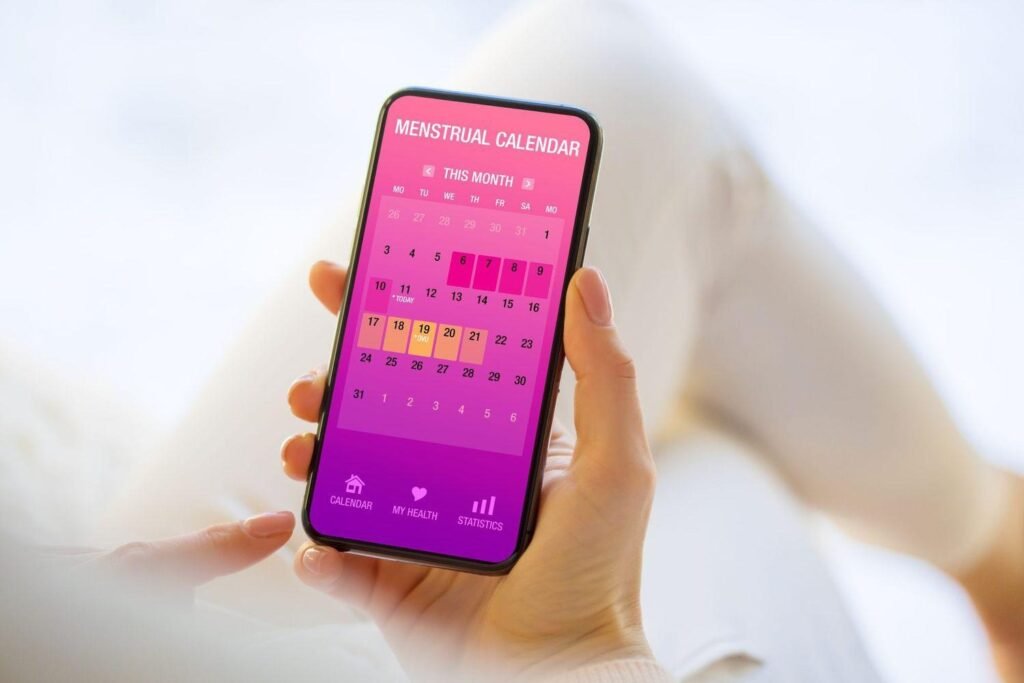
    2. Track Your Mood: This is a total game-changer. When you track your emotional symptoms in an app like CrampCare, you start to see the pattern. Knowing why you’re suddenly feeling anxious can take away its power. You can look at your phone and say, “Oh, okay. I’m three days away from my period. This feeling is temporary. It’s my hormones, not me.” This simple act can help you feel so much more in control.

    3. Move Your Body (Gently): Even though you might want to stay in bed, gentle movement like walking, stretching, or a chill yoga class can boost your serotonin levels and help lift your mood.

    4. Feed Your Brain: Cravings are real, but try to reach for snacks that will help you, not lead to a sugar crash. Complex carbs like oatmeal or a banana can give your serotonin a little boost. And don’t forget to drink lots of water!

    5. Talk It Out: Let a trusted friend or your partner know that you’re in your pre-period phase and might be more sensitive. Just saying it out loud can make a huge difference.

    Your emotional health is just as important as your physical health. By understanding the connection between your mood and your cycle, you can learn to navigate it with more compassion for yourself.

    Ready to start understanding your body’s unique patterns? Download CrampCare and begin tracking your cycle and your mood today. You’ve got this.

    References

    [1] Yonkers, K. A., O’Brien, P. M. S., & Eriksson, E. (2008). Premenstrual syndrome. The Lancet, 371(9619), 1200-1210. https://www.thelancet.com/journals/lancet/article/PIIS0140-6736(08)60527-9/fulltext

    [2] American Psychiatric Association. (2013). Diagnostic and statistical manual of mental disorders (5th ed.). https://dsm.psychiatryonline.org/doi/book/10.1176/appi.books.9780890425596
  • Your Period Problems Are Real. Here’s When to See a Doctor.


    We’re taught to just “deal with” our periods. We learn to push through the pain, manage the bleeding, and accept that our bodies are just going to do their own thing. But what if “dealing with it” means missing out on life? What if your period problems feel like more than just a monthly inconvenience?

    It can be really hard to know what’s “normal” and what’s a sign that you should get help. We often downplay our own pain or assume everyone feels the way we do. 

    At CrampCare, we want you to know one thing: your pain is valid, and you don’t have to suffer in silence. Knowing when to raise your hand and ask for help is a superpower. Let’s go over the key signs that mean it’s time to check in with a doctor.

    The “When to Worry” Checklist

    Think of this as your guide to listening to your body. If any of these sound familiar, it’s a good reason to make an appointment.

    1. Your Pain is Next-Level

    We’re not talking about the usual, annoying cramps that a heating pad can fix. We’re talking about pain that stops you in your tracks.

    See a doctor if:

    • Your period pain is so bad you regularly have to miss school, work, or social events.
    • Over-the-counter pain meds like ibuprofen (Advil) or naproxen (Aleve) barely make a dent.
    • The pain has been getting worse over time.
    • You have significant pain even when you’re not on your period.

    This kind of severe pain isn’t something you just have to live with. It could be a sign of a condition like endometriosis or fibroids, and there are treatments that can help. [1]

    2. Your Bleeding is Super Heavy

    What’s a “heavy” flow? It can be subjective, but there are some clear signs that your bleeding is more than average.

    See a doctor if:

    • You have to change your pad or tampon every hour for several hours in a row.
    • You have to wake up at night to change your protection.
    • Your period consistently lasts longer than 7 days.
    • You pass blood clots that are bigger than a quarter.

    Extremely heavy bleeding (the medical term is menorrhagia) can lead to anemia, which can make you feel tired and weak. It’s also a common sign of underlying issues that a doctor can help you manage. [2]

    3. Your Cycle is All Over the Place

    As we’ve said before, a perfect 28-day cycle is a myth. But a cycle that’s consistently unpredictable is worth looking into.

    See a doctor if:

    • Your cycles are always shorter than 21 days or longer than 35 days.
    • You go more than 3 months (90 days) without getting a period (and you know you’re not pregnant).
    • Your cycle length suddenly changes dramatically and stays that way for a few months.
    • You bleed or spot between your periods.

    Irregular cycles can sometimes be the first sign of a hormonal imbalance, like with Polycystic Ovary Syndrome (PCOS) or a thyroid condition.

    How to Talk to Your Doctor and Be Heard

    Okay, so you’ve decided to make an appointment. Awesome! The next step is to prepare so you can have the best possible conversation. Unfortunately, some doctors can be dismissive of period pain, so walking in with clear information is your best strategy.

    1. Come with Data: This is your secret weapon. Instead of just saying “my periods are bad,” you can say “For the last four months, I’ve had debilitating pain for the first two days of my period, and I’ve had to miss two days of work each time.” See the difference? 

    2. Track Everything: This is where an app like CrampCareis a lifesaver. Before your appointment, use it to track:
        *   The start and end dates of your period.
        *   Your pain levels each day (a 1-10 scale is great).
        *   How heavy your flow is (light, medium, heavy).
        *   Any other symptoms (like clots, bloating, mood swings, or pain with sex).
        *   What you did to try and manage the pain (meds, heat, etc.) and whether it helped.

    3. Have Your Questions Ready:Write down a few key questions you want to ask. For example:
        *   “Based on my symptoms, could this be more than just normal period pain?”
        *   “What tests could we do to find out more?”
        *   “What are my treatment options besides birth control?”

    Walking into a doctor’s office with a detailed log from your CrampCare app changes the conversation. It shows you’re serious and gives your doctor concrete evidence to work with. You are the expert on your body; the data just helps you prove it.

    Don’t let anyone tell you it’s “just a bad period.” If your cycle is controlling your life, you deserve answers. Take that first step, talk to a doctor, and start your journey to feeling better.

    References

    [1] American College of Obstetricians and Gynecologists. (2022). Dysmenorrhea: Painful Periods. https://www.acog.org/womens-health/faqs/dysmenorrhea-painful-periods

    [2] Centers for Disease Control and Prevention. (2022). Heavy Menstrual Bleeding. https://www.cdc.gov/ncbddd/blooddisorders/women/menorrhagia.html

  • Your Period Blood Color: What It’s Trying to Tell You


    Okay, let’s talk about something we all do but maybe don’t talk about: looking at our period blood. It might seem a little weird, but it’s actually one of the coolest and easiest ways to check in with your health. The color and texture of your flow can give you clues about what’s going on inside your body.

    But what does it all mean? Is brown blood bad? Are clots normal? It can be confusing, and let’s be honest, Google can be a scary place. At CrampCare, we’re here to give you the straight facts, no drama. Consider this your friendly guide to decoding your flow.

    The Official Period Blood Color Decoder

    Your period blood can change colors from day to day, and most of the time, it’s totally normal. It all comes down to how long the blood has been in your uterus and exposed to oxygen. The longer it’s been hanging out, the darker it gets.

    An infographic showing what different period blood colors mean.

    Source: Livi

    If it’s Bright Red…

    What it looks like: Think cranberry red.

    What it means: This is fresh blood that’s moving out of your body quickly. You’ll probably see this on the heaviest days of your period when your flow is steady. 

    The verdict: Totally normal and a sign of a healthy, active flow.

    If it’s Dark Red, Brown, or Black…

    What it looks like: The color of wine, coffee grounds, or dark chocolate.

    What it means: This is older blood. It’s been sitting in your uterus for a little longer and has had time to react with oxygen, which makes it turn darker. You’ll often see this at the very beginning or very end of your period when your flow is slower.

    The verdict: Super normal. Don’t panic if you see brown or black blood on your pad or in the toilet.

    If it’s Pink…

    What it looks like: A very light, rosy shade.

    What it means: Pink period blood is usually just blood that’s mixed with your normal cervical fluid, which can dilute its color. You might see this on your lightest flow days. Sometimes, it can also be a sign of low estrogen levels, but for the most part, it’s nothing to worry about.

    The verdict: Usually normal, especially if it’s just light spotting.

    If it’s Orange…

    What it looks like: A rusty, orangey tint.

    What it means: Like pink blood, this can also be blood mixed with cervical fluid. However, if it’s accompanied by a bad smell or itching, it could be a sign of an infection, like bacterial vaginosis (BV) or trichomoniasis. 

    The verdict: Keep an eye on it. If it’s just the color, you’re likely fine. If you have other symptoms, it’s time to call a doctor.

    If it’s Gray…

    What it looks like: A grayish, dull color.

    What it means: Gray discharge is definitely a sign to call your doctor. It’s almost always a symptom of an infection like bacterial vaginosis. [1]

    The verdict: Not normal. Make an appointment to get it checked out.

    What’s the Deal with Blood Clots?

    Seeing a jelly-like blob in your period blood can be alarming, but small clots are a totally normal part of your period. 

    Your body produces natural anticoagulants (things that stop blood from clotting) to help your uterine lining flow out smoothly. But when your flow is heavy, sometimes those anticoagulants can’t keep up, and small clots form. 

    An infographic showing different period blood consistencies, including clots.

    When are clots normal? If they are small, around the size of a dime, and only show up on your heaviest days.

    When should I be concerned? If you are consistently passing clots that are larger than a quarter. This could be a sign of a very heavy flow (menorrhagia) or another condition like uterine fibroids, and it’s worth discussing with your doctor. [2]

    Your Body, Your “Normal”

    The most important thing is to get to know what’s normal for you. Your period is like your body’s monthly report card, and tracking it is the best way to read it.

    When you use an app like CrampCare to log the color and consistency of your flow, you’re creating a personal health record. You’ll start to notice your own patterns—like how your period always starts with a day of brown blood, or that you only get small clots on day two.

    This information is powerful. It helps you stop worrying about normal changes and gives you clear evidence if something is truly off. Having that data on your phone makes it so much easier to talk to a doctor and show them exactly what’s been going on.

    Ready to become an expert on your own body? Download CrampCare and start tracking your flow today!

    References

    [1] Cleveland Clinic. (2022). Vaginal Discharge. https://my.clevelandclinic.org/health/symptoms/4719-vaginal-discharge

    [2] Mayo Clinic. (2022). Menorrhagia (heavy menstrual bleeding). https://www.mayoclinic.org/diseases-conditions/menorrhagia/symptoms-causes/syc-20352829

  • Is My Period Normal? Why Your Cycle Can Be Early or Late

    We’ve all been there. You’re staring at the calendar, doing the mental math, and a wave of panic hits you. “Wait… is my period late?” Or maybe it shows up a week early, completely uninvited, and messes up your plans. It’s enough to make anyone feel anxious and wonder, “Is my body okay? Is this normal?”

    Here’s the good news: a perfectly predictable, 28-day cycle is more of a myth than a reality for most of us. Your body isn’t a clock! A little variation is totally normal. At CrampCare, we want to help you ditch the anxiety and get to know your own unique rhythm. Let’s talk about what a “normal” cycle really is and why it can sometimes go off-script.

    What Does a “Normal” Menstrual Cycle Actually Mean?

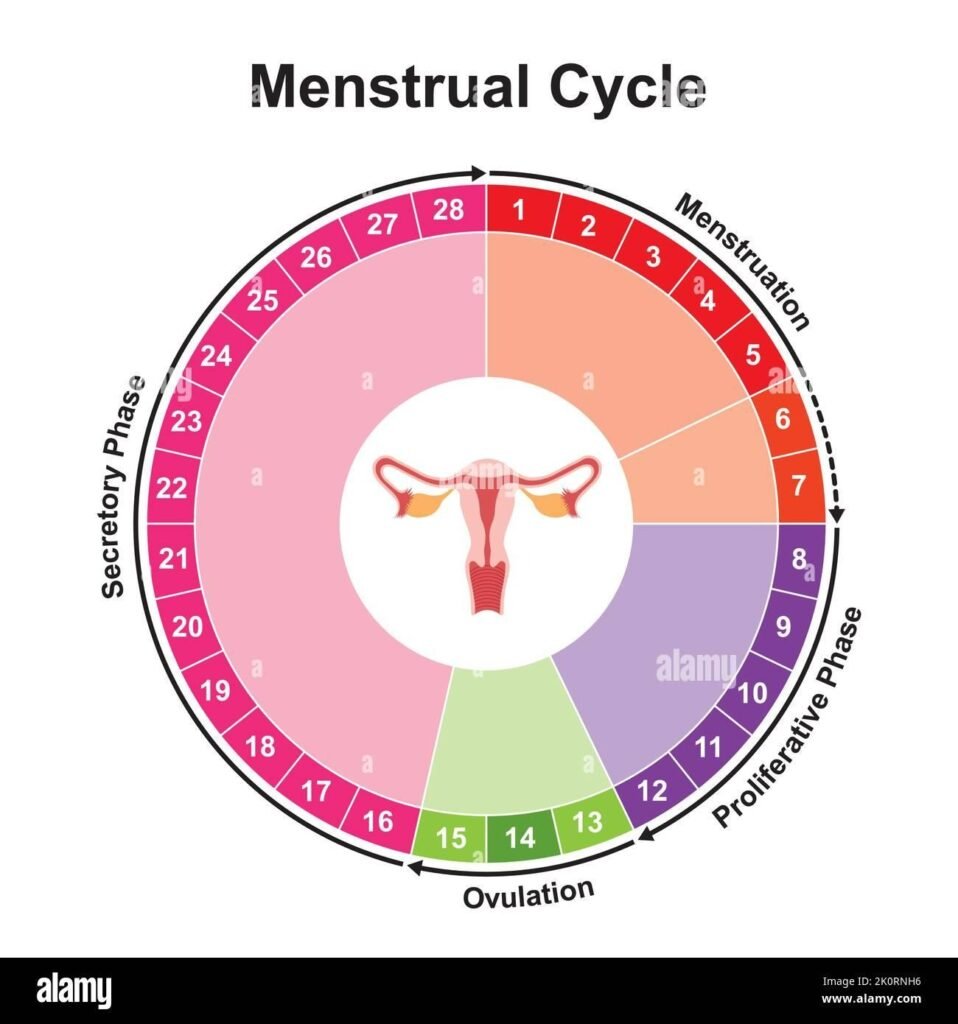
    First, let’s clear something up. Your menstrual cycle is the entire process from the first day of one period to the first day of the next. The bleeding part is just one phase of the cycle.

    When you hear the number “28 days,” that’s just an average. A textbook number. In reality, a normal, healthy menstrual cycle for an adult can be anywhere from 21 to 35 days long. [1] For teenagers who have just started getting their periods, it can be even more all over the place, sometimes ranging from 21 to 45 days.

    So, if your cycle is 25 days one month and 31 days the next, that doesn’t automatically mean something is wrong. It’s also normal for the length of your period (the number of days you bleed) to vary, usually lasting anywhere from 2 to 7 days.

    Think of it less like a fixed schedule and more like a rhythm. Your body has its own beat, and the goal is to learn what’s normal for you.

    Source: alamy

    So, Why Is My Period Early or Late?

    Your menstrual cycle is run by a complex team of hormones. These hormones are sensitive and can be thrown off by all sorts of things. If your period shows up unexpectedly early or keeps you waiting, it’s usually because something has nudged your hormones off their usual track. Here are some of the most common culprits:

    1. Stress (The Big One)

    If there’s one thing that can mess with your cycle, it’s stress. When you’re stressed out—whether it’s from exams, a new job, or relationship drama—your body produces a hormone called cortisol. This “stress hormone” can interfere with the hormones that run your menstrual cycle, sometimes delaying ovulation (when your body releases an egg). If ovulation is late, your period will be too.

    2. Changes in Your Routine

    Your body loves a routine. When you change things up, it can take a minute for your cycle to adjust.

    • Travel: Crossing time zones can mess with your internal body clock (your circadian rhythm), which can temporarily confuse your cycle hormones.
    • Sleep Schedule: Pulling all-nighters or suddenly switching to a night shift can also have an impact.
    • Diet or Exercise: A sudden change in what you’re eating or a new, intense workout routine can put stress on your body and cause your period to be early or late.

    3. Sickness

    Being sick with something like the flu can put stress on your body, which, as we know, can delay your period. It’s your body’s way of saying, “Hey, we’ve got bigger things to deal with right now, let’s put this on hold!”

    4. Weight Changes

    Significant changes in your weight, whether it’s gaining or losing, can affect your hormones and cause your cycle to become irregular.

    When Should I Be Concerned?

    While occasional changes are normal, there are times when an irregular cycle is a sign that you should check in with a doctor. Here are a few things to watch out for:

    • Your cycles are consistently shorter than 21 days or longer than 35 days.
    • You miss a period for more than 90 days (and you’re not pregnant).
    • Your period suddenly becomes super heavy or painful.
    • You have bleeding or spotting between your periods.

    These could be signs of a health condition like Polycystic Ovary Syndrome (PCOS) or a thyroid issue, so it’s always best to get it checked out.

    Get to Know Your Flow with CrampCare

    The best way to stop worrying about your cycle is to understand it. And the best way to understand it is to track it!

    When you track your period using an app like CrampCare, you’re not just logging dates. You’re collecting data about your unique body. Over time, you’ll start to see what your normal looks like. You’ll be able to see if your cycle is usually 29 days, or if it tends to be longer when you’re stressed.

    This knowledge is empowering. It helps you know when to expect your period, understand your body’s signals, and recognize when something is truly off. Instead of panicking, you’ll have the data to know if it’s just a normal blip or if it’s time to talk to a doctor.

    Ready to stop guessing and start understanding? Download CrampCare and start tracking your cycle today. Your peace of mind is worth it.

    References

    [1] American College of Obstetricians and Gynecologists. (2021). Your First Period (Especially for Teens). https://www.acog.org/womens-health/faqs/your-first-period

  • Period Pain Sucks. But Are Your Cramps Normal? Here’s How to Tell.

    Let’s be real: for millions of us, getting our period means gearing up for a few days of pain. You’re probably a pro at grabbing a heating pad, taking some ibuprofen, and just trying to get through it. But have you ever laid there wondering, “Should it really hurt this much?”

    While some cramping is totally part of the deal, pain that makes you cancel plans or call out sick from school or work is not. Figuring out the difference is your first step to feeling better and taking control of your health. At CrampCare, we’re all about giving you the info you need, so let’s talk about what’s actually going on with cramps and when it might be time to ask for help.

    So, What’s Behind “Normal” Period Cramps?

    If your cramps show up a day or two before your period and stick around for the first few days of bleeding, you’re probably dealing with what doctors call primary dysmenorrhea. That’s just a fancy term for the usual, common cramps that aren’t a sign of a bigger health problem. But why do they happen?

    The main reason? Tiny things in your body called prostaglandins. [1]

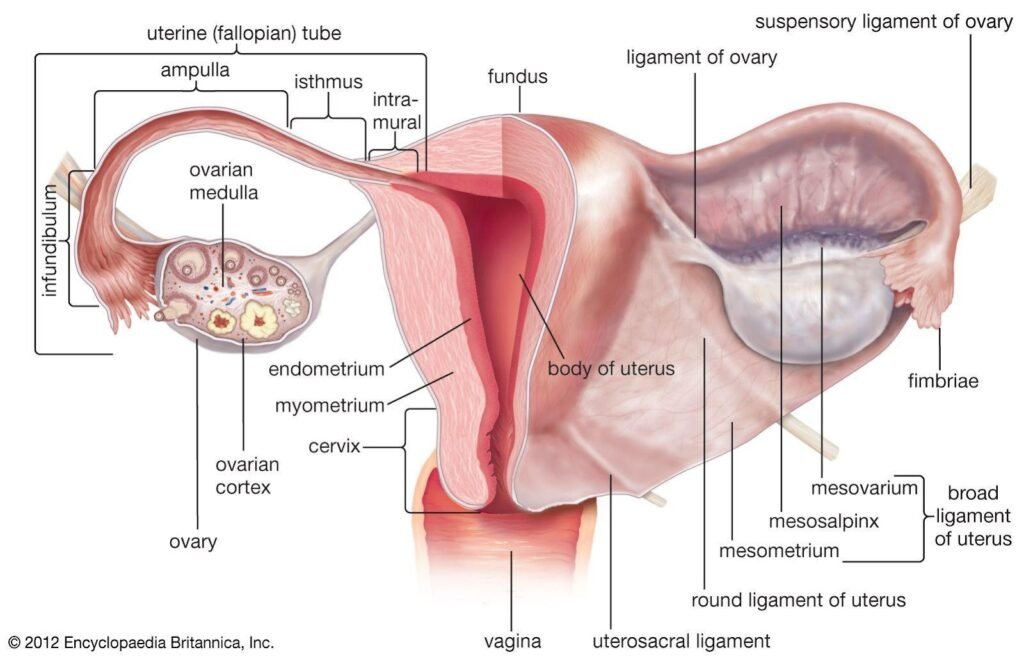
    Think of them like little messengers. Right before your period, your body sends out a ton of these messengers. Their job is to tell your uterus (the muscular organ where a baby can grow) to squeeze and contract to push out its lining, which comes out as your period. A little squeezing is normal, but when your body sends out too many prostaglandins, it’s like your uterus is getting squeezed way too hard and too often. That’s what causes those intense cramps. These squeezes can even cut off the oxygen supply to the muscle for a second, which also causes pain that you might feel in your lower back and thighs.

    For most of us, this pain is annoying but manageable, and it usually gets better after the first day or two of our period when the number of those little messengers goes down.

    When It’s More Than Just Cramps

    If your period pain is so bad that it makes you want to scream, seems to be getting worse as you get older, or doesn’t get better with regular pain medicine, you might have what’s called secondary dysmenorrhea. This means your cramps are a symptom of a different health issue. It’s your body’s way of waving a red flag and saying, “Hey, look over here!”

    Seriously, you shouldn’t have to put your life on hold because of your period. [2] If you do, it’s time to figure out why. Here are a few of the most common reasons for next-level period pain:

    Endometriosis (“Endo”)

    This is a super common cause of awful period pain, affecting about 1 in 10 women. [3] Endo is when tissue that’s supposed to be inside your uterus decides to grow in places it shouldn’t, like on your ovaries or other organs in your belly. When it’s time for your period, this misplaced tissue tries to shed too, but it has nowhere to go. This can cause a lot of inflammation, scarring, and seriously intense pain.

    Heads-up for:

    • Killer cramps that can start even before your period.
    • Pain during or after sex.
    • It hurting to poop or pee, especially on your period.
    • Just general pelvic pain that seems to stick around.

    Uterine Fibroids

    Fibroids are growths in the wall of the uterus that aren’t cancerous. They’re actually really common, especially once you hit your 30s. A lot of the time, they don’t cause any problems, but depending on where they are and how big they get, they can cause heavy bleeding and a lot of pain.

    Heads-up for:

    • Super heavy periods or periods that last for more than a week.
    • Feeling full or like there’s pressure in your lower stomach.
    • Having to pee all the time.
    • Pain in your lower back.

    Adenomyosis (“Adeno”)

    This one is like endo’s close cousin. Adeno is when the uterine lining tissue grows into the muscle wall of the uterus itself. That tissue then gets trapped in the muscle and tries to do its normal period thing (thicken and bleed), which can make your uterus swell up and cause really painful, heavy periods.

    Heads-up for:

    • Cramps that feel super sharp or like a stabbing pain.
    • Really heavy, long-lasting periods.
    • Feeling bloated or pressure in your stomach.

    Quick Vibe Check: Is Your Period Pain Normal?

    It’s easy to think your pain is normal if you’ve been dealing with it forever. Ask yourself these questions. If you answer “yes” to even one, it’s a good sign you should chat with a doctor.

    Symptom CheckYes / No
    Does your pain make you miss out on life (school, work, fun)?
    Does regular pain medicine (like ibuprofen) basically do nothing?
    Has your pain gotten worse over the years?
    Do you have bad cramps even when you’re not on your period?
    Does it hurt when you have sex, pee, or poop?
    Do you see big blood clots (like the size of a quarter or bigger)?

    What to Do Next

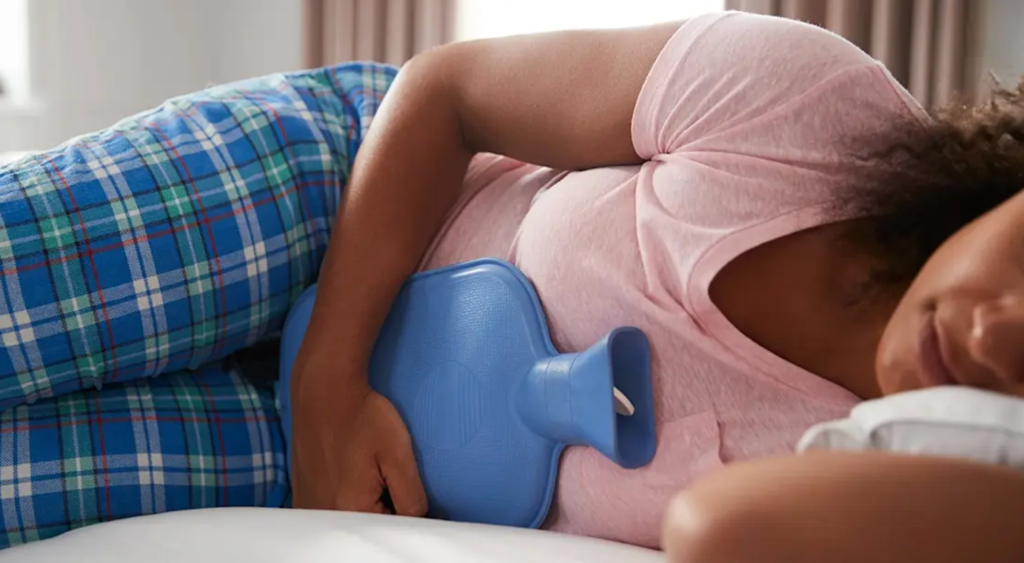
    If your pain seems like the “normal” kind, small changes can still make a big difference. Gentle exercise (like stretching or walking), finding ways to chill out, and using a heating pad are all proven ways to feel better.

    But if you think your pain might be something more, the best thing you can do is talk to a doctor. Don’t be afraid to speak up or feel like you’re exaggerating. Before your appointment, try to keep a log of your pain and symptoms.

    This is where an app like CrampCare can be a total game-changer. By tracking your symptoms in the app, you’re basically creating a health diary on your phone. You can show your doctor exactly what you’ve been feeling and for how long, which helps them see the full story. This data gives you the power to have a better conversation and get the answers you need, faster.

    Your pain is real, and you deserve to feel good. Stop just “getting through it” every month. Start tracking your cycle with CrampCare today and take the first step toward feeling your best.

    References

    [1] Dawood, M. Y. (2006). Primary Dysmenorrhea: Advances in Pathogenesis and Management. Obstetrics & Gynecology, 108(2), 428-441. https://journals.lww.com/greenjournal/abstract/2006/08000/primary_dysmenorrhea_advances_in_pathogenesis_and.27.aspx

    [2] American College of Obstetricians and Gynecologists. (2022). Dysmenorrhea: Painful Periods. https://www.acog.org/womens-health/faqs/dysmenorrhea-painful-periods

    [3] World Health Organization. (2023). Endometriosis. https://www.who.int/news-room/fact-sheets/detail/endometriosis