Category: Nutrition

  • Go With the Flow: The Ultimate Guide to Cycle Syncing

    Have you ever had weeks where you feel like you’re on top of the world—crushing your workouts, acing your projects, and being the life of the party? And other weeks where you feel so drained that just getting off the sofa feels like a marathon?

    What if I told you that those energy shifts aren’t random? They’re actually connected to the natural hormonal rhythm of your menstrual cycle. And you can use that rhythm to your advantage.

    Welcome to the world of cycle syncing. It sounds fancy, but it’s actually super simple: it’s the practice of aligning your lifestyle (think exercise, work, and even your social life) with the different phases of your menstrual cycle. Instead of fighting against your body’s natural flow, you learn to work with it.

    At CrampCare, we believe this is one of the biggest wellness superpowers you can unlock. Let’s get into how you can stop swimming against the current and start riding the wave.

    The Four Seasons of Your Cycle

    Think of your cycle as having four distinct seasons, each with its own unique hormonal landscape and energy level.
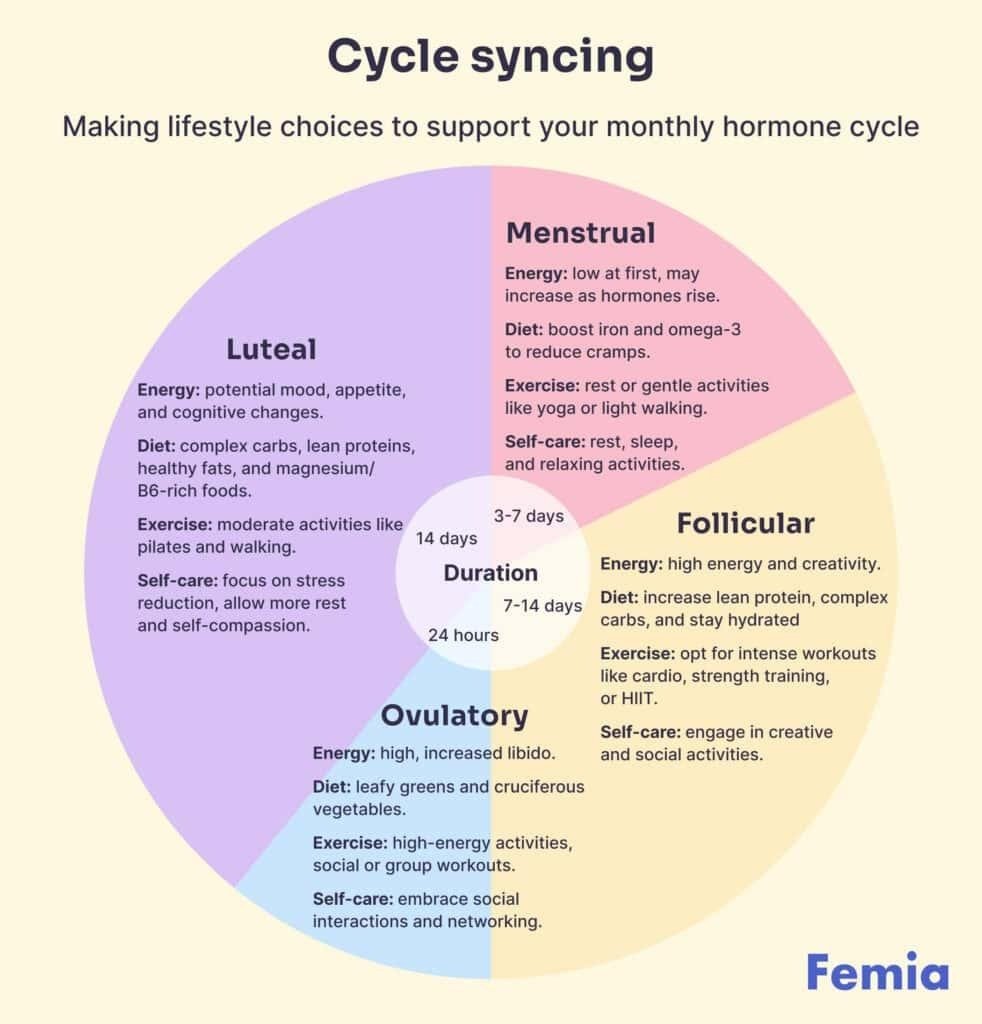
    Source: Femia

    Phase 1: Menstrual (Your Period – The “Winter” ❄️)

    • What’s Happening: Your hormones (estrogen and progesterone) are at their lowest point. Your body is shedding your uterine lining. It’s a time for rest and release.
    • Your Vibe: Low energy, intuitive, reflective.
    • Sync Your Life: This is your permission slip to slow down.
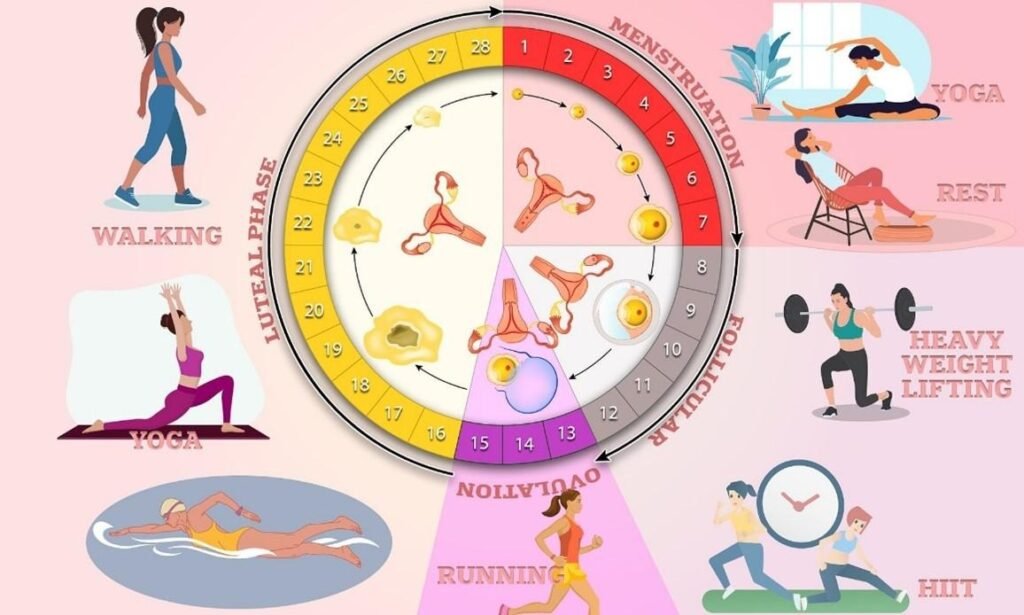
      • Exercise: Think restorative and gentle. Go for a walk, do some gentle stretching, or try a yin yoga class.
      • Work: Your two brain hemispheres are most connected now, making it a great time for reflection and evaluation. Review projects, journal, and avoid tight deadlines if you can.
      • Social Life: Honor your need for alone time. A cozy night in with a book or a movie is perfect. Say no to big social events if you’re not feeling it.

    Phase 2: Follicular (Before Ovulation – The “Spring” 🌱)

    • What’s Happening: Estrogen is starting to rise, which boosts your energy, mood, and brainpower. You’re emerging from your winter hibernation.
    • Your Vibe: Creative, energetic, open to new things.
    • Sync Your Life: Plant the seeds for the month ahead.
      • Exercise: Your energy is returning, so you can start to ramp things up. Try cardio, light runs, or a fun dance class.
      • Work: This is your brainstorming phase. Start new projects, learn a new skill, and map out your goals.
      • Social Life: You’re feeling more social. Plan a fun outing with friends or go on a date.

    Phase 3: Ovulatory (Ovulation – The “Summer” ☀️)

    • What’s Happening: Estrogen and testosterone are at their peak! This is when you release an egg. You’re at the height of your power.
    • Your Vibe: Confident, social, communicative, magnetic.
    • Sync Your Life: It’s time to be seen and heard.
      • Exercise: Go all out! This is the best time for high-intensity workouts like HIIT, spinning, or heavy lifting. Your body can handle it.
      • Work: You’re a communication superstar right now. Schedule important meetings, give that presentation, ask for a raise, or have that difficult conversation. Collaborate with others.
      • Social Life: This is your social peak. Host the party, go to the networking event, and connect with people.

    Phase 4: Luteal (Before Your Period – The “Autumn” 🍂)

    • What’s Happening: Progesterone is rising, and if the egg wasn’t fertilized, both estrogen and progesterone will start to fall, leading to PMS symptoms. Your energy begins to wind down.
    • Your Vibe: Detail-oriented, focused, a little introverted.
    • Sync Your Life: It’s time to wrap things up and get cozy.
      • Exercise: Start to scale back the intensity. Focus on strength training, Pilates, or more moderate cardio. As you get closer to your period, shift back to more gentle movement.
      • Work: Your focus shifts inward, making this a great time for detail-oriented tasks. Finish up projects, organize your files, and clear your to-do list.
      • Social Life: You might feel more like nesting. Plan a small get-together with close friends or a cozy date night at home.
    How to Start Cycle Syncing: The First Step is Easy

    Feeling overwhelmed? Don’t be. You don’t have to do all of this at once. The most important first step is simply to start tracking your cycle. You can’t sync with a rhythm you don’t understand.

    This is where the CrampCare app becomes your best friend. By tracking your period, symptoms, and mood every day, you’ll start to see your own unique patterns emerge. You’ll learn exactly when your personal “spring” begins and when it’s time to prepare for your “autumn.”

    Start small. This month, maybe just try to sync your workouts. Next month, focus on your work tasks. It’s not about being perfect; it’s about being in tune with your body.

    Working with your body instead of against it is a radical act of self-care. Welcome to the flow.
  • Eat Your Way to a Better Period: How Food Affects Your Cycle

    Have you ever noticed that the week before your period, all you want is a mountain of chocolate and salty chips? Or that during your period, you feel totally drained of energy? It’s not just in your head—it’s deeply connected to your hormones and, you guessed it, your nutrition.

    What you eat has a massive impact on how you feel throughout your menstrual cycle. And the cool part is, you can use food as a tool to work with your body, not against it. This idea is sometimes called “cycle syncing,” but you don’t need to get fancy with it. It’s really just about listening to your body and giving it what it needs, when it needs it.

    At CrampCare, we’re all about empowering you with knowledge to feel your best. Let’s break down how you can eat your way to a happier, healthier cycle.

    The Big Picture: Key Nutrients for a Healthy Cycle

    Before we get into the different phases, there are a few all-star nutrients that are your period’s best friends, all month long.

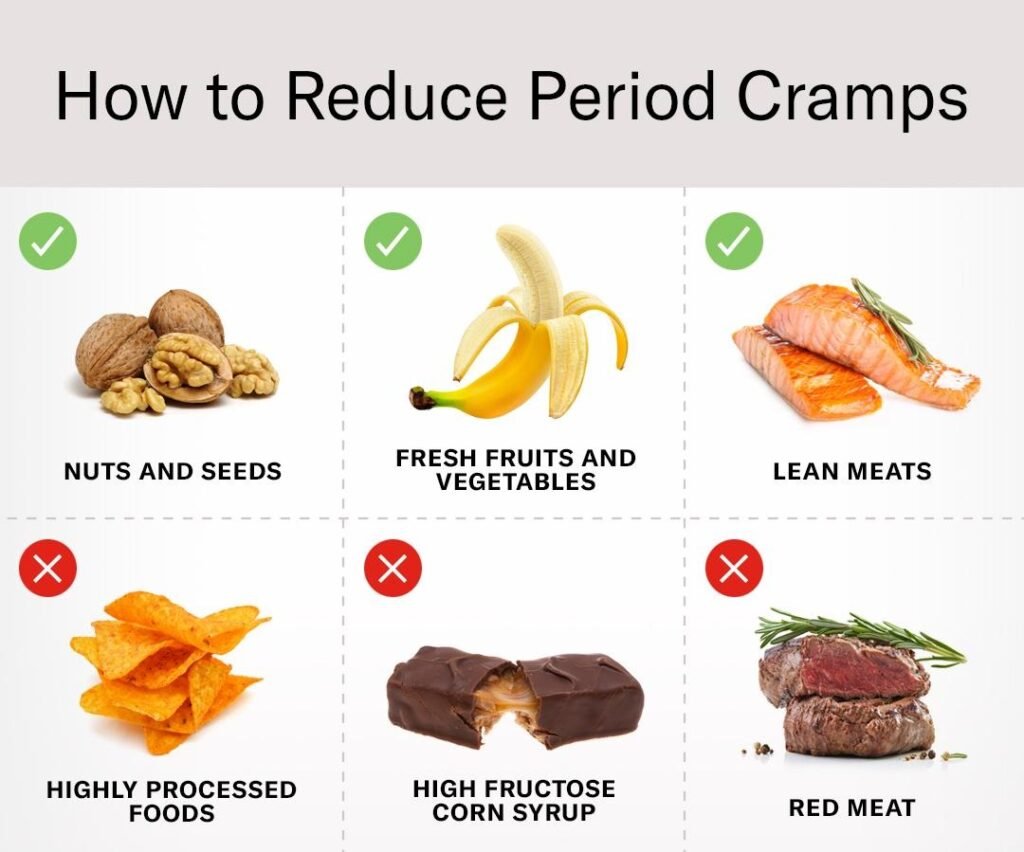
    • Magnesium: This is nature’s muscle relaxer! It can be a huge help in reducing menstrual cramps. Find it in leafy greens (spinach), nuts, seeds, and dark chocolate (yes, your craving has a purpose!).
    • Iron: You lose iron when you bleed, which can lead to fatigue and low energy. It’s important to replenish it. Find it in lean meats, beans, lentils, and fortified cereals.
    • Omega-3 Fatty Acids: These are amazing for fighting inflammation, which is a major cause of period pain. Find them in fatty fish (salmon), walnuts, and flaxseeds.

    Eating for Your Four Phases

    Your cycle has four distinct phases, and your body has different needs in each one. Think of it as eating with the seasons of your cycle.

    Phase 1: Menstrual (Your Period – The “Winter”)

    • What’s Happening: Your uterine lining is shedding, and your hormones are at their lowest point. Energy is typically low.
    • Your Food Mission: Comfort, nourish, and replenish.
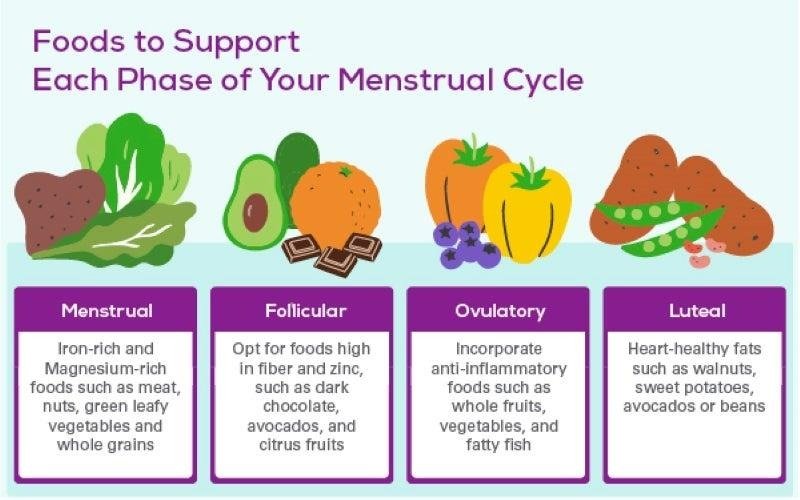
    • What to Eat: Focus on those key nutrients we just talked about. Warm, comforting foods are your friend here.
      • Iron-rich foods to replenish what you’re losing: Think lean red meat, chicken, beans, and lentils.
      • Foods high in Vitamin C to help you absorb that iron: Oranges, bell peppers, and strawberries.
      • Magnesium-rich foods to help with cramps: Spinach, dark chocolate, and pumpkin seeds.
      • Anti-inflammatory foods: Ginger and turmeric tea can be wonderfully soothing.

    Phase 2: Follicular (Before Ovulation – The “Spring”)

    • What’s Happening: Your body is preparing to release an egg. Estrogen is rising, and you’re starting to feel more energetic and vibrant.
    • Your Food Mission: Keep it fresh, light, and energizing.
    • What to Eat: Your body is building, so focus on fresh, vibrant foods.
      • Lean proteins and plant-based proteins like tofu and edamame.
      • Fresh, colorful vegetables and sprouted grains.
      • Healthy fats like avocado and nuts.

    Phase 3: Ovulatory (Ovulation – The “Summer”)

    • What’s Happening: An egg is released! Estrogen is at its peak, and you’re likely feeling your most social, confident, and energetic.
    • Your Food Mission: Support your liver and maintain energy.
    • What to Eat: You need fiber to help your body process that peak in hormones.
      • Lots of fiber: Think raw veggies, fruits (especially berries), and whole grains.
      • Antioxidant-rich foods to protect the egg: Berries, dark leafy greens.

    Phase 4: Luteal (Before Your Period – The “Autumn”)

    • What’s Happening: This is PMS week. Progesterone is rising, and if you’re not pregnant, both estrogen and progesterone will fall, leading to cravings, moodiness, and bloating.
    • Your Food Mission: Stabilize blood sugar and boost your mood.
    • What to Eat: This is where cravings for carbs and comfort foods kick in. The key is to choose the right kind.
      • Complex carbs to stabilize blood sugar and boost serotonin (the happy chemical): Sweet potatoes, brown rice, and oats.
      • Magnesium-rich foods to combat cramps and anxiety before they start.
      • Calcium-rich foods like yogurt and leafy greens, which have been shown to help with PMS symptoms. [1]
      • Limit salt and caffeine to reduce bloating and anxiety.

    Listen to Your Body

    This is not about a strict diet. It’s about tuning in and noticing how different foods make you feel at different times of the month. 

    This is where tracking can be a superpower. Use the CrampCare app to log your daily symptoms—your energy levels, your mood, your cramps. Then, make a note of what you ate. Over time, you’ll start to see powerful connections. You might notice that when you eat more magnesium-rich foods, your cramps are less intense. Or that when you focus on complex carbs before your period, your mood feels more stable.

    This knowledge allows you to be proactive, giving your body the support it needs before the symptoms even start. It’s one of the most powerful forms of self-care there is.

    References

    [1] Abdi, F., et al. (2016). The effect of calcium on premenstrual syndrome: A double-blind randomized clinical trial. Obstetrics & Gynecology Science, 59(1), 100–105. https://doi.org/10.5468/ogs.2016.59.1.100

  • Ready for a Baby? Your Supportive Guide to Boosting Your Chances of Getting Pregnant

    Making the decision to start a family is a huge, exciting step! It’s a journey filled with hope, daydreams, and a whole lot of love. But it can also come with a lot of questions and a bit of pressure. You might be wondering, “Am I doing everything I can? How can I make this happen?”

    Trying to conceive (TTC) can feel like you’re navigating a whole new world, and it’s easy to get overwhelmed by all the advice out there. At CrampCare, we want to walk alongside you on this path, offering clear, supportive, and empowering advice to help you on your journey to parenthood.

    Let’s talk about the most effective ways to boost your fertility and increase your chances of seeing that positive test, one gentle step at a time.

    1. Timing is Everything: Get to Know Your Fertile Window

    If there’s one “secret” to getting pregnant, this is it. You can only conceive during a very specific time in your cycle known as the fertile window. This window is about 6 days long: the 5 days before you ovulate and the day you ovulate.

    Having sex during this window is the single most important thing you can do to increase your chances of getting pregnant. [1]

    So, how do you find this magic window? By becoming an expert on your own cycle. You can do this by tracking a few key signs:

    • Your Cycle Length: Helps you estimate when ovulation might happen.
    • Your Cervical Mucus: Changes to a clear, stretchy “egg white” consistency when you’re most fertile.
    • Your Basal Body Temperature (BBT): Spikes slightly right after ovulation, confirming it happened.

    This is where an app like CrampCare becomes your best friend. It takes the guesswork out of tracking and helps you pinpoint your most fertile days with confidence, so you can focus on the fun part!

    2. Nourish Your Body: The “Fertility Diet”

    Think of your body as a garden you’re preparing for a beautiful new seed. Creating a healthy, nourished environment is key. While there’s no magic food that guarantees pregnancy, a balanced, nutrient-rich diet supports your overall health and hormone function, which is crucial for fertility.

    Focus on these Fertility-Friendly Foods:

    • Leafy Greens: Spinach, kale, and broccoli are packed with folate, a B vitamin that’s essential for preventing birth defects and supporting reproductive health.
    • Healthy Fats: Avocados, nuts, seeds, and olive oil help regulate your hormones.
    • Lean Proteins: Think fish, chicken, beans, and lentils.
    • Complex Carbs: Brown rice, quinoa, and whole-wheat bread provide sustained energy without spiking your blood sugar.

    It’s also wise to limit things that can work against you, like excessive alcohol, smoking, and too much caffeine. [2]

    3. Move with Joy: Finding Your Exercise Sweet Spot

    Regular, moderate exercise is fantastic for fertility. It helps you maintain a healthy weight, reduces stress, and improves circulation. The key word here is moderate.

    This isn’t the time to train for a marathon or push yourself to the absolute limit. Over-exercising can actually stress your body and interfere with ovulation. Instead, focus on movement that feels good and energizes you.

    Great options include:

    • Brisk walking or hiking
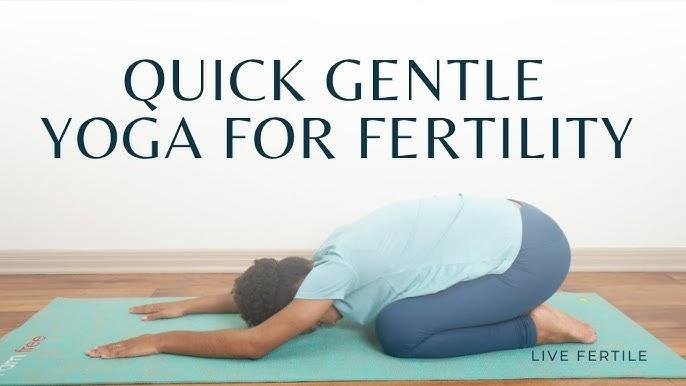
    • Gentle yoga or Pilates
    • Dancing
    • Swimming

    Source: LIVE FERTILE

    4. Find Your Calm: Why Stress Matters

    The TTC journey can be stressful, which is a cruel irony because high levels of stress can mess with the hormones that control ovulation. Finding healthy ways to manage stress is not just good for your mental health—it’s good for your fertility, too.

    Try incorporating some of these into your routine:

    • Mindfulness or Meditation: Even 5-10 minutes a day can make a difference.
    • Deep Breathing: A simple tool you can use anytime, anywhere.
    • Journaling: Get your worries out of your head and onto paper.
    • Prioritizing Sleep: Aim for 7-9 hours of quality sleep per night.

    Be kind to yourself. This journey is a marathon, not a sprint.

    When to Get a Little Extra Help

    It’s also important to know when it might be time to talk to a professional. The general guidelines are:

    • If you are under 35 and have been actively trying for one year.
    • If you are over 35 and have been actively trying for six months.

    You should also consider seeing a doctor sooner if you have a history of very irregular periods, PCOS, endometriosis, or other known health issues.

    A doctor can help you explore your options and create a plan that’s right for you. Remember, seeking help is a sign of strength.

    You’ve Got This

    Embarking on the path to parenthood is a profound and personal experience. Be patient with your body, celebrate the small victories, and lean on your partner and support system.

    Let CrampCare be your trusted companion on this journey, helping you understand your body and feel empowered every step of the way. You are capable, you are strong, and you’ve got this.

    References

    [1] American Society for Reproductive Medicine. (2021). Fertility and Sterility: Optimizing natural fertility. https://www.fertstert.org/article/S0015-0282(16)62895-9/fulltext

    [2] American College of Obstetricians and Gynecologists. (2021). Evaluating Infertility. https://www.acog.org/womens-health/faqs/evaluating-infertility

  • How to Actually Feel Better During PMS: Your Guide to Less Bloat, Fewer Mood Swings, and More Energy

    That week before your period can feel like a total betrayal by your own body. You’re bloated, your favorite jeans don’t fit, you’re snapping at everyone, and all you want to do is eat chips and cry on the couch. If you’re sick of Premenstrual Syndrome (PMS) taking over your life every month, we’ve got you. 

    While there’s no magic “off” switch for PMS, there are so many small, powerful lifestyle changes you can make that add up to a huge difference. It’s all about learning to work with your body, not against it. 

    At CrampCare, we’re all about giving you the tools to take back control. Here is your ultimate guide to reducing PMS symptoms, one simple step at a time.

    1. Hack Your Snacks: How Food Can Fight PMS

    Your hormones and your diet are basically best friends—what you eat directly impacts how you feel. During your pre-period phase, your body is more sensitive. Giving it the right fuel can help stabilize your mood and reduce physical symptoms like bloating and cramps.

    Foods to Add to Your Plate:

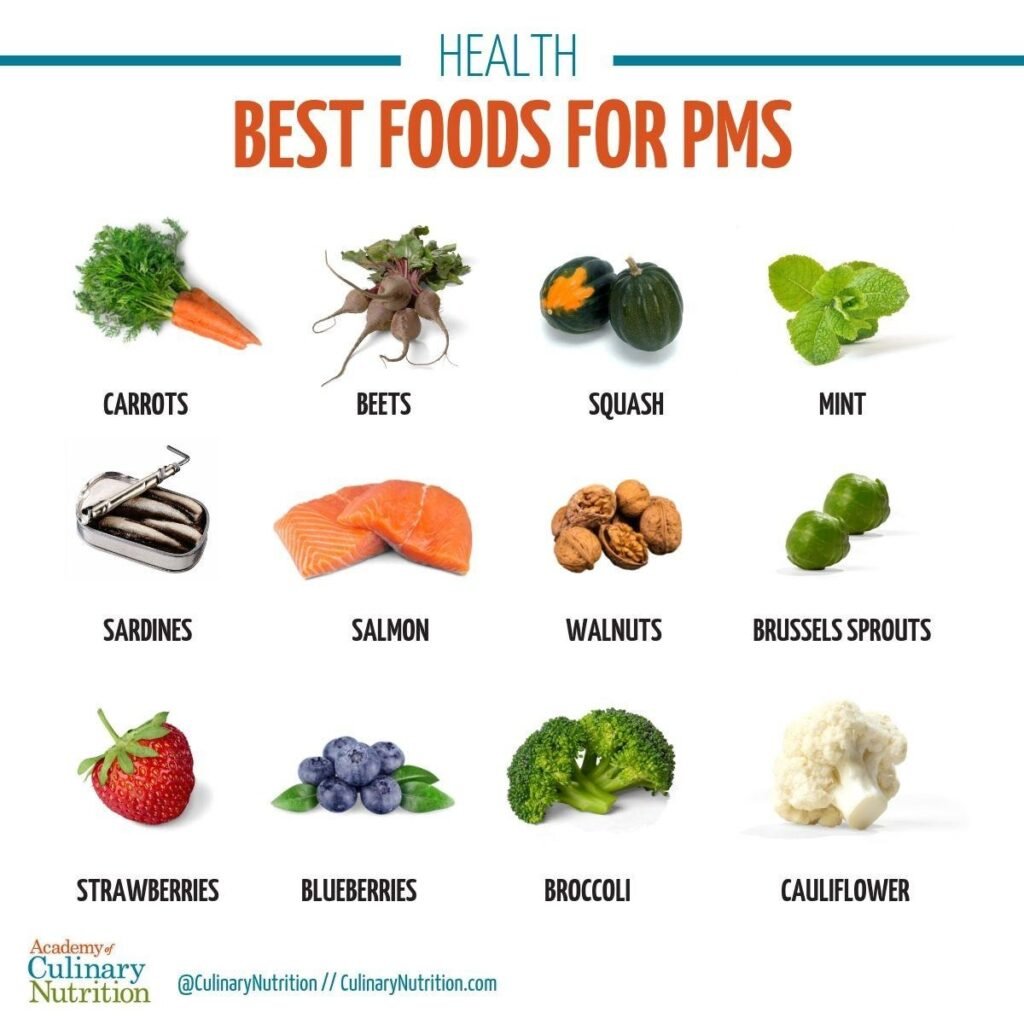
    • Complex Carbs: Think whole-wheat bread, brown rice, and oatmeal. These give you a steady supply of energy and can boost your levels of serotonin (the “happy chemical”), which can help with those pre-period blues. [1]
    • Magnesium-Rich Foods: Magnesium is like a chill pill for your muscles (including your uterus!). Find it in dark leafy greens (spinach, kale), nuts, seeds, and avocado.
    • Calcium Crew: Studies show that getting enough calcium can help reduce PMS symptoms. Try yogurt, almonds, and leafy greens.

    Source: Culinary Nutrition

    Foods to Limit (Just for a few days!):

    • Salt: Too much salt is the number one cause of that puffy, bloated feeling. Try to cut back on processed snacks and fast food in the days leading up to your period.
    • Sugar: A sugary treat can give you a quick high, but the crash that follows can make mood swings even worse. 
    • Caffeine: If you’re feeling extra anxious or having trouble sleeping, caffeine might be making it worse. Try swapping one of your coffees for an herbal tea.

    2. Move Your Body, Boost Your Mood

    When you’re feeling crampy and exhausted, exercise might be the last thing on your mind. But gentle movement is one of the most effective ways to combat PMS. Why? Because it releases endorphins, which are your body’s natural painkillers and mood-lifters.

    You don’t have to run a marathon. The key is to be gentle and listen to your body.

    PMS-Friendly Movement:

    • Yoga: A gentle yoga flow can ease muscle tension, reduce cramps, and calm your mind. Poses like Child’s Pose and Cat-Cow are especially great.
    • Walking: A simple 20-30 minute walk outside can clear your head and get your blood flowing, which can help with both mood and bloating.
    • Stretching: If you’re feeling stiff and achy, take 10 minutes to do some simple stretches. Focus on your hips, lower back, and hamstrings.

    3. Prioritize Your Zzz’s: The Power of Sleep

    Sleep is when your body repairs itself and regulates your hormones. When you don’t get enough, everything feels harder—especially PMS. Hormonal fluctuations can already mess with your sleep quality in the week before your period, so giving yourself the best chance at a good night’s rest is crucial.

    Tips for Better Pre-Period Sleep:

    • Stick to a Schedule: Try to go to bed and wake up around the same time every day, even on weekends. This helps regulate your body’s internal clock.
    • Create a Wind-Down Routine: An hour before bed, put your phone away. The blue light can mess with your sleep hormones. Instead, read a book, take a warm bath, or listen to calming music.
    • Keep it Cool: Your body temperature naturally rises before your period, which can make it harder to sleep. Keep your bedroom cool to help you stay comfortable.

    You’ve Got the Power to Feel Better

    Managing PMS is all about finding what works for you. Maybe it’s swapping your afternoon coffee for a walk, or making sure you get to bed a little earlier. These small changes can empower you to feel more in control of your body and your life.

    The best way to figure out your personal PMS-fighting formula? Track it! Use the CrampCare app to log your symptoms and any lifestyle changes you make. Over time, you’ll be able to see clear connections. You might notice that your mood is always better on the days you do yoga, or that your bloating goes down when you drink more water.

    This isn’t just data—it’s your personal roadmap to a better period. Download CrampCare today and start your journey to a happier, healthier cycle.

    References

    [1] Fathizadeh, N., Ebrahimi, E., Valiani, M., Tavakoli, N., & Yar, M. H. (2010). Evaluating the effect of magnesium and magnesium plus vitamin B6 supplement on the severity of premenstrual syndrome. Iranian journal of nursing and midwifery research, 15(Suppl 1), 401–405. https://www.ncbi.nlm.nih.gov/pmc/articles/PMC3208934/

  • Your Ultimate Guide to Kicking Period Cramps to the Curb

    Period cramps are the ultimate party crashers. One minute you’re living your life, and the next, you’re curled up in a ball, begging your uterus to chill out. If you’re tired of your monthly cycle dictating your social life, school attendance, or work performance, you’ve come to the right place.

    Managing period pain is about having a toolkit of strategies you can turn to. It’s not about one magic cure, but about finding a combination of things that work for your body. At CrampCare, we’re all about empowering you with options. Let’s dive into the best ways to manage period pain, from the food you eat to the way you move.

    1. Eat Your Way to Less Pain: Food & Nutrition

    What you eat can have a huge impact on how you feel, and that’s especially true during your period. Certain foods can help fight inflammation (the science-y word for the irritation that can make cramps worse), while others can make it worse.

    Foods That Fight Cramps:

    • Ginger: This powerhouse root is a total game-changer. Studies have shown that ginger can be just as effective as ibuprofen at reducing period pain. [1] Try sipping on some warm ginger tea or adding fresh ginger to your meals.
    • Dark, Leafy Greens: Think spinach, kale, and broccoli. They are packed with magnesium, which helps relax your muscles (including your uterus!).
    • Salmon and Walnuts: These are rich in omega-3 fatty acids, which are amazing at fighting inflammation.
    • Dark Chocolate: Yes, you read that right! Dark chocolate (the kind with over 70% cocoa) is high in magnesium and can give you a little mood boost.

    Foods to Maybe Avoid:

    • Super Salty or Sugary Snacks: These can cause bloating and a quick energy crash, which is the last thing you need.
    • Too Much Caffeine: For some people, caffeine can make cramps feel more intense.
    • Red Meat and Dairy: These can be high in compounds that promote inflammation, so you might feel better if you limit them right before and during your period.

    2. Get Moving: Movement & Exercise

    When you’re in pain, the last thing you probably want to do is move. But gentle exercise can be one of the best things for cramps. It releases endorphins (your body’s natural painkillers) and increases blood flow, which can help your uterine muscles relax.

    Stretches That Soothe:

    • Child’s Pose: This gentle yoga pose is amazing for relieving tension in your lower back and hips.
    • Cat-Cow Stretch: This move helps warm up your spine and can ease the ache in your abdomen and back.
    • Knee-to-Chest Stretch: Lying on your back and hugging your knees to your chest can help relax the muscles in your lower belly.

    Light Exercise Ideas:

    • Walking: Even a short, 15-20 minute walk can work wonders.
    • Light Yoga or Pilates: Focus on flows that are gentle and restorative.
    • Swimming: The water supports your body and can feel incredibly soothing.

    3. When You Need a Little Extra Help: Over-the-Counter (OTC) Options

    Sometimes, natural remedies aren’t enough, and that’s completely okay. There are safe and effective over-the-counter medications that can help you get through the worst of it.

    The Go-To Pain Relievers:

    • NSAIDs (Nonsteroidal Anti-Inflammatory Drugs): This is the category that includes ibuprofen (like Advil or Motrin) and naproxen (like Aleve). These are usually the most effective for period pain because they work by blocking those cramp-causing prostaglandins we talked about earlier. Pro Tip: For best results, take them as soon as you feel cramps starting, rather than waiting until the pain is severe.
    • Acetaminophen: This includes brands like Tylenol or Panadol. While it can help with pain, it doesn’t have the same anti-inflammatory effect as NSAIDs, so it might not be quite as effective for intense cramps.

    Don’t Forget the Heat!

    Never underestimate the power of a good heating pad or a warm bath. Applying heat to your lower abdomen helps relax your uterine muscles and can provide almost instant relief. It’s a simple but incredibly effective tool in your pain-management kit.

    Find What Works for You with CrampCare

    Everyone’s body is different, and what works for your best friend might not work for you. The key is to find your unique combination of strategies.

    This is where tracking your cycle with an app like CrampCare becomes so valuable. By logging your symptoms and the remedies you try, you can start to see patterns. Maybe you’ll notice that your cramps are always better when you go for a walk in the morning, or that taking ibuprofen before your pain gets bad is a total game-changer.

    Don’t let period pain control you. Start building your personalized pain-relief toolkit today. Track your symptoms, try these tips, and discover what makes your body feel its best.

    References

    [1] Daily, J. W., Zhang, X., & Park, S. (2019). Efficacy of Ginger for Alleviating the Symptoms of Primary Dysmenorrhea: A Systematic Review and Meta-analysis of Randomized Clinical Trials. Pain Medicine, 20(9), 1679–1693. https://academic.oup.com/painmedicine/article/20/9/1679/5152227