Category: Ovulation

  • Go With the Flow: The Ultimate Guide to Cycle Syncing

    Have you ever had weeks where you feel like you’re on top of the world—crushing your workouts, acing your projects, and being the life of the party? And other weeks where you feel so drained that just getting off the sofa feels like a marathon?

    What if I told you that those energy shifts aren’t random? They’re actually connected to the natural hormonal rhythm of your menstrual cycle. And you can use that rhythm to your advantage.

    Welcome to the world of cycle syncing. It sounds fancy, but it’s actually super simple: it’s the practice of aligning your lifestyle (think exercise, work, and even your social life) with the different phases of your menstrual cycle. Instead of fighting against your body’s natural flow, you learn to work with it.

    At CrampCare, we believe this is one of the biggest wellness superpowers you can unlock. Let’s get into how you can stop swimming against the current and start riding the wave.

    The Four Seasons of Your Cycle

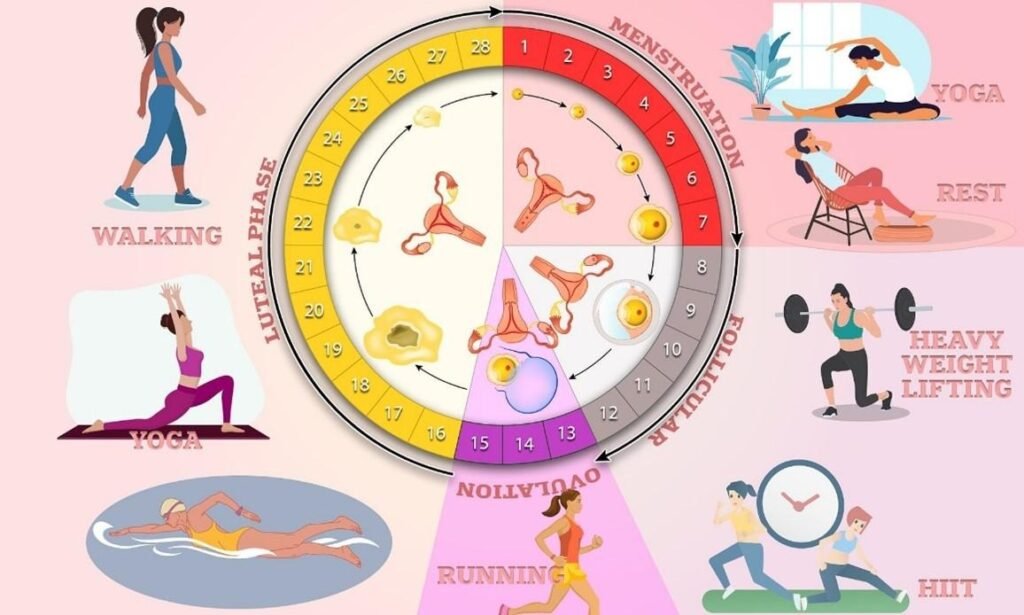
    Think of your cycle as having four distinct seasons, each with its own unique hormonal landscape and energy level.
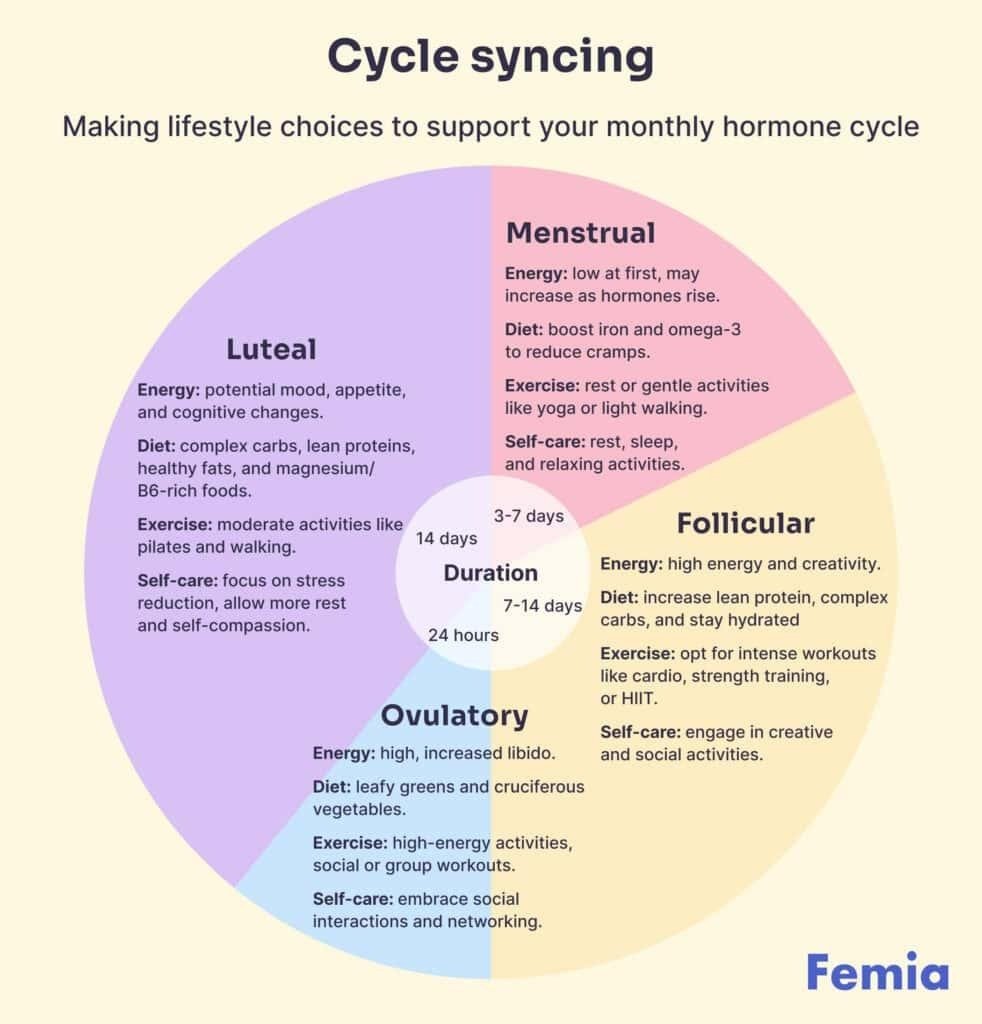
    Source: Femia

    Phase 1: Menstrual (Your Period – The “Winter” ❄️)

    • What’s Happening: Your hormones (estrogen and progesterone) are at their lowest point. Your body is shedding your uterine lining. It’s a time for rest and release.
    • Your Vibe: Low energy, intuitive, reflective.
    • Sync Your Life: This is your permission slip to slow down.
      • Exercise: Think restorative and gentle. Go for a walk, do some gentle stretching, or try a yin yoga class.
      • Work: Your two brain hemispheres are most connected now, making it a great time for reflection and evaluation. Review projects, journal, and avoid tight deadlines if you can.
      • Social Life: Honor your need for alone time. A cozy night in with a book or a movie is perfect. Say no to big social events if you’re not feeling it.

    Phase 2: Follicular (Before Ovulation – The “Spring” 🌱)

    • What’s Happening: Estrogen is starting to rise, which boosts your energy, mood, and brainpower. You’re emerging from your winter hibernation.
    • Your Vibe: Creative, energetic, open to new things.
    • Sync Your Life: Plant the seeds for the month ahead.
      • Exercise: Your energy is returning, so you can start to ramp things up. Try cardio, light runs, or a fun dance class.
      • Work: This is your brainstorming phase. Start new projects, learn a new skill, and map out your goals.
      • Social Life: You’re feeling more social. Plan a fun outing with friends or go on a date.

    Phase 3: Ovulatory (Ovulation – The “Summer” ☀️)

    • What’s Happening: Estrogen and testosterone are at their peak! This is when you release an egg. You’re at the height of your power.
    • Your Vibe: Confident, social, communicative, magnetic.
    • Sync Your Life: It’s time to be seen and heard.
      • Exercise: Go all out! This is the best time for high-intensity workouts like HIIT, spinning, or heavy lifting. Your body can handle it.
      • Work: You’re a communication superstar right now. Schedule important meetings, give that presentation, ask for a raise, or have that difficult conversation. Collaborate with others.
      • Social Life: This is your social peak. Host the party, go to the networking event, and connect with people.

    Phase 4: Luteal (Before Your Period – The “Autumn” 🍂)

    • What’s Happening: Progesterone is rising, and if the egg wasn’t fertilized, both estrogen and progesterone will start to fall, leading to PMS symptoms. Your energy begins to wind down.
    • Your Vibe: Detail-oriented, focused, a little introverted.
    • Sync Your Life: It’s time to wrap things up and get cozy.
      • Exercise: Start to scale back the intensity. Focus on strength training, Pilates, or more moderate cardio. As you get closer to your period, shift back to more gentle movement.
      • Work: Your focus shifts inward, making this a great time for detail-oriented tasks. Finish up projects, organize your files, and clear your to-do list.
      • Social Life: You might feel more like nesting. Plan a small get-together with close friends or a cozy date night at home.
    How to Start Cycle Syncing: The First Step is Easy

    Feeling overwhelmed? Don’t be. You don’t have to do all of this at once. The most important first step is simply to start tracking your cycle. You can’t sync with a rhythm you don’t understand.

    This is where the CrampCare app becomes your best friend. By tracking your period, symptoms, and mood every day, you’ll start to see your own unique patterns emerge. You’ll learn exactly when your personal “spring” begins and when it’s time to prepare for your “autumn.”

    Start small. This month, maybe just try to sync your workouts. Next month, focus on your work tasks. It’s not about being perfect; it’s about being in tune with your body.

    Working with your body instead of against it is a radical act of self-care. Welcome to the flow.
  • Is It More Than Just a ‘Bad Period’? Signs of PCOS & Endometriosis

    For years, many of us have been told that painful, difficult periods are just a normal part of being a woman. We’re told to just “tough it out.” But what if your period problems are a sign of something more? What if the pain that makes you miss school or work isn’t “normal” at all?

    Two of the most common conditions that cause period problems are Polycystic Ovary Syndrome (PCOS) and Endometriosis. Millions of women have them, but they often go undiagnosed for years because the symptoms are dismissed as just a “bad period.”

    At CrampCare, we believe that knowledge is power. Understanding the signs of these conditions is the first, most crucial step to getting the diagnosis and care you deserve. Let’s break down the key differences.

    What is PCOS? The Hormone Disruptor

    PCOS is one of the most common hormonal disorders in women of reproductive age. The name is a bit misleading—it’s not really about cysts on your ovaries. It’s a complex metabolic and hormonal condition. [1]

    Think of PCOS as a communication breakdown. Your hormones get out of balance, which can disrupt ovulation and lead to a whole host of symptoms.

    The Vibe Check: Key Signs of PCOS

    To be diagnosed with PCOS, you typically need to have at least two of these three main signs:

    1. Irregular or Missing Periods: This is the hallmark sign. Because of the hormonal imbalance, you might not ovulate regularly. This can mean your cycles are super long (more than 35 days apart), you miss periods for months at a time, or they’re just completely unpredictable.
    2. Signs of High Androgens (a type of hormone): Androgens are sometimes called “male hormones,” but everyone has them. In PCOS, the levels can be higher than normal, leading to:
    • Acne: Especially stubborn, cystic acne around the jawline, chin, and neck.
    • Hirsutism: Unwanted hair growth on the face, chest, or back.
    • Hair Loss: Thinning hair on your head.
    1. Polycystic Ovaries on an Ultrasound: An ultrasound might show that your ovaries are enlarged and have many small follicles (which are sometimes called cysts, hence the name).

    Other common signs: Weight gain (especially around the abdomen), insulin resistance, and difficulty getting pregnant.

    What is Endometriosis? The Painful Inflammatory Disease

    Endometriosis (or “endo”) is a condition where tissue similar to the lining of the uterus (the endometrium) grows outside of the uterus—on the ovaries, fallopian tubes, or other parts of the pelvic cavity. [2]

    This out-of-place tissue acts like the uterine lining does: it thickens, breaks down, and bleeds with each menstrual cycle. But because this blood has no way to exit the body, it gets trapped, causing intense inflammation, scar tissue (adhesions), and severe pain.

    The Vibe Check: Key Signs of Endometriosis

    The number one sign of endometriosis is PAIN. But it’s not just “normal” period cramps.

    • Severe, Debilitating Period Pain: This is pain that makes you cancel plans, miss school or work, and doesn’t get better with over-the-counter pain meds. It’s often described as a sharp, stabbing, or pulling pain.
    • Pain at Other Times: You might also have pain during or after sex, during ovulation, or when you go to the bathroom (especially during your period).
    • Heavy Bleeding: You might soak through pads or tampons every hour or two.
    • Bowel and Bladder Issues: Things like painful bowel movements, diarrhea, constipation, and bloating, especially around your period (this is often misdiagnosed as IBS).
    • Infertility: Endometriosis is a leading cause of infertility in women.

    It’s important to know that the amount of pain you have doesn’t always correlate with the severity of the disease. Someone with a small amount of endo can have severe pain, and vice versa.

    “I Think I Might Have One of These. What Do I Do?”

    If you’re reading this and alarm bells are going off in your head, the first thing to know is that you are not alone, and you are not imagining it. Your pain is real, and your symptoms are valid.

    The most powerful next step you can take is to start tracking your symptoms. This is non-negotiable. When you go to a doctor, being able to show them a detailed record of your symptoms is the single best way to be taken seriously.

    This is exactly why we built the CrampCare app. Use it to track:

    • Your Cycle: Is it regular or irregular? How long is it?
    • Your Pain: On a scale of 1-10, how bad is your pain each day? Where is it located? What does it feel like (stabbing, dull, aching)?
    • Your Bleeding: How heavy is it? Are you passing clots?
    • Other Symptoms: Note everything—acne, bloating, pain with sex, bowel issues, fatigue.

    When you have weeks or months of this data collected, you are no longer just telling your doctor you have “bad periods.” You are presenting them with concrete evidence that something is wrong.

    Take this data, make an appointment, and don’t be afraid to advocate for yourself. A diagnosis can be the first step on the path to managing your symptoms and reclaiming your quality of life. You deserve to be heard, and you deserve to feel well.

    References

    [1] National Institutes of Health. (2020). Polycystic Ovary Syndrome (PCOS). https://www.ninds.nih.gov/health-information/disorders/polycystic-ovary-syndrome-pcos

    [2] World Health Organization. (2021). Endometriosis. https://www.who.int/news-room/fact-sheets/detail/endometriosis

  • How to Talk to Your Doctor About Period Problems & Actually Be Heard

    It’s a story that’s all too common. You finally work up the courage to talk to a doctor about your debilitating period pain, your heavy bleeding, or your wildly irregular cycles. You explain how it’s affecting your life—how you have to miss school, work, or social events. And then you’re met with a dismissive, “Oh, that’s normal,” or “Some women just have bad periods.”

    It’s infuriating, invalidating, and unfortunately, it happens all the time. Studies show that women’s pain is often taken less seriously than men’s pain, a phenomenon known as the “gender pain gap.” [1]

    But here’s what you need to know: You are the expert on your own body. If you feel like something is wrong, you are probably right. The key is learning how to communicate your concerns in a way that makes it impossible to be ignored.

    At CrampCare, we’re passionate about helping you become your own best health advocate. This is your guide to walking into that doctor’s office feeling prepared, confident, and ready to be heard.

    Step 1: The Power of Data – Your Secret Weapon

    This is the single most important thing you can do. Do not walk into an appointment with vague complaints. Walk in with data. A doctor might be able to dismiss “I have bad cramps,” but they can’t dismiss “For the last three months, I have had debilitating pain that I rate as an 8 out of 10 for the first two days of my period, forcing me to miss work.”

    Before your appointment, you need to become a detective of your own body. This is where an app like CrampCare is absolutely essential. For at least one to two full cycles, track everything:

    • Your Cycle: The start and end dates of your period.
    • Your Pain:
      • When: Does it happen before your period? During? During ovulation?
      • Where: Is it in your lower abdomen? Your back? Your legs?
      • What it feels like: Is it sharp, stabbing, dull, aching, burning?
      • How bad it is: Rate it on a scale of 1-10 every single day.
    • Your Bleeding:
      • How heavy: How many pads or tampons are you using? Are you soaking through them in an hour or two? Are you passing large clots?
    • Other Symptoms: Track everything, even if it seems unrelated. Acne, bloating, fatigue, mood swings, pain with sex, bowel or bladder issues, headaches.

    This data is your evidence. It transforms your personal experience into objective facts that a medical professional can’t ignore.

    Step 2: Prepare for Battle (The Friendly Kind)

    Now that you have your data, it’s time to prepare for the appointment itself. Don’t just show up and hope for the best. Go in with a plan.

    • Write Down Your Goal: What do you want to get out of this appointment? A diagnosis? A referral to a specialist? A new treatment plan? Write it down at the top of your notes.
    • Summarize Your Data: Look at the data you tracked in your CrampCare app and write down a one-paragraph summary. For example: “For the past 6 months, my periods have been irregular, ranging from 35 to 50 days. For the first 3 days of my period, I have severe, stabbing pelvic pain that I rate an 8/10, along with nausea and painful bowel movements. Over-the-counter pain medication does not help.”
    • List Your Questions: Write down every single question you have. No question is too small or too silly. “Could this be endometriosis?” “What are the side effects of this medication?” “What are the next steps for diagnosis?”
    • Bring a Friend or Family Member: If you’re nervous, bring someone with you for support. They can take notes for you and be another voice in the room to back you up.

    Step 3: In the Room – Be the CEO of Your Health

    You’ve done the prep work. Now it’s time to shine.

    • Lead with Your Summary: Start the appointment by reading the summary you wrote. This sets the tone and shows that you are prepared and serious.
    • Show, Don’t Just Tell: Open your CrampCare app and show your doctor the charts and logs. Visual data is incredibly powerful.
    • Use “I” Statements: Instead of “You’re not listening to me,” try “I am concerned that my quality of life is being severely impacted, and I need a plan to address this.”
    • Don’t Be Afraid to Ask “What Else Could It Be?”: If your doctor gives you a diagnosis that doesn’t feel right, or tells you it’s “just stress,” it’s okay to push back gently. Ask, “I understand that stress can be a factor, but what other possibilities should we be exploring? Could we run some tests to rule out conditions like PCOS or endometriosis?”
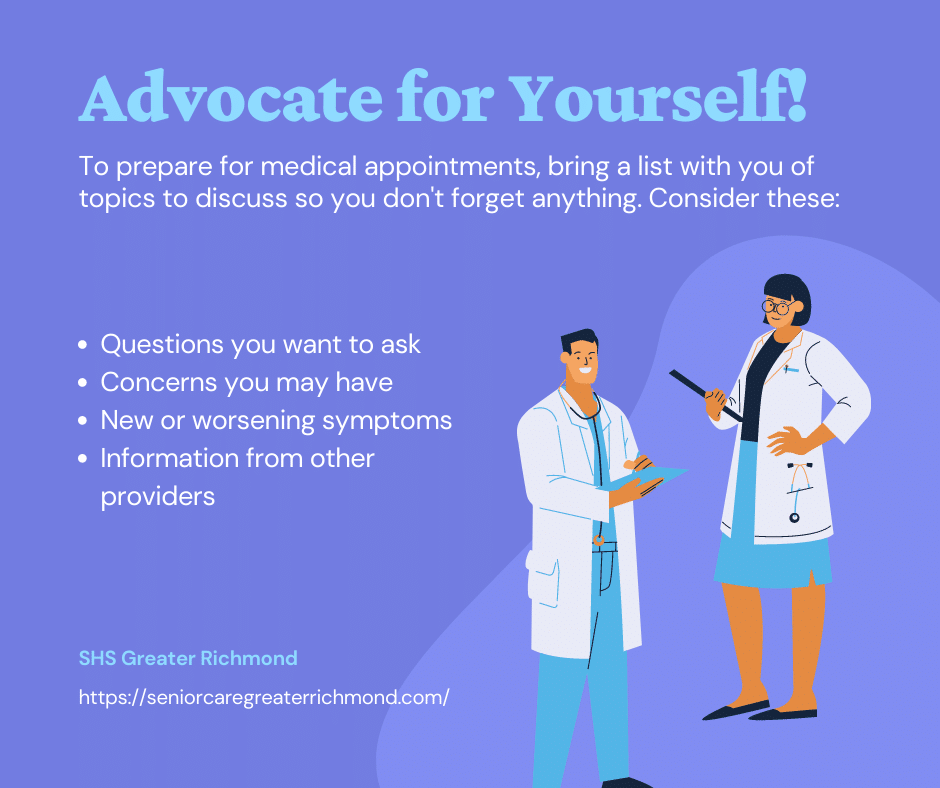
    • Ask for a Referral: If you feel like you’re not getting anywhere, it is your right to ask for a referral to a specialist, like a gynecologist who specializes in pelvic pain or hormonal disorders.

    Source: SHS Greater Richmond

    You Deserve to Be Taken Seriously

    It can be exhausting to have to fight to be heard when you’re already feeling unwell. But remember: your health is worth fighting for. You are not being “dramatic” or “difficult” for demanding answers and effective care.

    By tracking your symptoms, preparing for your appointments, and communicating with confidence, you can shift the dynamic. You are not just a passive patient; you are an active, informed partner in your own healthcare.

    And we’re here to back you up every step of the way. You’ve got this.

    References

    [1] Samulowitz, A., et al. (2018). “Brave men” and “emotional women”: a theory-guided literature review on gender bias in health care and gendered norms towards patients with chronic pain. Pain research & management, 2018, 6358624. https://doi.org/10.1155/2018/6358624

  • The Real Deal on Hormonal Birth Control: What to Expect for Your Body, Mood & Cycle

    So, you’re thinking about starting hormonal birth control. It’s a big decision, and it’s totally normal to have a million questions. You’ve probably heard stories from friends—the good, the bad, and the confusing. One friend says the pill cleared her acne, another says it made her feel moody, and a third says her IUD made her periods disappear completely. What’s the real deal?

    Here’s the truth: hormonal birth control affects every single body differently. But understanding the potential changes can help you feel way more prepared and empowered. 

    At CrampCare, we’re all about giving you the straight facts, no filter. Let’s talk about what hormonal birth control is actually doing in your body and what you might expect for your cycle, mood, and more.

    First, How Does This Stuff Even Work?

    Most hormonal birth control methods (like the pill, patch, ring, hormonal IUD, and implant) work by releasing a steady, low dose of lab-made hormones. These hormones do two main things to prevent pregnancy:

    1. They stop ovulation. This means your ovaries don’t release an egg each month. No egg, no chance of pregnancy.
    2. They thicken your cervical mucus. This makes it harder for sperm to get through to the uterus in the first place.

    By creating this stable hormonal environment, birth control can have effects that go way beyond just preventing pregnancy.

    Your Cycle on BC: The Period Glow-Up

    This is one of the biggest and often most welcome changes. If you struggle with heavy, painful, or unpredictable periods, hormonal birth control can be a game-changer.

    • Lighter & Shorter Periods: Because the hormones prevent the uterine lining from building up as much, there’s less to shed each month. This often means lighter, shorter, and way less crampy periods. [1]
    • Predictable Schedule: With the pill, patch, or ring, you’ll know exactly when your period (which is technically a “withdrawal bleed”) is coming.
    • Skipping Periods Altogether: Yes, it’s safe! With methods like the hormonal IUD or the implant, many users find their periods become super light or stop completely after a few months. You can also use the pill to safely skip your period.
    An infographic showing that birth control is a common reason for lighter periods.

    Source: OSH WELLNESS

    Your Mood on BC: The Big Question Mark

    This is the side effect that probably gets talked about the most. Does birth control make you moody or depressed? The answer is… it’s complicated.

    For some people, the stable level of hormones can actually reduce the intense mood swings that come with PMS or PMDD. They feel more even-keeled all month long.

    For others, particularly in the first few months of starting a new method, they might experience an increase in moodiness, anxiety, or feelings of sadness. Your body is adjusting to a new normal, and it can take time to settle. [2]

    The bottom line: If you start a new birth control method and feel like your mood has taken a nosedive and it’s not getting better after 2-3 months, trust your gut. Talk to your doctor. There are dozens of different hormonal formulations out there, and sometimes finding the right fit takes a little trial and error.

    A woman looking sad and moody, representing the potential mood effects of birth control.

    Your Body on BC: The Other Stuff

    What else might you notice? Here’s a rapid-fire rundown of other common effects.

    • Acne: For many, hormonal birth control, especially certain types of pills, can be amazing for clearing up hormonal acne.
    • Weight: This is a big myth! Large-scale studies have shown that, on average, hormonal birth control does not cause weight gain. While some people might experience minor fluctuations, it’s not the norm.
    • Breast Tenderness: This is a common side effect, especially when you first start. It usually gets better after a few months.
    • Headaches: Some people experience headaches when starting birth control, while others who get menstrual migraines find that birth control actually helps them.

    Finding Your Perfect Match

    There is no one-size-fits-all answer when it comes to birth control. The best method for your friend might not be the best one for you. The key is to listen to your body and advocate for yourself.

    Keep a log of your symptoms—both good and bad—when you start a new method. An app like CrampCare is perfect for this. It helps you track your cycle, mood, and physical symptoms all in one place. This data is invaluable when you talk to your doctor.

    Don’t be afraid to say, “This isn’t working for me.” A good doctor will listen and help you explore other options. Finding the right fit can give you incredible freedom and peace of mind. You’ve got this!

    References

    [1] American College of Obstetricians and Gynecologists. (2022). Combined Hormonal Birth Control: Pill, Patch, and Ring. https://www.acog.org/womens-health/faqs/combined-hormonal-birth-control-pill-patch-and-ring

    [2] de Wit, A. E., et al. (2020). Association of Use of Hormonal Contraception With Depression. JAMA Psychiatry, 77(11), 1154–1162. https://doi.org/10.1001/jamapsychiatry.2020.2110

  • Oops! A Calm & Clear Guide to Emergency Contraception

    Meta Description: Missed a pill? Condom broke? Don’t panic. Here’s a clear, calm guide on what to do next, including your emergency contraception options like Plan B and the copper IUD.

    Focus Keyphrase: what to do if I miss a birth control pill

    It happens. That sudden, heart-sinking moment when you realize the condom broke, or you forgot to take your birth control pill. Your mind starts racing, and panic can set in fast. 

    First, take a deep breath. You are not the first person this has happened to, and you won’t be the last. It’s okay to feel scared or stressed, but you have options, and you have the power to take control of the situation. 

    At CrampCare, we believe in providing calm, clear, and non-judgmental information for these high-anxiety moments. This is your action plan. Let’s walk through it together.

    The Situation: You Had Unprotected Sex. What Now?

    Whether you missed a pill, the condom failed, or you just got caught up in the moment, the next steps are all about timing. When it comes to preventing pregnancy after sex, the sooner you act, the better.

    This is where Emergency Contraception (EC) comes in. EC is a safe way to prevent pregnancy after unprotected sex. It is NOT the same as the abortion pill. EC works by preventing or delaying ovulation, so an egg is never released and fertilization can’t happen. [1]

    Your Two Main Options: The Pill vs. The IUD

    There are two main types of emergency contraception available in the United States. 

    Option 1: The Morning-After Pill (Levonorgestrel)

    This is what most people think of when they hear “emergency contraception.” 

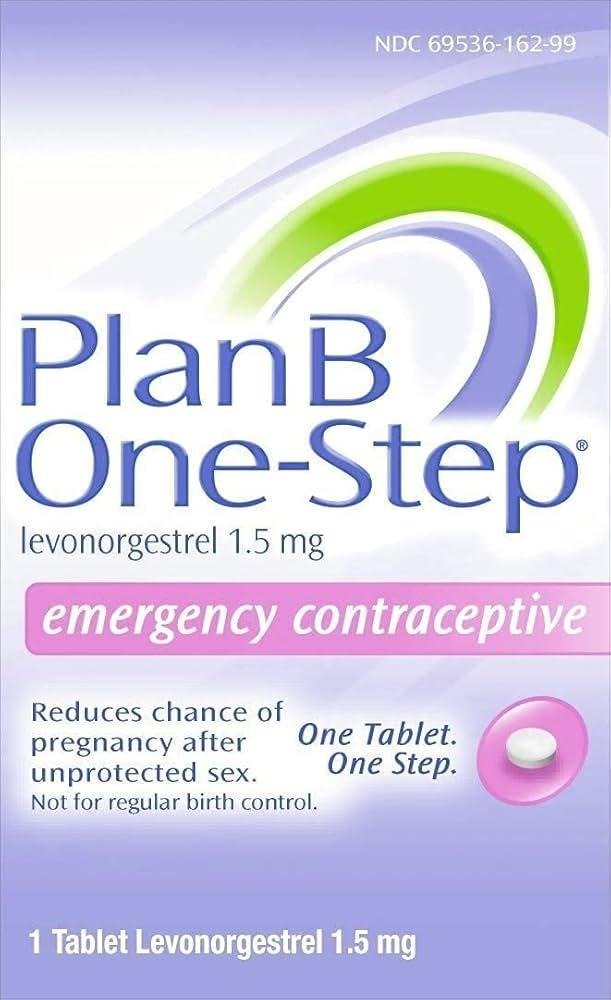
    • The Brand Name: The most common brand is Plan B One-Step, but there are many generic versions like Take Action, My Way, and Aftera that work the exact same way and are usually cheaper.
    • How it Works: It’s a single pill with a high dose of the hormone levonorgestrel (a type of progestin). 
    • The Time Window: You should take it as soon as possible. It can be taken up to 72 hours (3 days) after unprotected sex, but its effectiveness decreases with every passing hour.
    • Where to Get It: You can buy it over-the-counter at any pharmacy or drugstore. You do NOT need a prescription or an ID, and there is no age restriction.

    Important Note: Studies have shown that levonorgestrel-based EC pills may be less effective for individuals who weigh more than 165 pounds (75 kg). If this applies to you, the other options below are a better choice. [2]

    Option 2: The Other Morning-After Pill (Ulipristal Acetate)

    There is another type of EC pill that is more effective, especially if more time has passed or if you have a higher BMI.

    • The Brand Name: This pill is sold under the brand name ella®.
    • How it Works: It uses a different drug (ulipristal acetate) that is more effective at delaying ovulation, even closer to when it’s about to happen.
    • The Time Window: It is effective for up to 120 hours (5 days) after unprotected sex, with no decrease in effectiveness during that window.
    • Where to Get It: You need a prescription from a doctor or a health clinic to get ella®.

    Option 3: The Copper IUD (The Most Effective EC)

    This might be surprising, but the most effective form of emergency contraception is actually the copper IUD (Paragard).

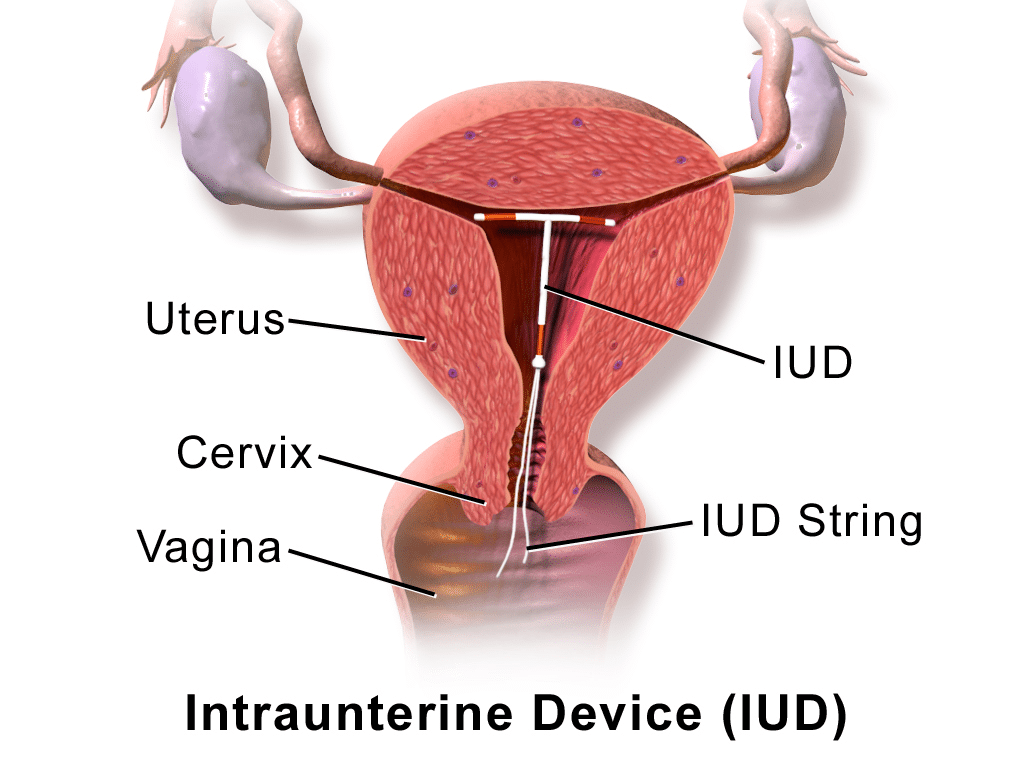
    • How it Works: A doctor inserts this small, hormone-free T-shaped device into your uterus. The copper is toxic to sperm and prevents fertilization.
    • The Time Window: It can be inserted up to 5 days after unprotected sex to prevent pregnancy. 
    • The Effectiveness: It is over 99.9% effective as emergency contraception. [1]
    • The Bonus: Once it’s in, you have a super-effective, hormone-free birth control method that can last for up to 10 years!

    Best for: Anyone who wants the most effective EC possible and is also interested in a long-term birth control method.

    What If I Missed My Regular Birth Control Pill?

    This is a super common scenario! Here’s a general guide, but you should always check the patient information leaflet that came with your specific pill pack.

    • If you missed ONE pill: Take the missed pill as soon as you remember, even if it means taking two pills in one day. Then continue taking the rest of your pack as usual. You generally don’t need emergency contraception.
    • If you missed TWO OR MORE pills: Take the most recent missed pill as soon as you remember and continue your pack as usual (discard the other missed pills). However, you should use a backup method (like condoms) for the next 7 days. If you had unprotected sex during this time, you should consider using emergency contraception.

    You Are in Control

    That moment of panic is real, but it doesn’t have to control you. Knowing your options is the first step to taking powerful, decisive action for your health.

    If you’re ever unsure what to do, don’t hesitate to call your doctor, a local health clinic like Planned Parenthood, or even talk to the pharmacist. They are there to help you without judgment.

    And remember to be kind to yourself. Accidents happen. The important thing is that you took care of yourself. You’ve got this.

    References

    [1] American College of Obstetricians and Gynecologists. (2022). Emergency Contraception. https://www.acog.org/womens-health/faqs/emergency-contraception

    [2] Glasier, A., et al. (2011). Can we identify women at risk of pregnancy despite using emergency contraception? Data from randomized trials of ulipristal acetate and levonorgestrel. Contraception, 84(4), 363-367. https://doi.org/10.1016/j.contraception.2011.02.009

  • Stressed Out? Why Your Period Might Be, Too

    Life is a lot sometimes. Between exams, work deadlines, relationship drama, and just trying to keep up, it’s easy to feel completely overwhelmed. You might notice that when you’re super stressed, you get more headaches, your sleep is a mess, and you’re snapping at everyone. But have you ever noticed that your period gets weird, too?

    Maybe it shows up late, or it doesn’t come at all. Maybe it’s much lighter or heavier than usual. It’s not a coincidence. Your menstrual cycle is like your body’s monthly report card, and it’s incredibly sensitive to stress.

    At CrampCare, we want to help you connect the dots between your mental health and your physical health. Understanding why your period gets thrown off by stress is the first step to managing it and showing your body some extra love when it needs it most.

    The Science, But Make It Simple: The Brain-Ovary Connection

    Think of your reproductive system as a team that needs clear communication to work properly. The coach is a part of your brain called the hypothalamus. It sends signals to another part of your brain (the pituitary gland), which then sends signals to your ovaries, telling them when to release the hormones (like estrogen) that lead to ovulation.

    This whole communication chain is called the HPO axis (Hypothalamic-Pituitary-Ovarian axis). It’s a delicate, finely-tuned system.

    Now, let’s add stress to the mix. When you’re stressed, your body goes into “fight or flight” mode and releases a flood of the stress hormone, cortisol. From a biological perspective, your body thinks you’re in danger—like you’re being chased by a tiger. In this state of emergency, your body decides that right now is not a great time to get pregnant. It needs to conserve all its energy for survival. [1]

    So, what does it do? Cortisol can directly interfere with the HPO axis, essentially telling the coach in your brain to stop sending signals. This can disrupt or even completely shut down the communication to your ovaries.

    How Stress Can Mess With Your Period

    When that brain-ovary communication gets staticky, a few things can happen:

    • Delayed Ovulation: Your body might put ovulation on hold until the stress passes. Since your period typically arrives about 14 days after you ovulate, delayed ovulation means a delayed period.
    • Anovulation (No Ovulation): If the stress is severe or long-lasting, your body might just skip ovulation altogether for that cycle. This can lead to a very long cycle or a missed period (this is called functional hypothalamic amenorrhea).
    • Irregular Cycles: You might find your cycle length is all over the place—one month it’s 28 days, the next it’s 40.
    • Worse PMS: Stress can also make your usual PMS symptoms, like cramps, mood swings, and fatigue, feel ten times worse.

    Finding Your Calm: How to Support Your Cycle

    You can’t just decide to “not be stressed.” But you can build a toolkit of strategies to help your body manage stress and feel safer, which allows your reproductive system to get back to its regular programming.

    This isn’t about adding more to your to-do list; it’s about finding small, sustainable ways to signal to your body that the tiger is gone.

    Your Stress-Busting Toolkit:

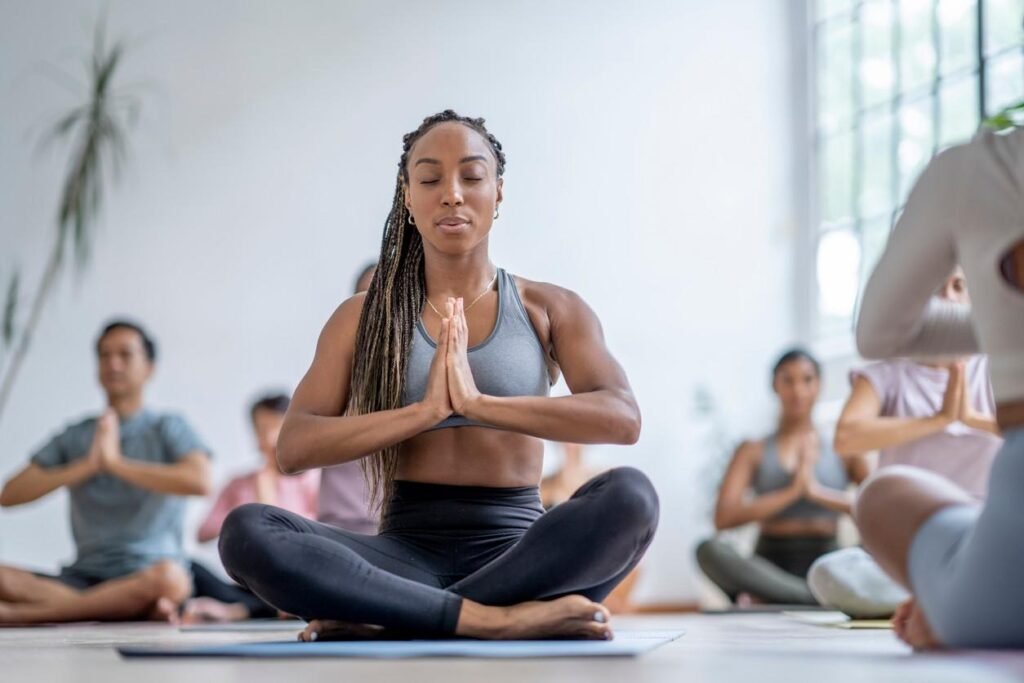
    • Mindful Movement: This isn’t about intense, punishing workouts. Think gentle, restorative activities like yoga, tai chi, or simply going for a walk in nature. Movement helps process stress hormones.
    • Breathwork: This is the fastest way to calm your nervous system. When you feel overwhelmed, try the “box breathing” technique: Inhale for 4 counts, hold for 4 counts, exhale for 4 counts, and hold for 4 counts. Repeat.
    • Prioritize Sleep: Sleep is when your body repairs itself. Aim for 7-9 hours of quality sleep per night. Try to create a relaxing bedtime routine, like reading a book or taking a warm bath.
    • Nourish, Don’t Restrict: When you’re stressed, your body needs fuel. This is not the time for a restrictive diet. Focus on regular, balanced meals with protein, healthy fats, and complex carbs to keep your blood sugar stable.

    Track Your Way to Understanding

    Sometimes, it’s hard to see the connection between a stressful week at work and a late period a few weeks later. This is where tracking your cycle becomes an act of self-care.

    By using an app like CrampCare to log not just your period, but also your daily stress levels, you can create a powerful map of your own body. You’ll be able to look back and see, “Oh, wow, my period was a week late after that crazy finals week.”

    This knowledge is empowering. It helps you anticipate these changes and reminds you to be extra gentle with yourself during stressful times. It transforms your cycle from a source of anxiety into a valuable source of information about your overall well-being.

    Your period is so much more than just a period. It’s a vital sign. Listen to what it’s telling you.

    References

    [1] Ranabir, S., & Reetu, K. (2011). Stress and hormones. Indian journal of endocrinology and metabolism, 15(1), 18–22. https://doi.org/10.4103/2230-8210.77573

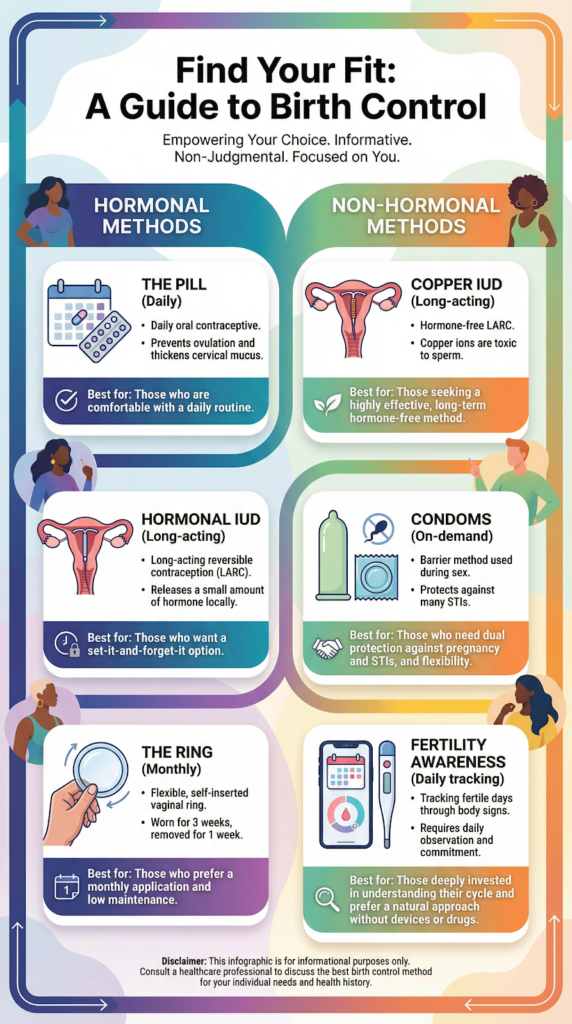
  • Find Your Fit: A No-Stress Guide to Choosing Birth Control

    Let’s be real: choosing a birth control method can feel like a huge, overwhelming decision. There are so many options, so many opinions, and so much information to sift through. The pill? An IUD? What even is an IUD? It’s enough to make you want to just close all your browser tabs and give up.

    But here’s the thing: being in control of your reproductive health is one of the most empowering things you can do. And you don’t have to figure it out alone. Think of this as your friendly, no-judgment guide to the world of contraception. 

    At CrampCare, we want to give you the clear, simple facts so you can walk into a doctor’s office feeling confident and ready to have an informed conversation. Because the “best” birth control method is the one that’s best for you.

    The Two Big Teams: Hormonal vs. Non-Hormonal

    Most birth control methods fall into one of two categories. Understanding this is the first step to finding your fit.

    • Hormonal Methods use lab-made hormones (similar to the ones your body already makes) to prevent pregnancy, usually by stopping ovulation (the release of an egg).
    • Non-Hormonal Methods use other ways to prevent pregnancy, like creating a barrier or an environment where sperm can’t survive, without affecting your body’s natural hormone cycle.

    The Hormone Squad: Effective & Low-Maintenance

    These methods are super popular because they’re incredibly effective and can even help with things like heavy periods and cramps.

    The Superstars: IUDs & The Implant (aka LARCs)

    If you’re looking for a “set it and forget it” option, these are your MVPs. LARCs (Long-Acting Reversible Contraceptives) are the most effective methods out there—we’re talking over 99% effective. [1]

    • Hormonal IUDs (Mirena, Kyleena, etc.): A tiny, T-shaped device that a doctor places in your uterus. It releases a small amount of the hormone progestin to prevent pregnancy and can last for 3-8 years. Bonus: It often makes periods much lighter or even disappear altogether.
    • The Implant (Nexplanon): A tiny, flexible rod that’s inserted under the skin of your upper arm. It releases progestin and protects you from pregnancy for up to 5 years.

    Best for: Anyone who wants the most effective protection without having to think about it every day.

    The Routine Crew: The Pill, Patch & Ring

    These methods are also very effective, but they require you to remember to use them on a daily, weekly, or monthly basis. With perfect use, they’re great. With “typical” human use (because we all forget sometimes!), their effectiveness is closer to 93%. [1]

    • The Pill: The classic. You take one pill every single day.
    • The Patch: A sticker you wear on your skin that you change once a week.
    • The Ring: A small, flexible ring you insert into your vagina for three weeks at a time.

    Best for: People who are good with routines and want a method they can easily start and stop themselves.

    The Hormone-Free Zone: For a More Natural Vibe

    If you’d rather not use hormones, there are some fantastic and effective options for you, too.

    The Copper IUD (Paragard)

    This is the only hormone-free LARC, and it’s a powerhouse. It’s a small, T-shaped device wrapped in copper that a doctor places in your uterus. The copper creates an environment that’s toxic to sperm. It’s over 99% effective and can last for up to 10 years. The one downside? It can sometimes make periods heavier and more crampy, especially at first.

    Best for: Someone who wants a super-effective, long-term, hormone-free method and doesn’t mind their natural period.

    The On-Demand Defender: Condoms

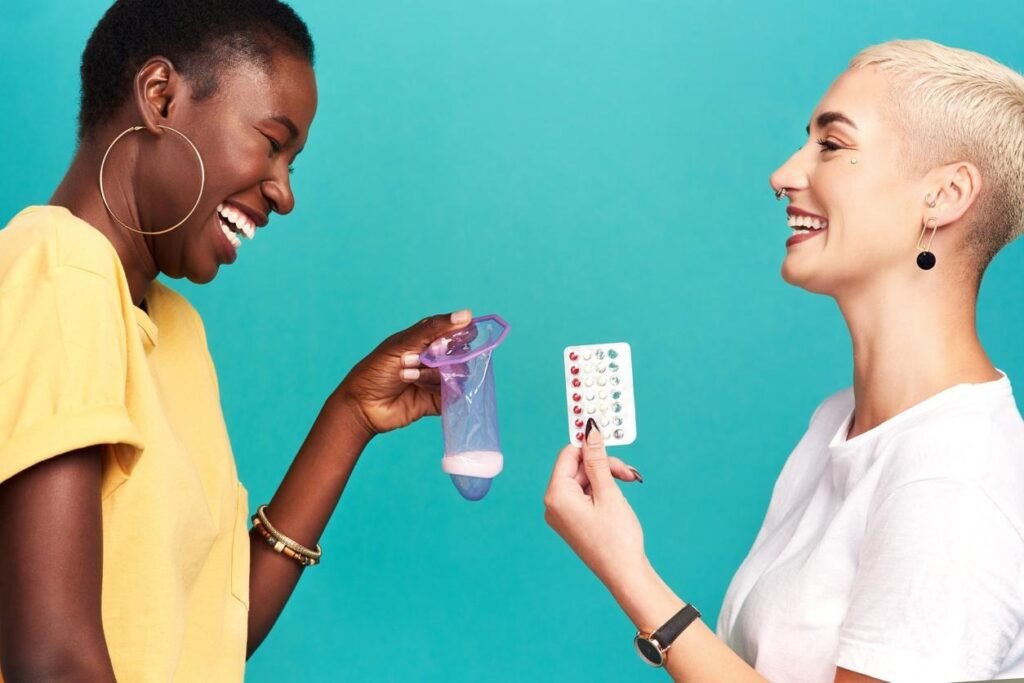
    Don’t sleep on the condom! It’s a classic for a reason. When used correctly every time, condoms are a great way to prevent pregnancy. But their biggest superpower is that they are the only method that also protects you from Sexually Transmitted Infections (STIs). Because of this, it’s a great idea to use condoms even if you’re on another form of birth control.

    Best for: Everyone! Especially for STI protection, as a backup method, or if you’re not having sex regularly.

    How to Choose Your Fighter: A Vibe Check

    Feeling clearer? To narrow it down, ask yourself these questions:

    1. How important is effectiveness? If preventing pregnancy is your absolute top priority, a LARC like an IUD or the implant is your most reliable bet.
    2. Am I okay with hormones? Or would I prefer a hormone-free option?
    3. How much maintenance am I willing to do? Can I remember a pill every day, or do I need something I don’t have to think about?
    4. Do I need STI protection? If yes, condoms are your non-negotiable friend.

    You’re in the Driver’s Seat

    This guide is your starting point. The next step is to take this knowledge and have a conversation with a healthcare provider. They can talk to you about your personal health history and help you make the final choice.

    Remember, you can always change your mind. What works for you now might not be what you need in a few years, and that’s totally okay. This is your body, your health, and your choice.

    And if you choose a method that relies on understanding your cycle, like Fertility Awareness, an app like CrampCare can be an essential tool to help you track your signs with confidence. Knowledge is power, and you’ve got this.

    References

    [1] Centers for Disease Control and Prevention. (2023). Contraception. https://www.cdc.gov/reproductivehealth/contraception/index.htm

  • Ready for a Baby? Your Supportive Guide to Boosting Your Chances of Getting Pregnant

    Making the decision to start a family is a huge, exciting step! It’s a journey filled with hope, daydreams, and a whole lot of love. But it can also come with a lot of questions and a bit of pressure. You might be wondering, “Am I doing everything I can? How can I make this happen?”

    Trying to conceive (TTC) can feel like you’re navigating a whole new world, and it’s easy to get overwhelmed by all the advice out there. At CrampCare, we want to walk alongside you on this path, offering clear, supportive, and empowering advice to help you on your journey to parenthood.

    Let’s talk about the most effective ways to boost your fertility and increase your chances of seeing that positive test, one gentle step at a time.

    1. Timing is Everything: Get to Know Your Fertile Window

    If there’s one “secret” to getting pregnant, this is it. You can only conceive during a very specific time in your cycle known as the fertile window. This window is about 6 days long: the 5 days before you ovulate and the day you ovulate.

    Having sex during this window is the single most important thing you can do to increase your chances of getting pregnant. [1]

    So, how do you find this magic window? By becoming an expert on your own cycle. You can do this by tracking a few key signs:

    • Your Cycle Length: Helps you estimate when ovulation might happen.
    • Your Cervical Mucus: Changes to a clear, stretchy “egg white” consistency when you’re most fertile.
    • Your Basal Body Temperature (BBT): Spikes slightly right after ovulation, confirming it happened.

    This is where an app like CrampCare becomes your best friend. It takes the guesswork out of tracking and helps you pinpoint your most fertile days with confidence, so you can focus on the fun part!

    2. Nourish Your Body: The “Fertility Diet”

    Think of your body as a garden you’re preparing for a beautiful new seed. Creating a healthy, nourished environment is key. While there’s no magic food that guarantees pregnancy, a balanced, nutrient-rich diet supports your overall health and hormone function, which is crucial for fertility.

    Focus on these Fertility-Friendly Foods:

    • Leafy Greens: Spinach, kale, and broccoli are packed with folate, a B vitamin that’s essential for preventing birth defects and supporting reproductive health.
    • Healthy Fats: Avocados, nuts, seeds, and olive oil help regulate your hormones.
    • Lean Proteins: Think fish, chicken, beans, and lentils.
    • Complex Carbs: Brown rice, quinoa, and whole-wheat bread provide sustained energy without spiking your blood sugar.

    It’s also wise to limit things that can work against you, like excessive alcohol, smoking, and too much caffeine. [2]

    3. Move with Joy: Finding Your Exercise Sweet Spot

    Regular, moderate exercise is fantastic for fertility. It helps you maintain a healthy weight, reduces stress, and improves circulation. The key word here is moderate.

    This isn’t the time to train for a marathon or push yourself to the absolute limit. Over-exercising can actually stress your body and interfere with ovulation. Instead, focus on movement that feels good and energizes you.

    Great options include:

    • Brisk walking or hiking
    • Gentle yoga or Pilates
    • Dancing
    • Swimming

    Source: LIVE FERTILE

    4. Find Your Calm: Why Stress Matters

    The TTC journey can be stressful, which is a cruel irony because high levels of stress can mess with the hormones that control ovulation. Finding healthy ways to manage stress is not just good for your mental health—it’s good for your fertility, too.

    Try incorporating some of these into your routine:

    • Mindfulness or Meditation: Even 5-10 minutes a day can make a difference.
    • Deep Breathing: A simple tool you can use anytime, anywhere.
    • Journaling: Get your worries out of your head and onto paper.
    • Prioritizing Sleep: Aim for 7-9 hours of quality sleep per night.

    Be kind to yourself. This journey is a marathon, not a sprint.

    When to Get a Little Extra Help

    It’s also important to know when it might be time to talk to a professional. The general guidelines are:

    • If you are under 35 and have been actively trying for one year.
    • If you are over 35 and have been actively trying for six months.

    You should also consider seeing a doctor sooner if you have a history of very irregular periods, PCOS, endometriosis, or other known health issues.

    A doctor can help you explore your options and create a plan that’s right for you. Remember, seeking help is a sign of strength.

    You’ve Got This

    Embarking on the path to parenthood is a profound and personal experience. Be patient with your body, celebrate the small victories, and lean on your partner and support system.

    Let CrampCare be your trusted companion on this journey, helping you understand your body and feel empowered every step of the way. You are capable, you are strong, and you’ve got this.

    References

    [1] American Society for Reproductive Medicine. (2021). Fertility and Sterility: Optimizing natural fertility. https://www.fertstert.org/article/S0015-0282(16)62895-9/fulltext

    [2] American College of Obstetricians and Gynecologists. (2021). Evaluating Infertility. https://www.acog.org/womens-health/faqs/evaluating-infertility

  • Your Ultimate Guide to Predicting Ovulation & Finding Your Fertile Window

    Whether you’re thinking about starting a family someday, or you’re very much not trying to get pregnant right now, understanding your own fertility is like having a superpower. It’s the key to making informed decisions about your body and your future.

    But let’s be real: most of us weren’t taught how to do this. We learn that our period comes once a month, and that’s about it. The part in the middle—ovulation—is often a total mystery. When does it happen? How do I know?

    At CrampCare, we believe that fertility education is for everyone. Knowing when you’re fertile gives you the power to either achieve or avoid pregnancy. Let’s pull back the curtain and learn how to decode your body’s secret signals.

    First, What Is Ovulation & The Fertile Window?

    In simple terms, ovulation is the main event of your menstrual cycle. It’s the moment when one of your ovaries releases a mature egg. This egg then travels down the fallopian tube, where it can be fertilized by sperm.

    Here’s the catch: the egg only lives for about 12-24 hours. But sperm can live inside your body for up to 5 days! This means the time you can actually get pregnant—your fertile window—is about 6 days long. It includes the 5 days before ovulation and the day of ovulation itself.

    Nailing down this 6-day window is the whole game. So, how do you find it? Your body actually leaves you clues. You just have to know what to look for.

    Your Body’s 3 Big Ovulation Clues

    Think of yourself as a detective and your body as the scene of the crime. There are three main clues you can track to find out when you’re ovulating.

    Clue #1: Your Calendar (Cycle Tracking)

    This is the most well-known method, but it comes with a big asterisk. The basic idea is to use the length of your past cycles to predict your future fertile window.

    How it works: Ovulation typically happens about 14 days BEFORE your next period is due to start. This is a key point! It’s not 14 days after your last period ended. 

    • If you have a perfect 28-day cycle, you’ll likely ovulate around day 14.
    • If you have a longer 32-day cycle, you’ll likely ovulate around day 18.

    The catch: This method only gives you a rough estimate. It works best if your cycles are super regular. If your cycle length varies, the calendar method alone can be unreliable.

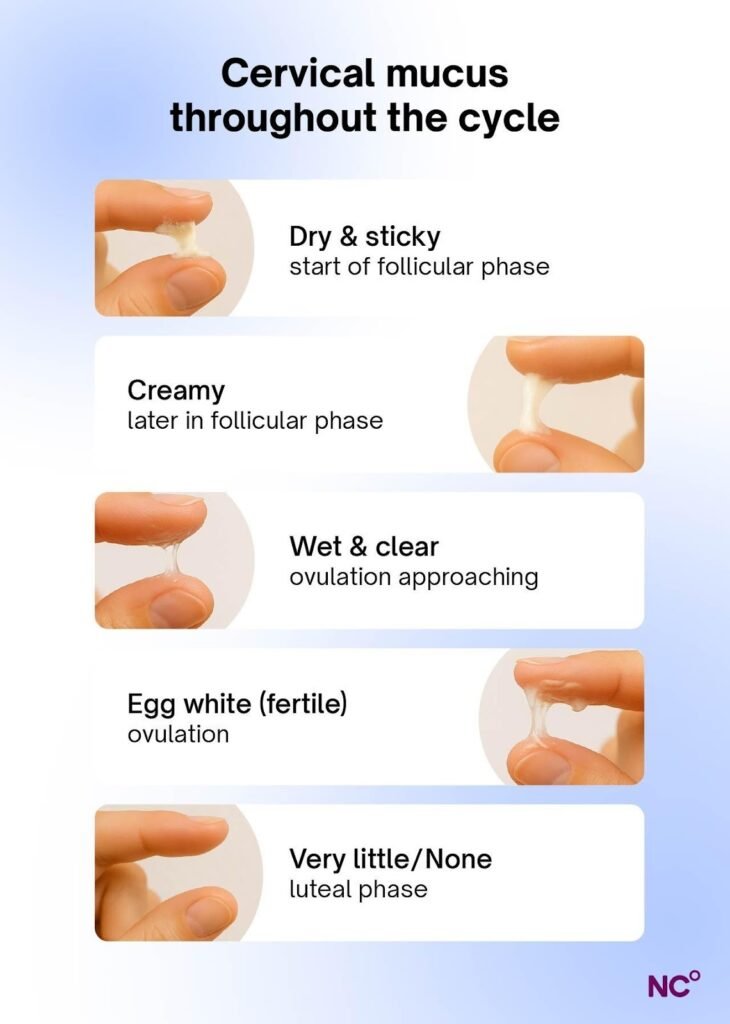
    Clue #2: Your Cervical Mucus (Your Body’s Secret Signal)

    This might sound a little weird, but checking your cervical mucus is one of the most reliable ways to spot your fertile window in real-time. This fluid changes throughout your cycle to either help or block sperm.

    How it works: After your period, you’ll likely be dry for a few days. As you get closer to ovulation, your estrogen levels rise, and you’ll start to notice more mucus. It will go through a few stages:

    1. Sticky or Gummy: Like paste.
    2. Creamy or Lotion-y: White or yellowish, like hand lotion.
    3. Egg White (The Main Event!): Right before and during ovulation, your mucus will become clear, slippery, and super stretchy—just like raw egg whites. This is your body’s green light for fertility! This “egg white” mucus helps sperm swim and stay alive. [1]

    Once you see egg white cervical mucus, you know you are in your fertile window.

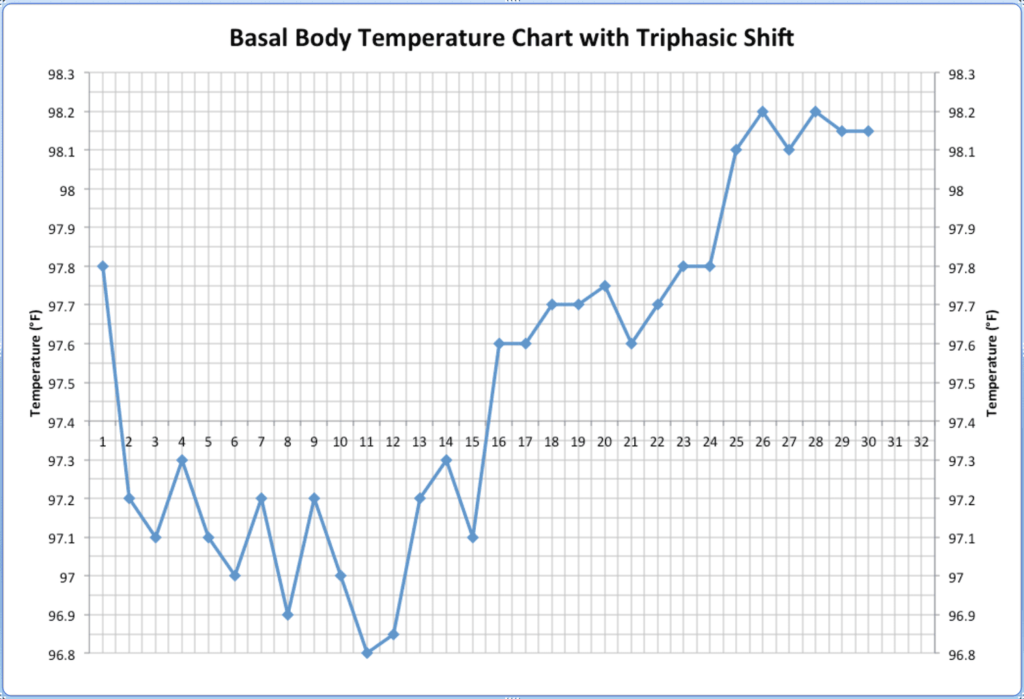
    Clue #3: Your Basal Body Temperature (BBT)

    Your Basal Body Temperature (BBT) is your body’s temperature when you’re fully at rest. By tracking this temperature every morning, you can confirm when ovulation has already happened.

    How it works: You’ll need a special BBT thermometer that measures in tiny increments. You must take your temperature at the exact same time every morning, before you even sit up in bed, talk, or check your phone.

    • In the first half of your cycle, your BBT will be relatively low.
    • After you ovulate, the hormone progesterone causes your temperature to spike up by about 0.5 to 1.0 degrees Fahrenheit (about 0.3 to 0.6 degrees Celsius). It will stay elevated until your next period. [2]

    The catch: BBT charting doesn’t predict ovulation in advance; it confirms it after the fact. This makes it more useful for understanding your cycle patterns over time or confirming if you ovulated, rather than for timing intercourse in the moment.

    The Power Trio: Putting It All Together

    While each of these methods gives you a piece of the puzzle, using them together is the most accurate way to pinpoint your fertile window. 

    • Your calendar gives you a heads-up for when to start paying closer attention.
    • Your cervical mucus tells you in real-time when your fertile window has opened.
    • Your BBT confirms that ovulation happened, helping you understand your cycle’s length and rhythm.

    The Easy Button: Let CrampCare Do the Work

    Feeling a little overwhelmed? That’s totally normal. Tracking all these signs can feel like a part-time job. But that’s where technology comes in.

    Using an app like CrampCare simplifies everything. You can log your period dates, your cervical mucus consistency, and your daily BBT all in one place. The app’s algorithm does the heavy lifting, analyzing your unique data to give you a clear prediction of your fertile window and ovulation day.

    It takes the guesswork out of the equation and turns you into the ultimate expert on your own body. Whether your goal is to get pregnant or prevent it, knowledge is power.

    Ready to unlock your fertility superpower? Download CrampCare and start tracking your cycle with confidence today.

    References

    [1] American College of Obstetricians and Gynecologists. (2021). Fertility Awareness-Based Methods of Family Planning. https://www.acog.org/womens-health/faqs/fertility-awareness-based-methods-of-family-planning

    [2] Ecochard, R., Duterque, O., Leiva, R., & Bouchard, T. (2015). Self-identification of the clinical fertile window and the ovulation period. Fertility and sterility, 103(5), 1319–1325.e3. https://doi.org/10.1016/j.fertnstert.2015.01.031

  • Your Period Problems Are Real. Here’s When to See a Doctor.


    We’re taught to just “deal with” our periods. We learn to push through the pain, manage the bleeding, and accept that our bodies are just going to do their own thing. But what if “dealing with it” means missing out on life? What if your period problems feel like more than just a monthly inconvenience?

    It can be really hard to know what’s “normal” and what’s a sign that you should get help. We often downplay our own pain or assume everyone feels the way we do. 

    At CrampCare, we want you to know one thing: your pain is valid, and you don’t have to suffer in silence. Knowing when to raise your hand and ask for help is a superpower. Let’s go over the key signs that mean it’s time to check in with a doctor.

    The “When to Worry” Checklist

    Think of this as your guide to listening to your body. If any of these sound familiar, it’s a good reason to make an appointment.

    1. Your Pain is Next-Level

    We’re not talking about the usual, annoying cramps that a heating pad can fix. We’re talking about pain that stops you in your tracks.

    See a doctor if:

    • Your period pain is so bad you regularly have to miss school, work, or social events.
    • Over-the-counter pain meds like ibuprofen (Advil) or naproxen (Aleve) barely make a dent.
    • The pain has been getting worse over time.
    • You have significant pain even when you’re not on your period.

    This kind of severe pain isn’t something you just have to live with. It could be a sign of a condition like endometriosis or fibroids, and there are treatments that can help. [1]

    2. Your Bleeding is Super Heavy

    What’s a “heavy” flow? It can be subjective, but there are some clear signs that your bleeding is more than average.

    See a doctor if:

    • You have to change your pad or tampon every hour for several hours in a row.
    • You have to wake up at night to change your protection.
    • Your period consistently lasts longer than 7 days.
    • You pass blood clots that are bigger than a quarter.

    Extremely heavy bleeding (the medical term is menorrhagia) can lead to anemia, which can make you feel tired and weak. It’s also a common sign of underlying issues that a doctor can help you manage. [2]

    3. Your Cycle is All Over the Place

    As we’ve said before, a perfect 28-day cycle is a myth. But a cycle that’s consistently unpredictable is worth looking into.

    See a doctor if:

    • Your cycles are always shorter than 21 days or longer than 35 days.
    • You go more than 3 months (90 days) without getting a period (and you know you’re not pregnant).
    • Your cycle length suddenly changes dramatically and stays that way for a few months.
    • You bleed or spot between your periods.

    Irregular cycles can sometimes be the first sign of a hormonal imbalance, like with Polycystic Ovary Syndrome (PCOS) or a thyroid condition.

    How to Talk to Your Doctor and Be Heard

    Okay, so you’ve decided to make an appointment. Awesome! The next step is to prepare so you can have the best possible conversation. Unfortunately, some doctors can be dismissive of period pain, so walking in with clear information is your best strategy.

    1. Come with Data: This is your secret weapon. Instead of just saying “my periods are bad,” you can say “For the last four months, I’ve had debilitating pain for the first two days of my period, and I’ve had to miss two days of work each time.” See the difference? 

    2. Track Everything: This is where an app like CrampCareis a lifesaver. Before your appointment, use it to track:
        *   The start and end dates of your period.
        *   Your pain levels each day (a 1-10 scale is great).
        *   How heavy your flow is (light, medium, heavy).
        *   Any other symptoms (like clots, bloating, mood swings, or pain with sex).
        *   What you did to try and manage the pain (meds, heat, etc.) and whether it helped.

    3. Have Your Questions Ready:Write down a few key questions you want to ask. For example:
        *   “Based on my symptoms, could this be more than just normal period pain?”
        *   “What tests could we do to find out more?”
        *   “What are my treatment options besides birth control?”

    Walking into a doctor’s office with a detailed log from your CrampCare app changes the conversation. It shows you’re serious and gives your doctor concrete evidence to work with. You are the expert on your body; the data just helps you prove it.

    Don’t let anyone tell you it’s “just a bad period.” If your cycle is controlling your life, you deserve answers. Take that first step, talk to a doctor, and start your journey to feeling better.

    References

    [1] American College of Obstetricians and Gynecologists. (2022). Dysmenorrhea: Painful Periods. https://www.acog.org/womens-health/faqs/dysmenorrhea-painful-periods

    [2] Centers for Disease Control and Prevention. (2022). Heavy Menstrual Bleeding. https://www.cdc.gov/ncbddd/blooddisorders/women/menorrhagia.html