We’ve all been there. You’re staring at the calendar, doing the mental math, and a wave of panic hits you. “Wait… is my period late?” Or maybe it shows up a week early, completely uninvited, and messes up your plans. It’s enough to make anyone feel anxious and wonder, “Is my body okay? Is this normal?”
Here’s the good news: a perfectly predictable, 28-day cycle is more of a myth than a reality for most of us. Your body isn’t a clock! A little variation is totally normal. At CrampCare, we want to help you ditch the anxiety and get to know your own unique rhythm. Let’s talk about what a “normal” cycle really is and why it can sometimes go off-script.
What Does a “Normal” Menstrual Cycle Actually Mean?
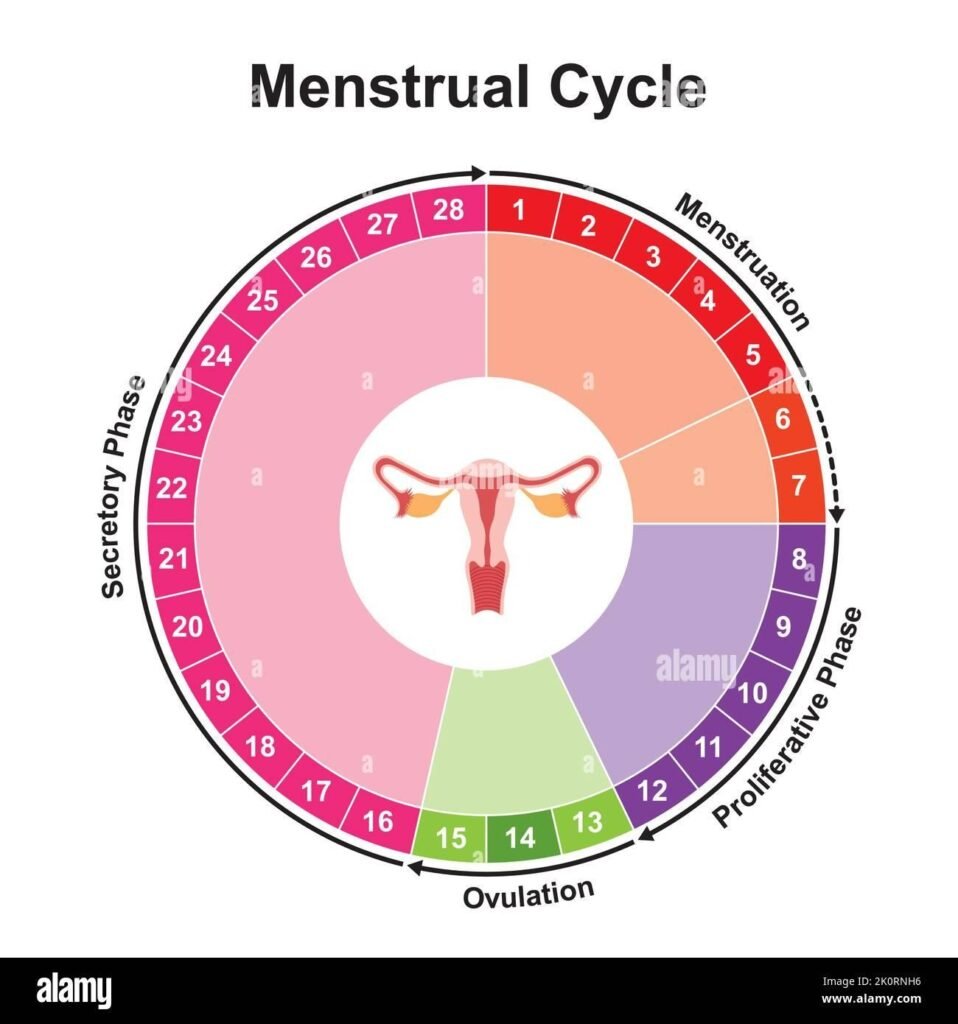
First, let’s clear something up. Your menstrual cycle is the entire process from the first day of one period to the first day of the next. The bleeding part is just one phase of the cycle.
When you hear the number “28 days,” that’s just an average. A textbook number. In reality, a normal, healthy menstrual cycle for an adult can be anywhere from 21 to 35 days long. [1] For teenagers who have just started getting their periods, it can be even more all over the place, sometimes ranging from 21 to 45 days.
So, if your cycle is 25 days one month and 31 days the next, that doesn’t automatically mean something is wrong. It’s also normal for the length of your period (the number of days you bleed) to vary, usually lasting anywhere from 2 to 7 days.
Think of it less like a fixed schedule and more like a rhythm. Your body has its own beat, and the goal is to learn what’s normal for you.
Source: alamy
So, Why Is My Period Early or Late?
Your menstrual cycle is run by a complex team of hormones. These hormones are sensitive and can be thrown off by all sorts of things. If your period shows up unexpectedly early or keeps you waiting, it’s usually because something has nudged your hormones off their usual track. Here are some of the most common culprits:
1. Stress (The Big One)
If there’s one thing that can mess with your cycle, it’s stress. When you’re stressed out—whether it’s from exams, a new job, or relationship drama—your body produces a hormone called cortisol. This “stress hormone” can interfere with the hormones that run your menstrual cycle, sometimes delaying ovulation (when your body releases an egg). If ovulation is late, your period will be too.

2. Changes in Your Routine
Your body loves a routine. When you change things up, it can take a minute for your cycle to adjust.
- Travel: Crossing time zones can mess with your internal body clock (your circadian rhythm), which can temporarily confuse your cycle hormones.
- Sleep Schedule: Pulling all-nighters or suddenly switching to a night shift can also have an impact.
- Diet or Exercise: A sudden change in what you’re eating or a new, intense workout routine can put stress on your body and cause your period to be early or late.
3. Sickness
Being sick with something like the flu can put stress on your body, which, as we know, can delay your period. It’s your body’s way of saying, “Hey, we’ve got bigger things to deal with right now, let’s put this on hold!”
4. Weight Changes
Significant changes in your weight, whether it’s gaining or losing, can affect your hormones and cause your cycle to become irregular.
When Should I Be Concerned?
While occasional changes are normal, there are times when an irregular cycle is a sign that you should check in with a doctor. Here are a few things to watch out for:
- Your cycles are consistently shorter than 21 days or longer than 35 days.
- You miss a period for more than 90 days (and you’re not pregnant).
- Your period suddenly becomes super heavy or painful.
- You have bleeding or spotting between your periods.
These could be signs of a health condition like Polycystic Ovary Syndrome (PCOS) or a thyroid issue, so it’s always best to get it checked out.
Get to Know Your Flow with CrampCare
The best way to stop worrying about your cycle is to understand it. And the best way to understand it is to track it!
When you track your period using an app like CrampCare, you’re not just logging dates. You’re collecting data about your unique body. Over time, you’ll start to see what your normal looks like. You’ll be able to see if your cycle is usually 29 days, or if it tends to be longer when you’re stressed.
This knowledge is empowering. It helps you know when to expect your period, understand your body’s signals, and recognize when something is truly off. Instead of panicking, you’ll have the data to know if it’s just a normal blip or if it’s time to talk to a doctor.
Ready to stop guessing and start understanding? Download CrampCare and start tracking your cycle today. Your peace of mind is worth it.
References
[1] American College of Obstetricians and Gynecologists. (2021). Your First Period (Especially for Teens). https://www.acog.org/womens-health/faqs/your-first-period