Does this sound familiar? You’re having a totally normal week, and then suddenly, out of nowhere, you feel a wave of sadness. You snap at your best friend for no reason. You start crying over a commercial. You feel a knot of anxiety in your stomach that just won’t go away. You check your calendar and… yup. Your period is due in a few days.
If you feel like you become a completely different person in the week before your period, you are not imagining things, and you are definitely not alone. The emotional rollercoaster of Premenstrual Syndrome (PMS) is real, and for some, it can be just as tough as the physical cramps.
At CrampCare, we believe understanding your body is the first step to feeling better. So let’s talk about why this happens and remind you that it’s not your fault—it’s biology.
Your Brain on PMS: The Hormone Rollercoaster
So, why do you feel on top of the world one week and down in the dumps the next? The short answer: hormones. Specifically, the dramatic hormonal shifts that happen during the second half of your menstrual cycle (this is called the luteal phase).
Think of your cycle as having two main hormonal players: estrogen and progesterone.
- In the first half of your cycle, estrogen is on the rise, which can make you feel more energetic and confident.
- After you ovulate (release an egg), estrogen takes a nosedive while progesterone rises to prepare your body for a potential pregnancy.
This hormonal shift is where things can get tricky. This drop in estrogen, combined with the rise and eventual fall of progesterone right before your period, can have a major impact on your brain chemistry.
Specifically, it messes with your levels of serotonin—you might know it as the “happy chemical.” Serotonin helps regulate your mood, sleep, and appetite. When your serotonin levels dip, it can leave you feeling sad, irritable, anxious, and craving all the carbs. [1]
So, when you feel that pre-period gloom, it’s not a character flaw. It’s a biological response to a very real chemical change in your brain.
When Is It More Than Just PMS?
For most people, PMS is a few days of feeling a bit off. But for some, the emotional symptoms are severe and can seriously impact their life, relationships, and mental health. If this sounds like you, you might be experiencing Premenstrual Dysphoric Disorder (PMDD).
PMDD is like PMS’s much more intense older sister. It’s a medical condition characterized by severe depression, anxiety, and irritability that starts a week or two before your period and goes away once it starts. If your mood symptoms feel completely unmanageable, it is essential to talk to a doctor. You are not being “dramatic”—you may have a condition that requires and deserves treatment. [2]
How to Cope When You’re Feeling Low
Knowing the why is helpful, but you also need tools to get through it. While you can’t stop the hormone rollercoaster, you can learn to ride it more smoothly.
1. Be Radically Kind to Yourself: This is rule number one. You are not a bad person for feeling irritable or sad. Your body is doing a lot of work. Give yourself permission to feel your feelings and rest. Cancel plans if you need to. Your well-being comes first.
2. Track Your Mood: This is a total game-changer. When you track your emotional symptoms in an app like CrampCare, you start to see the pattern. Knowing why you’re suddenly feeling anxious can take away its power. You can look at your phone and say, “Oh, okay. I’m three days away from my period. This feeling is temporary. It’s my hormones, not me.” This simple act can help you feel so much more in control.
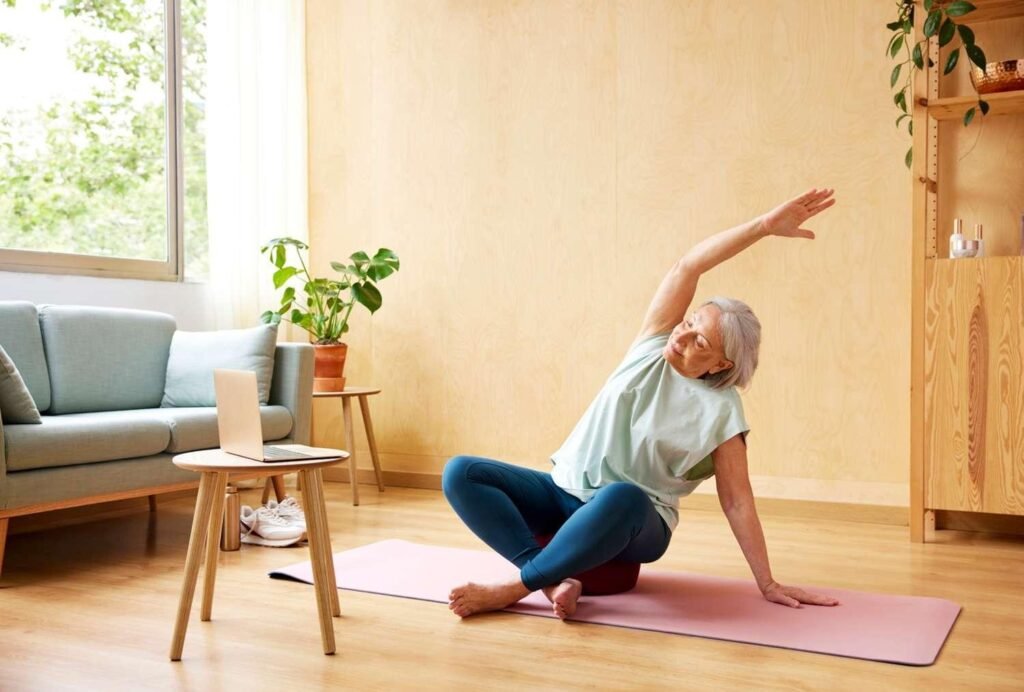
3. Move Your Body (Gently): Even though you might want to stay in bed, gentle movement like walking, stretching, or a chill yoga class can boost your serotonin levels and help lift your mood.
4. Feed Your Brain: Cravings are real, but try to reach for snacks that will help you, not lead to a sugar crash. Complex carbs like oatmeal or a banana can give your serotonin a little boost. And don’t forget to drink lots of water!
5. Talk It Out: Let a trusted friend or your partner know that you’re in your pre-period phase and might be more sensitive. Just saying it out loud can make a huge difference.
Your emotional health is just as important as your physical health. By understanding the connection between your mood and your cycle, you can learn to navigate it with more compassion for yourself.
Ready to start understanding your body’s unique patterns? Download CrampCare and begin tracking your cycle and your mood today. You’ve got this.
References
[1] Yonkers, K. A., O’Brien, P. M. S., & Eriksson, E. (2008). Premenstrual syndrome. The Lancet, 371(9619), 1200-1210. https://www.thelancet.com/journals/lancet/article/PIIS0140-6736(08)60527-9/fulltext
[2] American Psychiatric Association. (2013). Diagnostic and statistical manual of mental disorders (5th ed.). https://dsm.psychiatryonline.org/doi/book/10.1176/appi.books.9780890425596